Skip to content
View in the app

A better way to browse. Learn more.

BariatricPal

A full-screen app on your home screen with push notifications, badges and more.

To install this app on iOS and iPadOS
  1. Tap the Share icon in Safari
  2. Scroll the menu and tap Add to Home Screen.
  3. Tap Add in the top-right corner.
To install this app on Android
  1. Tap the 3-dot menu (⋮) in the top-right corner of the browser.
  2. Tap Add to Home screen or Install app.
  3. Confirm by tapping Install.

Join BariatricPal free

  • Ask your own questions
  • Reply and follow topics
  • Message other members
  • No cost, no spam

The link between high protein diets and cancer

  • Replies 52
  • Views 3.4k
  • Created
  • Last Reply

Top Posters In This Topic

Most Popular Posts

  • Sugar in any form has been found to be linked to cancer returning in previously treated patients. So. You might want to check out articles from the Mayo Clinic. FYI

  • http://cancerres.aacrjournals.org/content/early/2011/06/10/0008-5472.CAN-10-3973.full-text.pdf (The journal article is titled "A Low Carbohydrate, High Protein Diet Slows Tumor Growth and Prevents Ca

  • LOL, now all we need you to do is stamp your little feet, and shake your little fist!

Posted Images
Featured Replies

12 hours ago, Creekimp13 said:

What few people realize here...is that there is a difference between mouse biochemistry and human biochemistry. Particularly, in the way we deal with IGF-1. Mouse studies are pointless.

https://www.ncbi.nlm.nih.gov/pmc/articles/PMC2673798/

These findings demonstrate that, unlike in rodents, long-term severe CR (caloric restriction) does not reduce serum IGF-1 concentration and IGF-1 : IGFBP-3 ratio in humans. In addition, our data provide evidence that Protein intake is a key determinant of circulating IGF-1 levels in humans, and suggest that reduced protein intake may become an important component of anticancer and anti-aging dietary interventions.

MMME's study above...while from a reputable source...was done on mice.

Beating the point back to you.

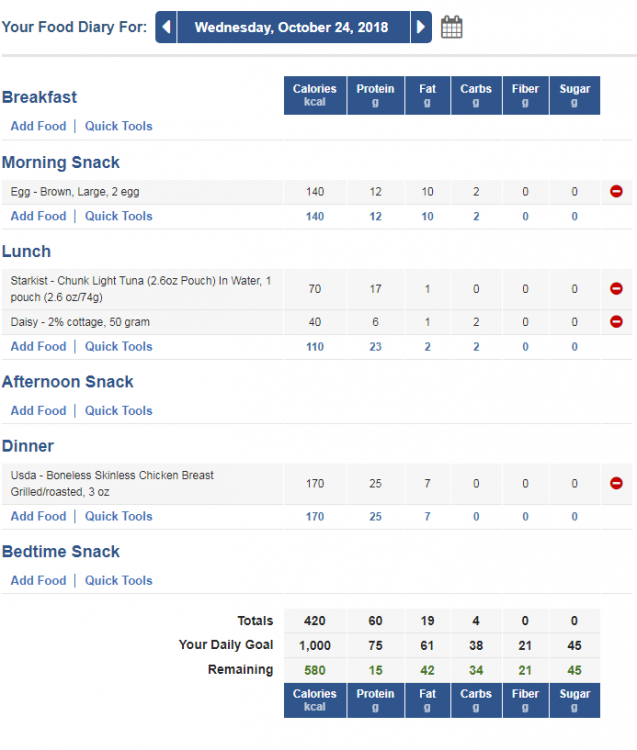
You eat 60 grams of protein like any other bariatric patient. So we can agree this is not a high protein diet. Topic does not apply to bariatrics but thanks for the information.

  • Author

Topic absolutely applies to bariatrics. Eating too much protein can increase your odds of cancer, diabetes, renal failure and other illnesses associated with premature aging.

MANY people here post menus that include more than 100g of protein per day. There are a lot of clinics that encourage their patients to eat as much protein as they can tolerate. It's terrible and potentially dangerous advice...particularly when people see it as a means to get thinner quicker.

Also...if these threads are not of interest to you and you don't find them of value, you are welcome to ignore them, or even block me. I've blocked a few posters I find unpleasant or uninteresting... and have had a much better experience at BP since I have:)

Edited by Creekimp13

You are inflating the issue. 60 to 100 is the norm. Same as you. The topic is creating an slanted view on how bariatric patients eat. But we can agree to disagree.

Again thanks for the info.

  • Author

Research would say I am not inflating the issue.

Research also backs up my claim that getting most of your protein from animal sources by severely restricting protein rich carbs...might not be wise. Not to mention the fiber you lose when you do this....that is important for healthy gut bugs.

I'm not correcting anyone. I'm putting some information out there. Take what you like, leave the rest:)

Again Xanax might be in someone’s future. Meant in a helpful way of course.

Ok, this is definitely coming late but when I'm thinking about "high protein diets" I always think in "%" and not in "g". 80 g of protein are about 336 kcal, so

80 g of protein on a 800 kcal diet = 42% protein

80 g of protein in a 1600 kcal diet = 21% protein

  • Author

^^This! Spot on point, Summerset.

30 minutes ago, Creekimp13 said:

Research would say I am not inflating the issue.

Research also backs up my claim that getting most of your Protein from animal sources by severely restricting protein rich carbs...might not be wise. Not to mention the Fiber you lose when you do this....that is important for healthy gut bugs.

I'm not correcting anyone. I'm putting some information out there. Take what you like, leave the rest:)

Leaving the rest.

Just wanted to represent to new patients that 60 to 100 is not high. I don't want to see unnecessary fear mongering.

  • Author

As Summerset pointed out, percentage of calories coming from protein is the best gauge of how "high protein" a diet is.

Quoting studies that show compelling evidence that high protein diets are dangerous long term isn't fear mongering...it's trusting adults to read the literature themselves and gain awareness.

Knowledge is never a bad thing.

Except you and Summerset are misrepresenting facts. LOLOLOLOLOL.

The % has no bearing in a severly calorie restricted diet.

A 150lb "normal" human who it NOT engaged in intermittent fasting that includes autophagy, STILL needs roughly between 60-80g of protein per day REGARDLESS of the caloric intake. Just because the new anatomy allows us to consume a VLC (very low calorie diet) does NOT negate the need for "adequate" protein consumption. You protein needs are based on many variables: lean body mass, level of activity, extremity of activity, age, sex, genetic, amount of broken metabolism. MANY variables. LOL. You don't "suddenly" and mysteriously need less protein just because you eat fewer cals.

ROFLMFAO. Good heavens. Go take basic biochemistry at least! Please????

The researchers' suggestion of .8g/kg is significantly more than 60 grams of protein for many of the folks here and for anyone newly post-op. There are people further out who are under 165 pounds and might need to weigh their options, but this article isn't at any risk of scaremongering immediate post-op patients.

3 minutes ago, CrankyMagpie said:

The researchers' suggestion of .8g/kg is significantly more than 60 grams of Protein for many of the folks here and for anyone newly post-op. There are people further out who are under 165 pounds and might need to weigh their options, but this article isn't at any risk of scaremongering immediate post-op patients.

Really? How do you figure?

Let's do basic math. mkay?

I weight 150lbs (this isn't even my ideal weight...it is just my current average weight).

150lbs / 2.2 kg/lb = 68.18kg (my current average weight expressed in kilograms).

Now you're saying the researchers suggest 0.8g/kg of weight.

So multiply 68.18kg by 0.8g/kg and you get= drumroll please!!!!!!!!!!

68.18kg x 0.8g/kg= 54g of protein needed.

That is his recommendation. But the USDA puts about a 10% additional protein req on that "just to play it safe and not kill people" so it becomes rounded up to around 60g.

(OK, forget biochem. Maybe you guys should start with 5th grade math skills class??)

Jesus, @FluffyChix, what is your problem?

Are you an immediate post-op patient? No, you are not. You had your surgery more than six months ago, so you are not relevant to my point.

Did I say "150 pounds"? No, I did not. I said 165, because at 165 pounds or more, one needs 60+ grams of protein, by these researchers' estimate. And the vast majority of immediate post-op patients weigh significantly more than 165 pounds.

You want to talk about basic skills? Try learning to read.

Also, maybe developing a modicum of chill. I was merely pointing out that the "you'll scare the immediate post-ops" is--I was nicer than this, but I'll be more real now--just concern trolling. You did not need to jump down my throat or insult my f---ing math skills.

Let's do the math for a 200lb person.

200/2.2=90.9kg

90.9kg x 0.8g/kg=72.7g of protein

This is for a normal person. Not a super athlete or someone working or working out like a beast daily.

And LOL the rules ABSOLUTELY apply to me. They are universal truths. ROFL (almost--for normal people--not extreme cases (ie body builders, @skinnylife, @BigViffer, etc)

I have no problem. But if you guys INSIST on mis-stating the truth, I'm calmly forced to show the actual scientific truth.

Also you should know, sometimes writers shorthand stuff. The studies are actually based on "ideal weights" or sometimes "due weight".

Sometimes LBM. So basically you figure the weight where you WANT to end up. Then you do the math around that end weight.

A 500lb person is not a "normal" person. This does not necessarily apply to them. But their protein goal depending on height is probably about the same. When I weighed 287lbs guess what my protein prescription was from my NON low carb RD? Yep, 74g. :)

Go figure.

Time for the one finger salute! Congrats you're my first! I feel like such a virgin! ?

Edited by FluffyChix

8 minutes ago, CrankyMagpie said:

Jesus, @FluffyChix, what is your problem?

Are you an immediate post-op patient? No, you are not. You had your surgery more than six months ago, so you are not relevant to my point.

Did I say "150 pounds"? No, I did not. I said 165, because at 165 pounds or more, one needs 60+ grams of Protein, by these researchers' estimate. And the vast majority of immediate post-op patients weigh significantly more than 165 pounds.

You want to talk about basic skills? Try learning to read.

Also, maybe developing a modicum of chill. I was merely pointing out that the "you'll scare the immediate post-ops" is--I was nicer than this, but I'll be more real now--just concern trolling. You did not need to jump down my throat or insult my f---ing math skills

I believe perhaps you are forgetting to divide the weight in pounds by 2.2lbs/kg in order to get to weight expressed in kilograms. Don't worry, I forgot to do that all the time in 5th grade. :D

165lbs DIVIDED by 2.2lbs/kg = 165/2.2 = 75kg

75kg X 0.8g/kg = 60g of protein recommended.

Guest
This topic is now closed to further replies.

Account

Navigation

Search

Search

Configure browser push notifications

Chrome (Android)
  1. Tap the lock icon next to the address bar.
  2. Tap Permissions → Notifications.
  3. Adjust your preference.
Chrome (Desktop)
  1. Click the padlock icon in the address bar.
  2. Select Site settings.
  3. Find Notifications and adjust your preference.