Skip to content
View in the app

A better way to browse. Learn more.

BariatricPal

A full-screen app on your home screen with push notifications, badges and more.

To install this app on iOS and iPadOS
  1. Tap the Share icon in Safari
  2. Scroll the menu and tap Add to Home Screen.
  3. Tap Add in the top-right corner.
To install this app on Android
  1. Tap the 3-dot menu (⋮) in the top-right corner of the browser.
  2. Tap Add to Home screen or Install app.
  3. Confirm by tapping Install.

Join BariatricPal free

  • Ask your own questions
  • Reply and follow topics
  • Message other members
  • No cost, no spam

Gastric Bypass WITH stomach removal

Hi! So I had gastric bypass on 4/26 and found out after surgery that my surgeon removed part of my stomach like they do with the VSG. He said it was to remove the ghrelin hormone. Has anyone else had this done? He said it wasn’t a duodenal switch but gastric bypass.

  • Replies 74
  • Views 5.4k
  • Created
  • Last Reply

Top Posters In This Topic

Most Popular Posts

  • The Greater Fool
    The Greater Fool

    It sounds like he's made changes with in the basic surgery, removing the blind stomach means changing the part of the stomach the pouch is created from so the bile ducts that used to dump into the bli

  • Quesodip251
    Quesodip251

    I’ll let y’all know when I hear something. The SASI one sounds like the best technical description for what was done. I’m off to bed. Goodnight everyone!

  • Quesodip251
    Quesodip251

    Update: I went back and forth with one of my surgeon’s coordinators today and I had the Single Anastomosis Gastric bypass (aka mini gastric bypass) plus the gastric sleeve which together is the litera

Posted Images

Featured Replies

  • Author
2 minutes ago, BypassingMyPhatAss♡ said:

I just read this other thread. It sounds similar to what you've described. I've never heard of this before today.

I actually emailed the coordinator this morning asking to get more info and inquiring on if it could be a SADI (another name for SASI) as this seemed like the closest option based on a google search. Probably won’t hear back til Monday though

  • Author

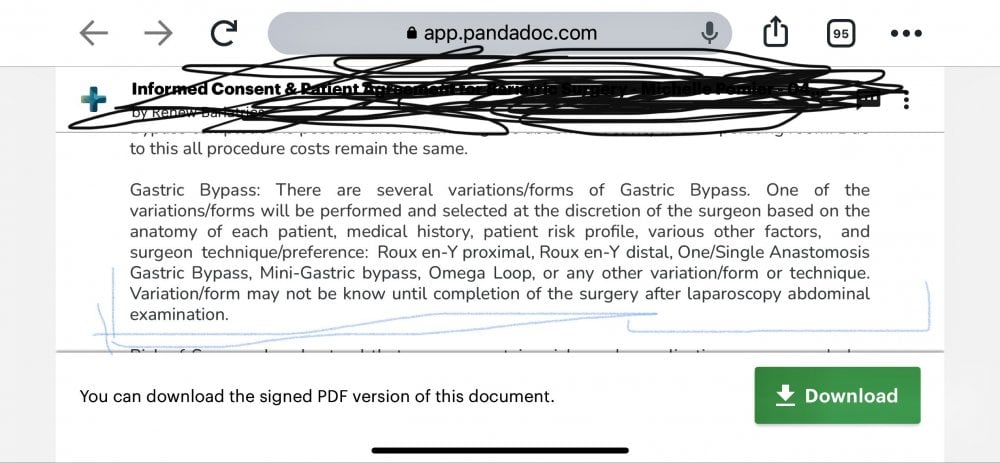
I looked up my informed consent paperwork and it said there are several variations of the gastric bypass and it’s the surgeon’s discretion to choose which one based on multiple factors. ?

1 minute ago, Quesodip251 said:

I actually emailed the coordinator this morning asking to get more info and inquiring on if it could be a SADI (another name for SASI) as this seemed like the closest option based on a google search. Probably won’t hear back til Monday though

I hope you have success with your surgery. But honestly if it were me, and I didn't get the surgery that I hired my surgeon for... AND he or she removed part of my body that I didn't agree to. Well, yeah I'd find an attorney. That's just not right at all.

I wish you the best! And keep us updated as to which surgery you have. I'm genuinely curious now.

Just now, Quesodip251 said:

I looked up my informed consent paperwork and it said there are several variations of the gastric bypass and it’s the surgeon’s discretion to choose which one based on multiple factors. ?

WOW. ? ?

1 minute ago, Quesodip251 said:

I looked up my informed consent paperwork and it said there are several variations of the gastric bypass and it’s the surgeon’s discretion to choose which one based on multiple factors. ?

WTF never heard anything like that before.

6 minutes ago, Quesodip251 said:

I looked up my informed consent paperwork and it said there are several variations of the gastric bypass and it’s the surgeon’s discretion to choose which one based on multiple factors. ?

WHAT??? That's a thing that can be done??? I've never heard of that before. That doesn't seem right...

13 minutes ago, Quesodip251 said:

I actually emailed the coordinator this morning asking to get more info and inquiring on if it could be a SADI (another name for SASI) as this seemed like the closest option based on a google search. Probably won’t hear back til Monday though

This is what I found about the SADI:

SADI-S stands for Single anastomosis duodeno-ileal bypass with sleeve gastrectomy. It is a new surgical treatment option for morbid obesity that is basically a variant of duodenal switch surgery, in which a single intestinal bypass is made as opposed to two. Patients spend less time in surgery and are exposed to a reduced risk of complications. DFW Bariatrics and General Surgery has got you covered if you are considering undergoing the SADI Procedure in Dallas and surrounding areas.

How Does SADI Work?

There are two steps involved in the SADI-S Procedure:

  • Firstly, the surgeon performs a sleeve gastrectomy to remove approximately 80 percent of the stomach.
  • Secondly, they detach the intestine just below the stomach after which they reattach it to an intestine loop roughly 2 meters down.

The effect of the SADI-S Procedure is to bypass food from the part of the intestine that is metabolically active. This results in the lessening of the length of the intestinal loop in which nutrients are absorbed. Patients experience a smaller appetite, consume less meal portions, and have hormonal changes that positively affect their metabolism.

Benefits of the SADI-S Procedure

  • Reduces the risk of diarrhea and nutritional deficiencies often associated with the duodenal switch
  • Gives patients greater weight loss when compared with standard gastric bypass or gastric sleeve, which is great for those with a BMI above 50.
  • The SADI-S Procedure can be performed on patients who have undergone sleeve gastrectomy but experienced insufficient weight loss or a relapse.
  • Reduces the long-term risk of intestinal obstruction when compared with duodenal switch and gastric bypass.
  • It is great for people with poorly controlled Type-2 Diabetes as it offers a more powerful metabolic effect when compared with a standard gastric bypass or sleeve gastrectomy.
  • Unlike gastric bypass surgery, patients experience a reduced likelihood of issues such as unstable blood sugar fluctuations, dumping syndrome, marginal ulcers, food restrictions and intolerance.

Potential Disadvantages of SADI-S Procedure

Potential risks associated with the SADI-S Procedure are similar to those of any other bariatric procedure. These include:

  • Anastomotic leaks
  • Infection
  • Bile reflux
  • Intestinal perforation
  • Venous thrombosis and pulmonary embolism
  • Bowel obstruction in the long-term
  • Abscess
  • Author
13 minutes ago, Future Sleeve Diva said:

This is what I found about the SADI:

SADI-S stands for Single anastomosis duodeno-ileal bypass with sleeve gastrectomy. It is a new surgical treatment option for morbid obesity that is basically a variant of duodenal switch surgery, in which a single intestinal bypass is made as opposed to two. Patients spend less time in surgery and are exposed to a reduced risk of complications. DFW Bariatrics and General Surgery has got you covered if you are considering undergoing the SADI Procedure in Dallas and surrounding areas.

How Does SADI Work?

There are two steps involved in the SADI-S Procedure:

  • Firstly, the surgeon performs a sleeve gastrectomy to remove approximately 80 percent of the stomach.
  • Secondly, they detach the intestine just below the stomach after which they reattach it to an intestine loop roughly 2 meters down.

The effect of the SADI-S Procedure is to bypass food from the part of the intestine that is metabolically active. This results in the lessening of the length of the intestinal loop in which nutrients are absorbed. Patients experience a smaller appetite, consume less meal portions, and have hormonal changes that positively affect their metabolism.

Benefits of the SADI-S Procedure

  • Reduces the risk of diarrhea and nutritional deficiencies often associated with the duodenal switch
  • Gives patients greater weight loss when compared with standard gastric bypass or gastric sleeve, which is great for those with a BMI above 50.
  • The SADI-S Procedure can be performed on patients who have undergone sleeve gastrectomy but experienced insufficient weight loss or a relapse.
  • Reduces the long-term risk of intestinal obstruction when compared with duodenal switch and gastric bypass.
  • It is great for people with poorly controlled Type-2 Diabetes as it offers a more powerful metabolic effect when compared with a standard gastric bypass or sleeve gastrectomy.
  • Unlike gastric bypass surgery, patients experience a reduced likelihood of issues such as unstable blood sugar fluctuations, dumping syndrome, marginal ulcers, food restrictions and intolerance.

Potential Disadvantages of SADI-S Procedure

Potential risks associated with the SADI-S Procedure are similar to those of any other bariatric procedure. These include:

  • Anastomotic leaks
  • Infection
  • Bile reflux
  • Intestinal perforation
  • Venous thrombosis and pulmonary embolism
  • Bowel obstruction in the long-term
  • Abscess

I read that as well. I would think it he was going to do a Spin off of the DS then I would’ve known bc they do the DS there and it’s a higher price tag due to the extra time involved. It’s also meant for larger patients and I had a bmi of 30 on the day of surgery…

I really think it’s just their standard policy to remove the stomach for ghrelin reduction. I just wish was told ahead of time.

3 minutes ago, Quesodip251 said:

I read that as well. I would think it he was going to do a Spin off of the DS then I would’ve known bc they do the DS there and it’s a higher price tag due to the extra time involved. It’s also meant for larger patients and I had a bmi of 30 on the day of surgery…

I really think it’s just their standard policy to remove the stomach for ghrelin reduction. I just wish was told ahead of time.

How did you get approved for surgery with a bmi of 30??? Even if you were self pay (not sure if you were or not) I would think 30 would be too low for bariatric surgery.

Well, I just signed a consent form Friday morning and I went to look at what mine says but they didnt even give me a copy of it??!!! I guess Ill be making a call Monday morning!

Wondering if they started with the sleeve since it's the most common WLS these days, realized their mistake and went bypass. Having said that, I had the VSG to bypass revision recently and asked a surgeon at the hospital how would it be different than the straight bypass and he said basically the same thing as your surgeon did. He said that with the sleeve, I already have far less ghrelin production than a normal stomach, so after the revision it'll be even more so. I couldn't find any studies online though.

  • Author
5 minutes ago, Future Sleeve Diva said:

How did you get approved for surgery with a bmi of 30??? Even if you were self pay (not sure if you were or not) I would think 30 would be too low for bariatric surgery.

I was self pay. Qualifications are bmi of 30+ at most places for self pay. I was at 31 when signed up but lost a few lbs from stress. Bypass was recommended to me bc it’s supposed to cure my long-standing GERD.

11 minutes ago, Future Sleeve Diva said:

How did you get approved for surgery with a bmi of 30??? Even if you were self pay (not sure if you were or not) I would think 30 would be too low for bariatric surgery.

Many places will do it with a BMI of 30 for self pay. It seems like I have Even heard of someone’s insurance covering it at 30 with certain comorbidities but I would not swear to that. They have done tons of studies that show people with 30 BMI are actually more successful on average with weight loss and keeping it off.

Join the conversation

You can post now and register later. If you have an account, sign in now to post with your account.

Guest
Reply to this topic...

Account

Navigation

Search

Search

Configure browser push notifications

Chrome (Android)
  1. Tap the lock icon next to the address bar.
  2. Tap Permissions → Notifications.
  3. Adjust your preference.
Chrome (Desktop)
  1. Click the padlock icon in the address bar.
  2. Select Site settings.
  3. Find Notifications and adjust your preference.