




Start here
Where are you in your journey?
Choose the path that fits today. We’ll take you to the most useful discussions.
- GLP-1 medication Zepbound, Wegovy, access, side effects, progress, and support.
- Before surgery Compare procedures, plan ahead, and get honest pre-op answers.
- Post-op Recovery, food stages, symptoms, and support.
- Long-term Regain, labs, habits, and life after the honeymoon.
- Revision Explore revision options, complications, and next steps.

catwoman7
Gastric Bypass Patients
-
Joined
-
Last visited
Everything posted by catwoman7
-
let your surgeon's office know. You're in the right window for a stricture. Happens to about 5% of bypass patients. It's an easy fix. I had two of them - one at four weeks out and one at eight weeks out (they usually happen when you're between 1-3 months post surgery - and almost never happen once you're three months out). I'm not saying this is what it is, but those are the common symptoms, and again, you're in the right time frame for it.
-
I still wear a 9, but I'm a medium now instead of a wide.
-
you're definitely NOT losing slower than everyone else. When I was where you are (four months out), I'd lost 52 lbs. And I started out much heavier than you. people lose at all different rates for all different reasons (age, sex, metabolic rate, activity level, whether or not you lost weight prior to surgery, starting BMI, for starters...). Other than sticking to your program and your activity level, you don't have a lot of control over these factors. Ultimately, your success is determined by how committed you are to your program - NOT to your rate of weight loss. I think losing 100 lbs in six months isn't that common, to be honest, except for people who start out much heavier than you. It took me a year to lose that much, and again, I started out much heavier than you did. I was a slow loser the entire time, and I, too, was told by some insensitive medical resident that I was behind where I should have been at every juncture. But I ended up losing 100% of my excess weight - which means I probably blew most/all of the other people in my classes out of the water by the time I was done. so just keep up your commitment, follow the rules, and you should be fine. P.S. yes weight loss does slow down after the first six months or so, but i kept losing until month 20. So don't give up hope!
-
strictures are pretty rare in sleeve patients (more common on bypass patients, but still, only about 5% of bypass patients get them) - although they're not unheard of. If it continues (after taking the advice of the people above), just let your clinic know.
-
I went slightly over my range yesterday (my maintenance range is 1500-1700), and ate more than my usual number of carbs as well, but here are my stats from a couple of days ago, which is more normal for me. Keep in mind I'm 5.5 years out and in maintenance. I never would have eaten like this when I was in weight-loss mode! (in addition to staying in the 1500-1700 calorie range, I also aim for around 100 grams of protein a day, because I malabsorb it - so getting the usual 60 grams that most WLS'ers eat would make my prealbumin level tank. I no longer count carbs, and I've never counted fat grams) total calories: 1673 carbs: 170 fat: 61 protein: 113 fiber: 30 (I don't know what my total sugar intake was since i don't have my tracker set up to calculate it)
-
I didn't do food funerals, but we did go to a couple of my favorite places and ordered something that I knew I wouldn't be able to eat again for awhile. I purposely didn't make a pig of myself when I ate it, though (as I would have before....). I just ate a "sensible" amount.
-
sounds like a nerve issue. Definitely not normal. I agree with the poster above - I'd see a doctor.
-
it's hard to know how much you're going to use it. I use my Instant Pot in pressure cooker mode about twice a week now (I've had it for about two years, I think), so it stays out on the counter. The first few months I used it almost every day, but now I use it mostly to make yogurt, sometimes (dried) beans, chili, marinara sauce - in other words, things that cook for hours on the stove that I can make in the pot in about an hour (or less). My mother-in-law's was a big dust collector in her pantry, so I asked her if I could have it last Christmas as a backup in case mine ever died (which I'm sure they eventually do...)
-
5.5 years out here and still fight it every day.
-
most people do lose some hair, but it's usually just "shedding" that no one is going to notice except you. If it's noticeable, you can always get it cut shorter so it's less noticeable. I actually lost very little hair. Having it come out in clumps (similar to someone on chemotherapy) is pretty rare. I wouldn't have noticed my hair loss by just looking at myself in the mirror - I could just tell by looking at the amount of hair in my comb after I combed it out after washing it - definitely more than usual for about four months or so. if it's going to happen, it's going to happen, and there's not much you can do about it other than keep on top of your protein and vitamins to keep it from getting worse than it is. Keep in mind that it's temporary - it'll last a few months and then grow back. In the grand scheme of things, it's kind of a minor issue, although I know a lot of people worry about it (I did, too...)
-
I do the same - I STILL dread being weighed at the doctor's office and wear as light as possible clothing when I go in. Although I asked my husband about this, whose never had a weight problem, and he said he hates being weighed, too. Maybe this is a common thing???
-
5-6 mornings a week. But I only record my in my tracker on Wednesdays.
-
terrible here - we're among the top five worst states in the country. I haven't been following what's going on with elective (or non-critical) surgeries, but I'm guessing they've been rescheduled...
-
yes. I was 373 lbs at 5'6" with no health issues other than arthritis (and being super morbidly obese). Even though I had no major issues at the time, I knew they were probably just around the corner, and I worried that I wouldn't see my 60th birthday without doing something drastic about my weight. How many people do you see over age 60 or 70 who are super morbidly obese? Not many. Plus I was tired of just existing - I wanted my life back again. I really don't understand that 3rd surgeon you went to. Weighing that much is a huge risk to your health. as far as surgeons #1 and #2, both are good surgeries. In general, if you have GERD, most surgeons recommend that you go with bypass. If you don't, it' pretty much comes down to personal preference. You'll find people who have had good success with both.
-
we started out at a similar weight and I lost 16 lbs the first month. I would say (and this is based only on my observations from hanging out on a handful of bariatric sites for the last six or so years) that most of us tend to lose in the 15-25 lb range that first month. Of course there are outliers on either side of that, but it seems like most are within that range. Well, unless you're talking about people who start out at much higher BMI's than most of us do (like people on those reality shows like "My 600 lb Life"). So you're doing fine!
-
like others have said, don't drive while you're taking pain meds, but otherwise, it's OK as long as you're feeling up to it. I was driving again after about a week.
-
I know several people who swear by Weight Watchers (easier to sustain for longer periods of time than Keto is, because there are fewer restrictions), but some just go back to the way they were eating that first year. Not all the way back to shakes, but how they were eating around months 6-12 - protein first, then non-starchy veggies, and then, if you have room, maybe a small serving of fruit or whole grain carbs. If you're no longer tracking your food intake, than start doing that again as well. not everyone recommends calorie counting, but I really monitor my calories if I'm trying to lose a regain. I can maintain my weight if I eat in the 1500-1700 calorie a day range (but that's going to be different for everyone - you'll have to experiment to find your range). If I need to lose weight, I'll eat at the lower end of that range, or just below it. And I step up on my exercising. It's slow, but it works.
-
I lost 57 lbs in the six weeks before surgery, but since I'd lost 50-60 lbs a gazillion times before and just ended up putting it all back on, I knew there was pretty much no way I'd be able to keep that off without the benefit of WLS.
-
almost everyone has their first major stall within the first 4-6 weeks of surgery. It usually happens during week 3 (thus we refer to it as "the three week stall"), but not always. Mine was weeks 2 and 3. It usually lasts 1-3 weeks. Just stick to your plan and the weight loss will start up again. btw - if you search this site for posts on the three week stall, you'll find over 15,000 posts on it. And I'm NOT kidding. It happens to almost everyone.
-
"starvation mode" is controversial. Not all dietitians/physicians believe it really happens. You're most likely just in a stall. Just stick to your program and the weight loss should start up again.
-
that's a common concern of newbies, but I think the majority of us who are several years out now view it as a minor issue in the grand scheme of things. I think most of us would take the loose skin ANY DAY over being morbidly obese again. Plus, it's easy enough for most of us to hide. And if it really bothers you, there's always plastic surgery...
-
most of us don't feel the restriction until we start eating solid foods again. In the mean time, just follow your clinic's guidelines.
-
my husband took a week off but ended going back to work after the third day. It was nice to have someone there to get things for me, but honestly, I probably could have handled it on my own.
-
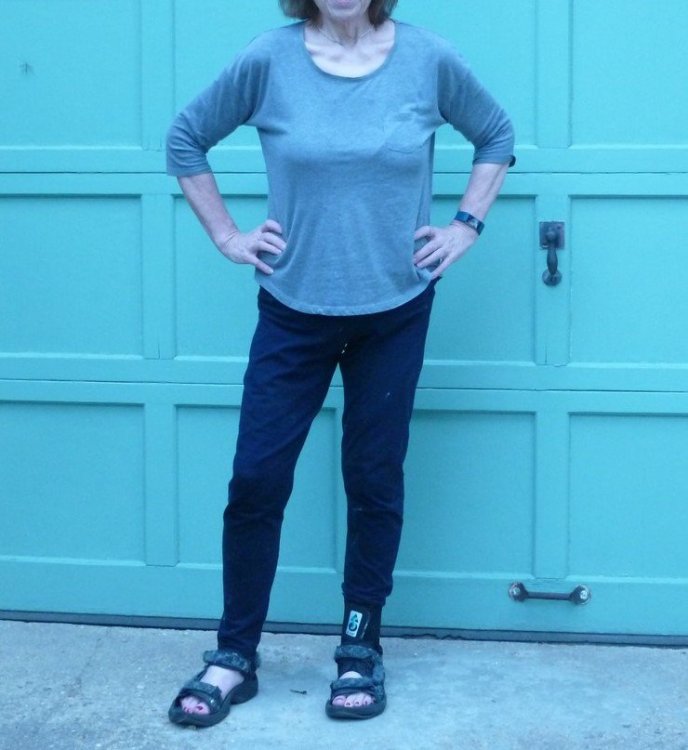
re: excess skin. Until the pandemic started, I worked with the pre-op groups at my clinic. Did this for about four years - at least 12 groups a year. Almost all of them are freaked out about the loose skin. I, also, obsessed about loose skin when I was a pre-op and early post-op. I can tell you now that most of us who are out a ways wonder why we wasted even one brain cell worrying about it. In the grand scheme of things, it's really a minor issue. I would take loose skin any day over weighing almost 400 lbs again. ANY FREAKING DAY!!! for most of us, it's easy to hide in clothes. I eventually had my excess skin removed, but I'm sure I was the only one who ever noticed it. Here's a picture of me BEFORE I had skin removal surgery. Do you see any loose skin? Nope. I tucked my stomach into my pants, wore longish, slightly oversized tops, and wore 3/4 length (or longer) sleeves. Ta da! Loose skin gone!
-
I can eat more than a cup (I'm 5+ years out). I doubt anyone can tell I had surgery anymore - I eat about as much as my never-been-obese women friends who are watching their weight. If I go out, I'll order an appetizer - or if I get an entree, I'll take half of it home. Same as they do. I can't tolerate really fatty foods anymore (I can maybe have one falafel - or a few fries), but some people can. Unfortunately, I can inhale sweets. I was hoping surgery would stop that, but nope. I can eat 'em just fine. I don't dump - never have. About 70% of us don't. And if you're one of the ones who DOES dump, you can manage that by limiting or avoiding fatty or sugary foods. the first few weeks and months can be tricky because you're eating so little and you have so many restrictions, but that's not a lifelong thing. I can eat most things now and have been able to for quite awhile. I just have to watch my portion size and make sure I'm not going over my calorie range. Vacations, holidays, birthdays are no problem. (I should add that the cup thing depends on what it is. If it's something like steak, there's no way I could eat a cup of that. Too dense. But stuff like soup, vegetables, salad, yogurt, popcorn - I can eat more than a cup of that) another thing -- before I had surgery, I started paying attention to what my female co-workers ate for lunch. There were a couple who could pack away what I would have called a "normal" lunch at the time - sandwich, chips, and a cookie. Or burger, fries, and a coke. But most of them ate these lunches that I considered pretty microscopic at the time - a sandwich and a apple. Or a sandwich and some baby carrots. Or a thing of yogurt with a skinny bagel with cream cheese on it. I came to the conclusion that that's the way a lot of normal-sized women eat - and those who ate more were either blessed with great metabolism or were super active. Anyway, now I pretty much eat like those light eaters eat. I think most normal-sized women eat that way (unfortunately...)


.png)