Start here
Where are you in your journey?
Choose the path that fits today. We’ll take you to the most useful discussions.
- GLP-1 medication Zepbound, Wegovy, access, side effects, progress, and support.
- Before surgery Compare procedures, plan ahead, and get honest pre-op answers.
- Post-op Recovery, food stages, symptoms, and support.
- Long-term Regain, labs, habits, and life after the honeymoon.
- Revision Explore revision options, complications, and next steps.

Arabesque
Gastric Sleeve Patients
-
Joined
-
Last visited
Everything posted by Arabesque
-
Always best to follow your surgeon’s plan. It’s there for a reason: to support your post surgical healing & recovery. Remember all those sutures & staples holding your tummy together - all because you can’t see them, they’re there & they take time to heal. (Think of a wound with multiple stitches on your arm or leg & how long that takes to heal & how careful you have to be to ensure you don’t stretch or strain it.) While all plans a different, most are on liquids for two weeks or more before staring purées. And it’s not unusual for people to struggle on the next stage & find they need to go back a step for a couple of days. Glad you’re feeling so well after your surgery.
-
My hunger didn’t come back for ages - more than a year. Up until recently I still often had times I wasn’t hungry but now hardly ever which is sad. I also wasn’t interested in eating for a few months after surgery. I ate to a routine - stuck to three meals a day because I realised I needed to eat for my body to function. My calorie intake was pretty low for a while - barely 900 calories at 6 months & starting maintenance & was often less. Eating to a routine did help change my relationship with food a lot. I looked at food for the nutritional benefit it would give me rather than for any other thing (comfort or soothe, or some other emotional reason, etc.). Food still had to be tasty because if it wasn’t I wouldn’t eat it or eat much of it. It may take time to see what foods you easily tolerate. Don’t be afraid to eat a small rotation of food options to begin.
-
I told some people but not others. When I took up a new work contract 4 weeks after surgery they just presumed it was a ‘female surgery’ which I never corrected cause they didn’t have to know. You could say you’ve been having some digestive issues so they did an exploratory but found nothing untoward. You’re being very careful with your diet to see if that helps. Whatever story you go with for those super inquisitive people (we all know those people) just be comfortable with it. All the best with your surgery.
-
My love of lamb is well documented. We’ll have to introduce you to the most delicious tender sweet mat ever @kris77. Haven’t had pigeon but do enjoy quail & Guinea fowl - except for the wee bones. Been wanting to try goat. What’s it like @GreenTealael? They used to say the butchers sold buffalo as beef in central Queensland - that meat was toooughh! I do like deer & kangaroo.
-
You need to get in touch with your surgeon. This is not what you should be experiencing after sleeve surgery but it could be something to expect after having some of your intestines removed. Regardless your surgeon is best to advise on how to manage what you’re experiencing. Hope you get answers & relief soon.
-
Unfortunately, the only way to find out if your tummy will like a food is to try it & see what happens. Food one person can’t eat others easily eat. The temporary changes to your senses of taste &/or smell also can turn you off certain foods. I liked to think of my tummy as a contrary, tantrum throwing 2yr old. One day everything is fine but the next you eat the same thing & your tummy throws a tantrum. Best advice is to add new foods slowly & don’t give up. If your tummy says no today try again next week. Don’t be too concerned by a growling, whining, noisy tummy. I asked my surgeon’s colleague about it $0& she said it’s just your digestive system doing what it’s supposed to: digest what your eating. Personally my tummy is noisier if I eat dairy, eat & drink to closely together or eat/drink a little too quickly. It also does it if I rest my iPad on my chest when reading at night - pressure on my tummy I think. I experience it every day - it’s actually squelching now! ?
-
Because your stall is longer than the usual 1-3 weeks duration, have a chat with your dietician & review your food choices, portion sizes etc. Do you measure & track everything you eat? It can be easy to over or underestimate, misunderstand your plan or include a food that’s not the best option. Sometimes a small tweak is all that’s needed to your food intake or your activity. You could be fighting against your other health concerns & any meds you may be taking too. Don't give up though. It may take you a little longer but it’s not a competition. All the best.
-
I was the same. I controlled my reflux by my food choices & the very occasional Nexium (usually if I had too many champagnes or G&Ts - the carbonation). I had a sleeve because the reflux wasn’t bad & I successfully managed it. I still watch my dietary choices but I do have reflux most days but it manifests itself differently now (hiccups not as severe, no bad taste in my mouth but burning in the throat most nights). I take Nexium every day which generally manages it & I was told I’ll always need to take one. I get not wanting to take meds all the time. I hate when I have to take any more than my one Nexium in the AM & my HRT in the PM. Was so glad I could toss the multivitamins from maintenance. Whether you will need to take a PPI for a short time or forever will really depend on your physiology. It is certainly worth another conversation with your surgeon.
-
I am sorry you are feeling so regretful about your surgery. I wonder how much of your despair comes from your medical team not fully informing you of what to expect as you progress through the process coupled with dealing with your inability to turn to the food that used to offer you comfort & working through the issues you are dealing with in regards your health. @sleevemealone suggested, a therapist may be very helpful. Ask your medical team for a referral to one who specialises in eating disorders & bariatric patients. There are many people on this forum who have benefitted from the support of a therapist. As you progress, you will be able to eat more food (portion size will increase until by maintenance you are eating about recommended serving sizes) & a broader range of foods. Many still eat some of their old favourite foods - just not as often & in smaller portions. Having a sleeve does not limit your social life at all. I went to a 60th birthday party two weeks after surgery. Sure I didn’t eat or drink any of what was provided (I took my own drink) but I still had a great time being with friends. I go out to dinner often. I socialise with friends & family often & did from pretty early out. I just make better food choices than I used to before my surgery. I have weekends away with girlfriends & family. My sleeve doesn’t stop me living my life. It helps me live it better because I’m fitter, physically & emotionally healthier & happier. I wish you all the best.
-
Better to have a chat with your supervisors (they don’t have to know the details of your surgery) that you may need some accommodation than not. We all heal & recover differently. Some people are fine after a week. Me, I was weak & could be doughy in the head 4 weeks later (my BP was very low). I undertook a new contract, fortunately with people I worked with before, & they were very accommodating. They allowed me to adjust my working hours & were ok if I had to leave a little earlier. I could eat/drink at my desk so that was never an issue & nor were bathroom breaks. Maybe ask if you could start back with reduced hours or a reduced working week to begin if you discover you need it. Also ensure they know you can’t lift anything heavy for a couple of weeks either & bending & reaching may be difficult for a little while. Again all this depends on how you recover. All the best.
-
Besides different hungry signals many get different full signals. Some people say a runny nose is an indicator they are full now. Or they sneeze. Wow that is a huge amount of fluid. With 1200ml from your shakes, soups, etc. plus two to three litres of fluid you’re drinking 3-4 litres a day. You must feel so bloated & be peeing constantly. Generally we’re advised all fluids count to our 2L daily goal regardless of whether it’s from combinations of water, tea, shakes, soup, etc. I wouldn’t be concerned about stretching your tummy but maybe putting stress/pressure on your healing tummy. Worth a chat with your dietician & surgeon. But then there are many different plans out there & a lot are adjusted to suit the individual & their needs. All the best.
-
They inflate the abdominal cavity with gas so they can more clearly see where they are operating. Some of the abdominal pain you may experience is from your abdominal muscles being stretched by tbe inflation.
-
You will have noticed people have a lot of different experiences. Some stay in hospital a day some two or 3 days. Some need opioid pain meds for 3 or 4 days but others don’t after 2 days. Some only experience more general discomfort. Some have a lot of gas pain but others very little. Some are constipated for days. Others have diarrhoea. Some move about pretty easily while others struggle getting up & down with their pulled muscles & internal sutures. Some have an energy drop & are fatigued for a couple of weeks. Others are fine & are back at work after a week. A lot of it depends on you & how you recover & respond to the surgery, anaesthetic, etc., whether your surgery was straight forward or if they have to do other things like a hernia repair. Also surgeons do things differently. Have a chat with your surgeon & ask them about what their patients generally experience & what you can expect. If you follow your plan, eat the foods you’re allowed & meet your goals (protein, fluids, carbs, etc.) you’ll be fine. You won’t throw yourself out of ketosis eating lettuce but I get the uncertainty & wanting to ensure you don’t make a mistake. Don’t be afraid to ask your dietician for a more defined diet if you will feel more comfortable about your food choices, portion sizes etc. And if you struggle to eat or can’t tolerate certain foods to begin ask them for alternatives. All the best.
-
Walk. Even laps around or inside your home. Gotta get that gas moving. Gas X can help too. I had no gas after my sleeve surgery but after my gall removal, oh, boy! Took a good 5 days for the discomfort, distended tummy & shoulder pain to reduce. You’re on purées already? Most are on liquids for two weeks after surgery & don’t get to purées until week 3. But every plan is different. ??♀️
-
@catwoman7 is on the mark. Where you end up is up to you but your body & life can throw curve balls at you. Often surgeons advise what seems a conservative achievable weight which is based on stats of where people are at 5 years out (a lose of about 65% of the weight you had to lose). Started at 91kg. Lowest 48.2kg Currently 50.2kg & nearing 3 years out. And post as often as you want & need. ?. We’re all happy to share our experience.
-
Check the recommended portion size of granola - usually 1/2 cup or 3 tablespoons. That’s what would be surprising to many who used to fill their bowls or add a couple of spoons to their yoghurt. It’s where we often got caught with food - eating 2 & 3 times the single portion.
-
Oh God, hollandaise sauce. There was a place not far from me that made the best hollandaise you could happily eat jugs of it. Now pour it over some of @Kris77’s asparagus & I’ll be yours life. Yes I’m that easy. Will have the lamb waiting @GreenTealael if you have some of that orange chicken with you. Yum. ?
-
Treat BMR & BMI as guides only. We, the human race, have too many differences for there to be a single one size fits all approach (bad pun I know). Age, height, gender, weight loss history, genetics, frame, muscle mass, health issues, etc. could mean that one of those numbers may be right or wrong for us. But it’s good to have a starting point. Just be flexible & realise that you may be more or less than those numbers & be perfectly fit & healthy. Whether you weigh yourself or not is up to @Pollito. You know you best. But don’t be surprised if your surgeon or dietician does want to weigh you. You don’t have to look & could ask they not tell you what the scale says. My surgeon & GP weighs me every time but my dietician never weighed me. She said it was obvious enough to her I was losing weight. Doctors like facts & figures so they can monitor change. Hence why we have blood tests & our BP, heart rate, etc. are recorded.
-
Give your medical team a call. New, different or unexpected pain should be looked into. It could be something simple, like healing muscle spasms, but always better to be sure. All the best.
-
First congrats on your surgery. You seem to be doing well so far. I was never given a calorie goal just fluid & protein but I checked out of my own curiosity. Those first couple of weeks I was eating a bare 200 calories which increased to about 300 on soft foods. But that was me. Many eat more. You’ll find there are a lot of different requirements around calories & we have different experiences about them too. If you feel you need more accountability or guidance ask your dietician &/or surgeon. You may not be able to meet any of their goals in those first weeks but as long as you’re making an effort & are close, especially to the protein & fluid goals, you’ll be ok. But as you’re only ‘eating’ 3 meals a day you should be close to your protein goal & doing fine. Just one thing to watch though, during the surgery a lot of nerves are cut which means messages aren’t getting through to your brain: hunger, full, etc. And fluids go through you quite quickly. It’s important to tread carefully & sip slowly. All because it seems like you can doesn’t mean you really can or should. All the best.
-
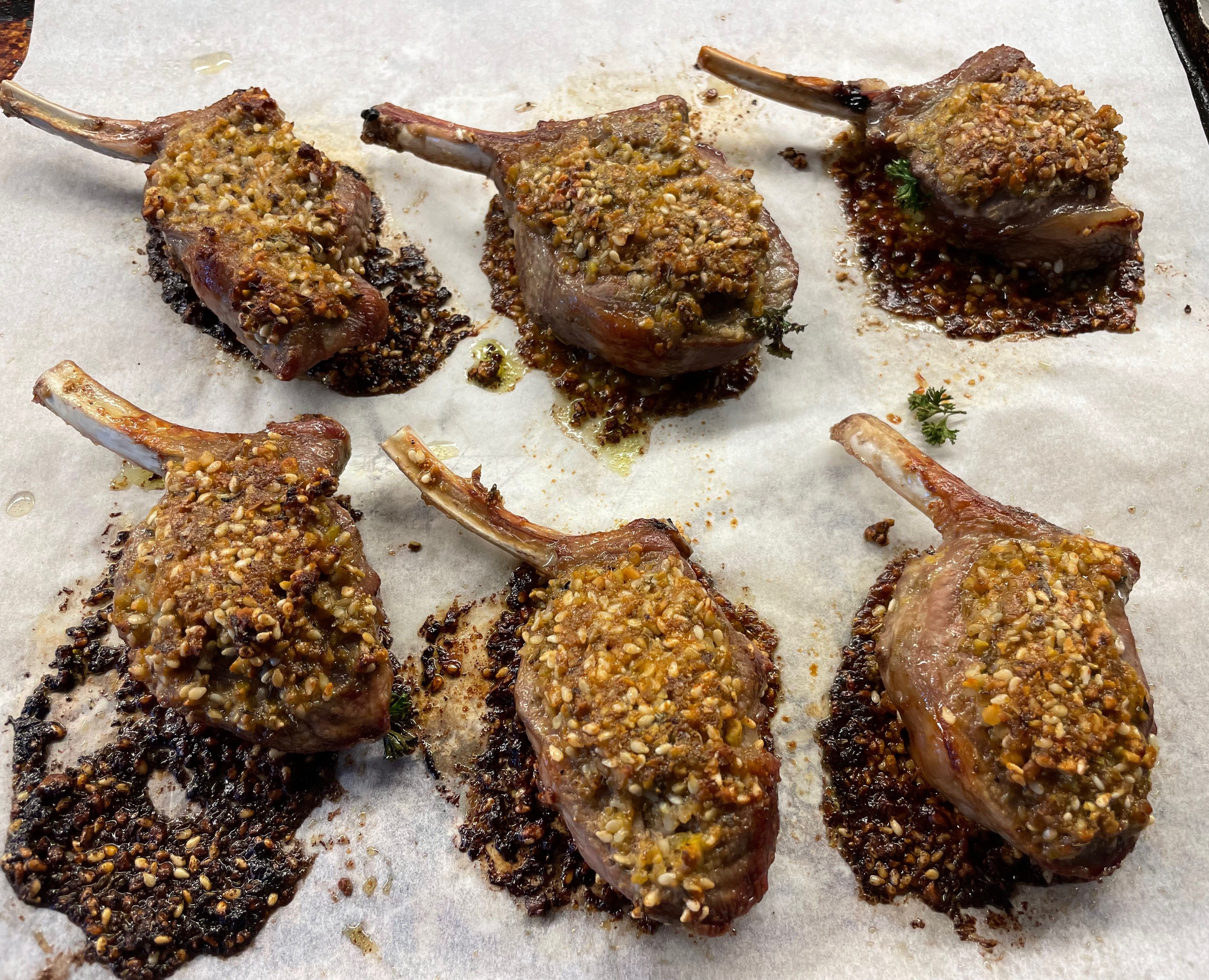
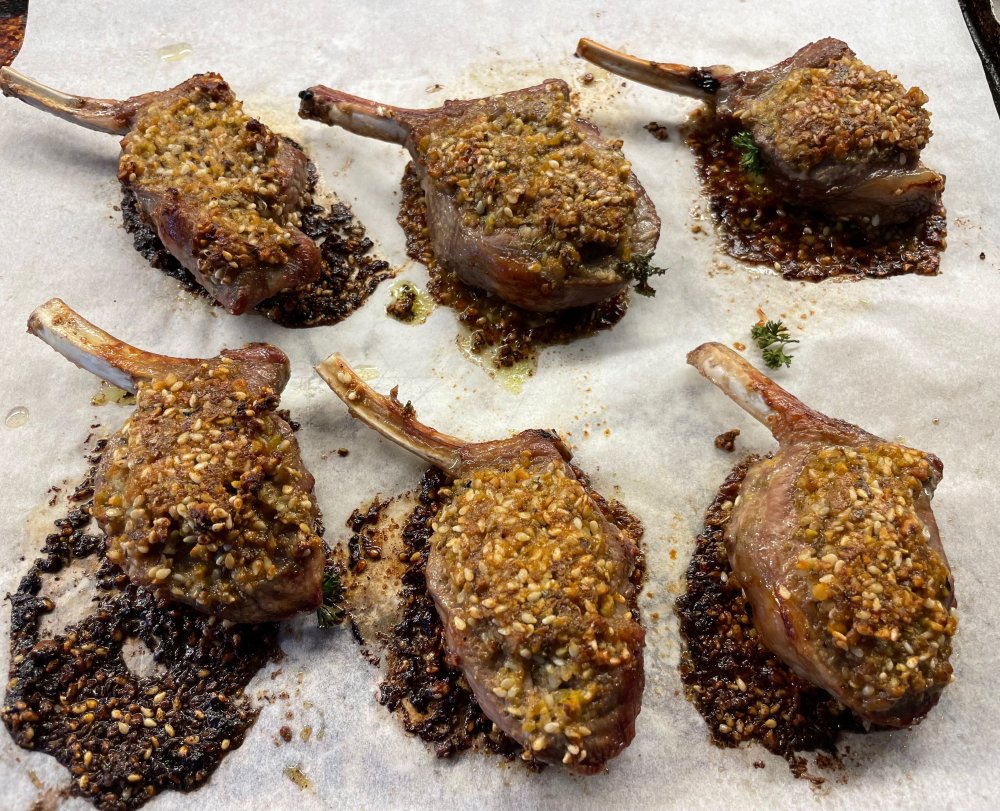
Thank you everyone. I’ve known the possibility of regain was there. It was one of the reasons I was ok with exceeding my weight loss goal - room to move. The challenging aspects for me is in understanding why. I can accept the return of hunger but the fact I haven’t changed my diet or calorie intake (except for those two Christmas weeks) & if anything I’m a little more active (not building muscle so I can’t blame that ?) messes with my head. And I know it’s only a very small amount so far but … more reflection & introspection needed I think. Anyway, I love a lamb cutlet as you know so last night I baked some with a pistachio dukkha crust. Those brown crunchy bits were super yummy. Ate two last night, two tonight & will freeze the last two. I love this baking tray. It was originally my mum’s biscuit tray. She gave it to me 35 odd years ago. I use it for everything including roasts, baked vegetables, as a drip tray, etc. If it goes into the oven I use the tray - hence the darker, burnt baked in flavour you can see in the corners ?. Do you have a favourite cooking pot or pan? PS - looking gorgeous as usual @Sophie7713.
-
It’s the beginning of examining what we eat & looking for healthier, more nutrient dense food. But yes, it can be an emotional roller coaster as you realise certain foods you enjoyed (offered comfort?) may be off the menu for a while, and your stress levels are already up as you near your surgery date. But there are a lot of things you can eat at 1300 calories. It’s about what I eat to maintain (3 meals & 3 snacks). Look for foods with similar flavours, textures & ingredients. Love your granola, try rolled oats (not instant) with some seeds, nuts & blueberries. (Granola is often high in sugar & fat too so another reason it would be off your plan.) I’ve snacked on things like cheese, high protein yoghurt (look for low added sugar or naturally sweetened with fruit), multi grain crackers, hummus, vegetable crudités, fruit, etc. It’s often easier if you make your own favourite treats as you choose the ingredients & how it’s prepped/cooked. Like you can make a low fat healthier guacamole with avocado, herbs & spices to taste, diced tomato, celery, a little grated red onion & lemon/lime juice. Lots of recipes about for healthier options. Look for alternatives like cauliflower rice & zucchini noodles instead of highly processed rice & pasta. One of the challenging things is reducing your sugar, salt & caffeine intake. Their addictive nature makes withdrawal hard. It will be all worth it. All the best.
-
Quite common for people to develop a sensitivity/intolerance to lactose after surgery. For many it’s temporary. Thankfully there’s a lot of non lactose products about these days you can swap in for your protein shakes & then yoghurt, milk, cheese, as you introduce them into your eating plan. I stopped the shakes after 2 weeks & focussed on getting my protein & nutrients via real foods: yoghurt, milk, broths, scrambled eggs, etc. to begin. Sure I didn’t hit my protein goals at first but I got there.
-
Could be too much stomach acid especially if eating eases it - the food absorbs the acid. Do you take esomeprazole? Check with your medical team just to be sure.
-
That’s a new one. Do your blood tests show you’re low in B12? I know B12 injections are quite commonly prescribed to older people because our ability to absorb it decreases as we age. My mother has to have a blood test first & her doctor only gives her a shot if her levels are low. Vegans often need B12 because the main source of B12 is via animal proteins. Supposedly it can protect against macular degeneration.