





Arabesque
Gastric Sleeve Patients
-
Joined
-
Last visited
Everything posted by Arabesque
-
There’s no hard or fast rule as to how much weight you will lose or that you will reach your goal weight by a certain date. Many keep losing, albeit very slowly, up to two years post surgery. Remember your goal weight is a number you chose not the number your body is happy at. If you are maintaining at your current weight, to lose more you will have to reduce the amount of food you are eating & increase your activity, however to maintain a lower weight you will have to continue to eat less than you do now & do more activity than you do now. Will that be sustainable for you? Will that restrict you enjoying your life? That’s the balance you have to work out. It’s the balance we’ve all had to work out and also accept. Congratulations on your weight loss. You’ve done amazing.
-
I don’t limit myself either. From the solid food stage (yep way back then) I wasn’t eating bariatric or any ‘diet’ food. Just making food selections that provided the nutrients I needed in appropriate portions, modifying recipes, swapping out ingredients, changing cooking styles, etc. accordingly. Be creative and try things you might not have before. I developed a way of eating that suited me, enabled me to lose and then maintain. This way I could continue to live & enjoy my life, including going to restaurants, parties, etc. without limiting myself to ‘bariatric approved’ recipes or ‘diet’ food. I didn’t want to be on a diet for the rest of my life. No one would know by looking at what I eat my history with my weight, old eating behaviours, relationship with food, my surgery, etc. Do I eat food that is bad for me? Of course. I just don’t eat it very often & I watch how much of it I eat when I do. You’ll work out how best to eat, what to eat & how much you can eat of various foods for you, your needs, lifestyle, activity, and so on. Start by adding in a couple of non diet/bariatric meals and see how you go. Good luck.
-
It’s just your shedding cycle that has accelerated. Your new hair is growing in at its usual rate. Stone hair you’re losing was ‘scheduled’ to fall out. It’s caused by the stress of the surgery, dietary changes, hormonal flush, etc. it usually lasts about 3 or so months. And this is the same for those who take the supplements that are supposed to help and those who don’t. So … Many of us found it helpful to cut some of our length if we had long hair. (I went from almost waist length to a shoulder length bob.) Shorter hair is bouncier & looks fuller & thicker. Plus it takes less time for your new hair to reach the length of your existing hair. Be careful taking biotin. It’s only helpful if you are low in B6. If not it can screw up your blood work (it affects the readings of other vitamins, etc.) and does nothing to help hair loss.
-
So sorry to hear about your terrible accident and hope your recovery continues to progress well. I agree with @Postop but get back to where you were when you began or just before you began maintenance. Focus on protein, fluids, vegetables, fruit, dairy and small amounts of complex multi or whole grains. Watch portions and snacking. That amount of calorie intake will get you back to a lower weight you were or close to where you were. Of course you will have to adjust for your reduced activity levels. Remember you’re not resetting your DS. It’s still there doing what it’s supposed to do. You're resetting your head i.e. your thinking & relationship with food. All the best.
-
Walk, walk, walk. Short distances (like laps around your house to begin) often. Start the day after your surgery. It ‘s the best thing to get rid of surgical gas. It is in your abdomen and rises up behind the lungs where it causes the shoulder pain you may feel. It moves into your lungs and you breathe it out. Marching on the spot, lifting/pumping your arms up & down also helps. Get up & down slowly so you don’t strain your wound sites and the tender abdominal muscles. Some people say they find a binder helpful. Some say they struggle to get in & out of bed and slept in a recliner initially but this is all individual so it might not apply to you. Sure some who started at a higher weight will share more tips. All the best.
-
There could be many reasons. What was your starting weight & your current weight? When did the stall begin? Is it a stall or has your weight loss slowed right down? What is your current calorie intake? What activity do you do? Could there be a medication you are on that is hindering your weight loss? Have you met with your surgeon/surgical team to discuss your stall? This could be your new set point - the weight your body is now happy at. The average weight loss after a sleeve or bypass is about 65% +/- of the weight you would need to lose to put your weight in a healthy range. Of course that means some will lose less than that percentage while some will exceed that average. Could that be applying to you at the moment? As we get close to this set point our rate of loss slows right down even to a point you’re losing ounces instead of pounds or weeks of losing nothing at all until you finally stabilise. The lower the weight you want to reach & stabilise at, the fewer calories you will need to consume. Congratulations on not needing your diabetic medication. That’s a big win.
-
Walking and swimming are good. Walking is highly recommended in the first weeks right from after your surgery so it would be beneficial to start that before. Post surgery walking helps protect you from clots, helps to eradicate the surgical gas in your abdomen & doesn’t stress or strain your healing post surgery body. Also there are lots of low impact cardio exercises you can do at home available on You Tube. It’s good to start building your strength too as maintaining (& building) muscle while losing weight is important. Buy some resistance bands and simple hand and ankle weights & again there are You Tube videos available with exercise ideas using the bands & weights. Some people may be able to recommend some specific videos. I watched a few when I began to get ideas and incorporated old dance and yoga stretches and developed my own routines. All the best.
-
The itchiness and redness could be an allergic reaction to the glue if used to close your wound sites or to the adhesive in the bandages. Your wound sites will become itchy as you heal but from my experience it’s too soon yet but … Worth a call with your team for sure. Most are given some recommended food portion sizes you should follow. For example I was advised 1/4 cup from purée stage (which would include your yoghurt) slowly increasing to a full cup at around 6 months. You should also have been advised to sip and to sip slowly. Some are given the advice to sip 30ml (1oz) every 15 minutes after surgery slowly increasing as you heal and recover. This is to protect your poor tummy and digestive system. It has been through a lot. Many sutures and staples are holding it altogether. Nerves were cut so you won’t be getting messages, or correct messages, through, about feeling full, if you’re straining or putting stress on your tummy or digestive system, etc. It takes at least 6-8 weeks to heal and recover from your surgery so please go slowly and follow the instructions you have been given so you don’t do any damage or hinder your recovery. This is a time when your focus should be on what you should do not what you can do. Get back on track & you’ll be fine. There’s a lot to learn & to get used to and slips happen. It’s okay.
-
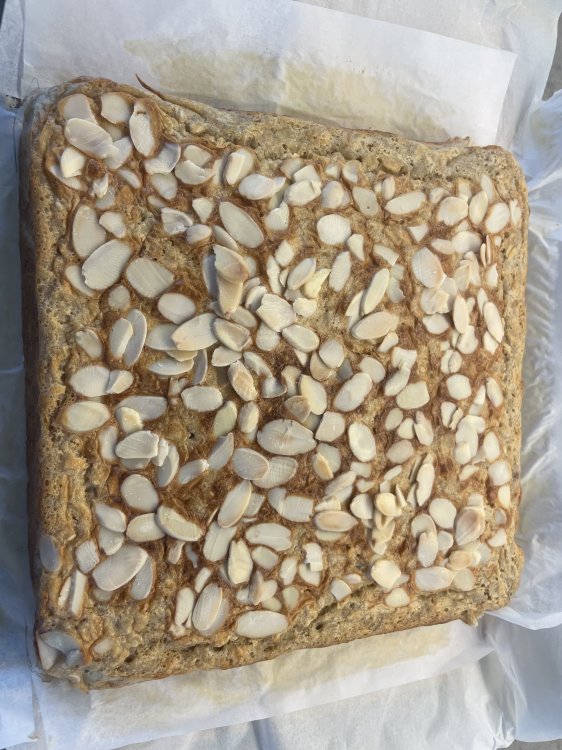
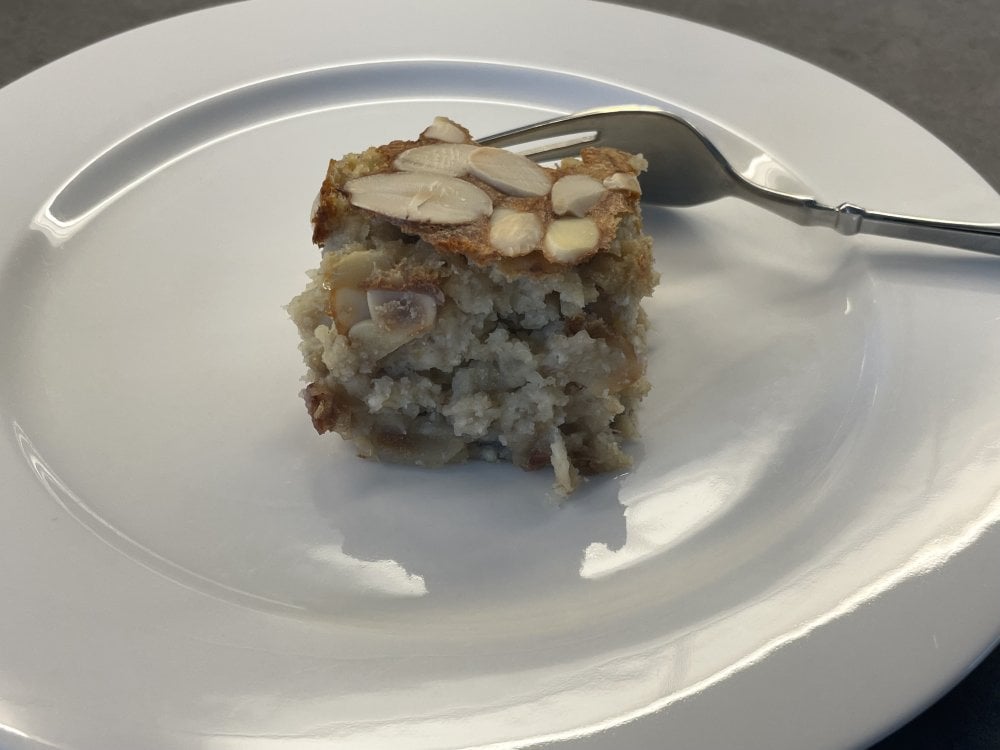
Found an interesting recipe I thought I’d try as an alternative to my usual rolled oats breakfast. Of course, as usual, I loosely followed the recipe swapping maple syrup for my brother’s honey, adding seeds and dried cranberries and omitting the plums on the top. Was intending to add some collagen powder but forgot. You could probably add protein powder too and some nutmeg abd/or cinnamon. I made it in a larger tin (9in instead of 8) and cut it into 12 instead of 9 squares & have frozen several. Looks a bit pale but tastes pretty good like a soft banana cake. Serve with yoghurt for extra protein. The recipe if anyone is interested. https://www.bbc.co.uk/food/recipes/plum_and_almond_baked_08643?fbclid=PAVERFWAPRvwlleHRuA2FlbQIxMQBzcnRjBmFwcF9pZA8xMjQwMjQ1NzQyODc0MTQAAac0tC856cepMaBEzIn-UKneSpDnL8Dm7PAukLylSS-nLYRC5gE8BbadGNBWUQ_aem_UxcaJmY8CfRr6D9gf7eg6Q
-
I agree, sounds like a perfectly normal stall. You’ll likely experience a few along the way. Some will last a week, some will last longer (1-3 weeks tends to be the norm). Keep going as you are. Think of them as a time when your body needs to take a break and reassess where you’re at. I mean it has been going through a lot. No need to increase or decrease calories or activity levels as sometimes is suggested as the stall will break when your body is ready to move forward again. Congrats on your weight loss so far. Whoo hoo!
-
Your surgeon &/or dietician should give you a list of foods to avoid for the first few months, what to try to introduce when & portion sizes. While many have plans that follow the two weeks cycles of liquids, purées, then soft foods before introducing more solid foods after week 6, there are variations. If you aren’t given anything, ask for specific plans and directions. Generally your focus should be protein, then vegetables, fruit and very last and only if you are able complex whole or multi grains. Within that avoid skins and seeds and fibrous fruits and vegetables when you able to introduce them fruits and vegetables. Most of us experienced temporary food aversions: taste, texture and smells. Your tummy becomes extremely fussy and it can change day to day or week to week. We often say the first couple of months is a lot of trial & error around what food your tummy will like for your next meal. I used to describe my tummy as a petulant, tantrum throwing, two year old. Don’t give up any food though. All because your tummy says no today, next week it might be fine. Some people specifically struggle with denser proteins like steak or chicken breast and eggs for a prolonged time. Most of us are told no bread, rice or pasta. They swell and take up valuable space in your tiny tummy. Plus as simple carbs they offer very little nutritional value which should be another focus - eating nutrient dense foods. I had many meals in the first months that were protein only and nothing else simply because I couldn’t eat anymore than the protein. Personally I still don’t eat simple carbs like bread, pasta and rice. I find them too heavy in my tummy. As to when to introduce spicy and sweet is individual. I developed an aversion where foods tasted overly sweet or salty. Personally I took advantage of the aversion to sweet and didn’t introduce sweet foods for more than 8 months & I had reached goal. At first it was no added sugar and most artificial sweeteners (most because it is added to so much food). Even now at 6.75 years I rarely have desserts, cakes, sweet biscuits, chocolate, etc. I had an existing intolerance to spicy (chilli allergy) so I don’t eat spicy food. Plus spicy food stirs up stomach acid which can cause GERD, a concern with sleevers. Also as your digestive system is still producing me amount of stomach acid it used to before your surgery, you are more susceptible to GERD symptoms for the first free months. Many surgeons will prescribe PPIs like Nexium, Prilosec, etc. to reduce the acid in your tummy for a while. Sure others will make other suggestions. All the best.
-
Yes I would. No regrets at all. I could diet and lose weight with the best of them but I would always put the weight back on. Until menopause then I couldn’t do anything to lose the weight that menopause had pushed me from bouncing between a healthy weight to overweight to obese. This has been the only time in my adult life I have maintained a low weight consistently (except for a glitch end 2024/early 2025 thanks to a medication issue). It will be 7 years since my surgery in May. For me the difference has been that dieting was always a negative experience. I was punishing myself because I had failed and gained weight & after I would go back to eating the exact same way. I found the time I was losing after surgery and opportunity to reassess and change my relationship with food and how & why I ate. The months when food and hunger was something I just didn’t think about helped a lot. I don’t consider myself on a diet to maintain. This is just how and what I eat. I do watch what I eat but to maintain any weight loss you have to be aware of what you eat, how much you eat & when & why you eat. There are foods I can’t eat but there were foods I struggled with before surgery so it’s not a problem. Best advice is you have to be committed to your decision to progress with the surgery. If you’re uncertain or have doubts, wait. Do more research, talk to your doctor/surgeon, hang around on this forum, ask if your surgeon can recommend a support group you could attend to talk with others who have had or are thinking about surgery. Don’t ask or listen to the opinions of so called well meaning friends or family. They usually have horror stories that are really urban myths or they may not be supportive. So pick those you tell with care. You have to be ready for the surgery and for the weight loss because it is not easy. Lots of your thinking about yourself, eating, etc. will be challenged. All the best whatever path you chose to go down.
-
Caffeine is notorious for stirring up reflux which I believe is why surgeons say no caffeine especially in the first weeks/months after surgery when your body is still producing the amount of stomach acid you needed pre surgery. Plus many people add a lot of syrups, creamers, etc. to their coffees which up the calories. However I do know some sleevers who were given coffee in hospital after their surgery so …. Best advice is to follow your doctor’s recommendations and then slowly reintroduce it after a couple of months & see how you go. It will just depend on how your body reacts. And one thing you will discover after surgery is all because someone can dorsn’t mean you will be able to as well & vice versa. I was lucky, my surgeon recommended green and herbal tea as an alternative and I had been a long time green tea drinker. I’d given up coffee/caffeine years prior as part of the dietary changes I’d made to manage my occasional reflux & poor sleep.
-
You don’t have to drink crystal light especially if it upsetting you. Your tummy will be sensitive to lots of different flavours, textures or smells while you are healing (so a good 6 or so weeks) even things you always liked before. Sometimes you find things you never liked before are now appealing. It is temporary and it dies take some trial and error to find what your tummy likes and doesn’t like during this healing/recovery stage. Try a little lemon, lime or orange juice (just a splash) in your water. I was (still am) a lover of green tea. Herbal tea is also another alternative to plain water. And yes I often diluted things so the flavours weren’t so intense too: soups, hydralite, etc. All the best with your recovery.
-
Oh, that’s good. I never thought of that. 😆😆 Besides those half soles, heel grips, etc. do nothing except push your feet up to rub somewhere on the shoe. So you throw out the shoes & buy a new pair. And the cycle continues.
-
I presume you’re referring to the post surgery diet? Generally you can have tomato soup but once you're past the clear liquid stage & in the general liquid stage . Clear liquids are just that: clear. Tomato soup is not clear. Bone broth is a good option in the clear & again in the general liquid stages being both clear and protein rich. How many days are you on clear liquids? It’s usually not for long and to get you through the initial healing stage when things are very ‘raw’. Then each subsequent stage continues to support your healing (which takes a good 6 weeks).
-
Actually I didn’t get a pxt of just me wearing the dress. The only full length mirror in my room was jammed in a dark corner & then I forgot to ask someone to take one which I didn’t post anything on OOTD. I cropped this from a pxt with my younger nieces and nephew so I’m a bit squished. Did you find something to wear or did you stick with the outfit you had already bought? Pxt sharing time. PS - my s-i-l found a bronze silk top to go with a black silk skirt she already had three days before the wedding. It was a bit of a ‘this will have to do’ purchase.

-
I think mine took so long is because I have no butt left. Like no padding at all (despite doing hip flex’s, squats, etc. for years 🤷🏻♀️). I can’t say I miss standing up after a short time and the shooting pain would be so awful I would be all bent over like an old woman of 110 trying to ease the pain.
-
Welcome to the bony butt club. LOL! I remember someone saying the pain will go when we develop calluses on these now exposed bones. Well it took a few years for my callus to grow but I now can sit for a couple of hours before the pain begins. I had issues with all my joints: wrists, elbows, shoulders, ankles, knees, hips. I’m a side sleeper & I still have to turn over every couple of hours otherwise my shoulders hurt. I have to ensure I’m not lying with my knees or ankles against each other otherwise bone on bone pain. The old donut cushion may be your best bet to reduce the pain when sitting.
-
Some medications, like steroids, are wickedly bad for weight gain, however, when you go off them, the weight seems to be relatively easy to lose. My 85yr old mother went off the antidepressant she’d been on & lost a good 15 kgs over about 6 months this year. Didn’t do anything: no change of diet, no change of activity, just dropped the medication. She still is on a medication which is known for weight gain but she can’t drop that one so probably won’t lose more weight but she has been pretty stable at this lower weight for a couple of months now. (Amusingly she’s complaining to me about all her clothes being too big and having to buy new ones as if I wouldn’t understand 😂😂😂.) I hope that may give you some hope for when you are able to stop the steroids if your doctors won’t prescribe a GLP -1.
-
You may find it comes down to how much your restriction will allow you and what your tummy will tolerate. At only three months out everything is still pretty sensitive - your restriction and your tummy & the foods it will tolerate. You don’t want to make yourself suck. My advice would be to go slowly and not push too hard. You won’t stretch your tummy out eating a bit more than you usually do on one day so don’t worry about that. I wasn’t a calorie counter either but I was always conscious of not excessively exceeding a reasonable calorie intake. And sending the leftovers home with others is a great idea - I did this too when hosting so I wouldn’t have anything to tempt me after everyone left. Eat slowly. Listen to your body. Keep your fluids up. You know the drill and get back on your plan the next day. Enjoy your Thanksgiving.
-
You are where I was earlier this year. I’d put on weight for the first time too - close to 10lbs. It really messed with me so I get exactly how you feel. I knew the cause was not being able to access my HRT as a transdermal patch. The alternative gel & tablet did not work for me. I actually did a post about how my body hated me. Picked myself up & made some small changes to what I was eating. Reduced my HRT (was still having hot flushes so what was a few more & it was winter - ha!). I lost about half of the weight though crazy slowly. Then after 10 months my transdermal patch became available again (my pharmacist was so excited for me & he’s male!) & almost all the rest came off comparatively more quickly. I have about a pound to go but I’ll be okay if it stays. Also the bony butt does improve. As a fellow sufferer I thought I’d have the pain forever & never be able to sit for more than a short time again but slowly it improved. I could sit for longer & longer before the pain would start shooting up my spine. I’d probably say it was only this year (so 6 years post surgery) that I found I could sit through a movie without any real discomfort. So you may have a couple more years to go.
-
Stalls are perfectly normal. You’re not failing or doing anything wrong. Almost everyone experiences their first one ( yes, first one) around the week three mark but it can be before or after that. They usually last around 1 - 3 weeks. Stalls are a time when your body takes stock of what’s been happening. Think of it like when you need to take a time out when life becomes stressful and you just want to stay home & reboot yourself. Your body is doing the sane thing. Best advice is to stick to your plan & just make the changes your plan advises. Don’t stress your body anymore than that. The stall will break when your body is ready. You can’t force it to break. Good news is when it does break, you often notice your weight loss is greater for a day or so than it had been prior. Weight loss is never a consistent straight line on a graph. It goes up & down, zigging & zagging, stopping & restarting. You’ll lose more one week and less the next. That’s just how it goes. As long as your general trend of loss over time is downwards you’re golden. I get annoyed that surgeons &/or support teams do not prepare people for this occurrence because they are very frustrating and cause a lot of anxiety for some.
-
I can’t offer any advice or share any experiences with bypass &/or BHR, but has a 60 year old woman I am familiar with bone loss. Besides beefing up your weight bearing activities, increasing your calcium & vitamin D intake, decreasing caffeine & alcohol intake, there are many medications available that retain and help to rebuild your bones. It may be worth having conversations with your doctors about these and if they are options for you. Search osteoporosis and osteopenia medications. I have a few girlfriends on these medications. One had quite significant bone growth. Don’t think these are only for women, as they are prescribed to men too. I have a male cousin whose bone density is concerning. He has been advised if calcium supplements and weight bearing exercises to build bone aren’t successful, medications will be the next step. I have been fortunate especially, with my age, not consuming a lot of calcium rich foods for years (lactose sensitivity) not taking supplements (still don’t take calcium), & having an malabsorption issue (since my gall removal), I haven’t experienced any bone loss. Genetics, being on HRT for 9 years have helped I think, plus use of resistance bands and increasing my calcium rich food intake since my sleeve, Hopefully others will have some personal experiences to share. PS - in Australia we advised to have specific bone density scans not dexa. Same machine but different parameters/settings. DXA tends to be the term used for bone density scans & the reports are more detailed about your bones, while dexa are for more general body composition including muscle & fat. DXA scans are covered by our Medicare (if criteria is met) & you need a doctor’s referral but dexa scans are not covered & you don’t need a doctor’s referral.
-
Pun alert: This too shall pass. It’s unpleasant for sure but keep on top of it with soluble, not swelling fibre, take stool softeners as needed and make sure you’re hitting your fluid goals. The longer you go between poops the more difficult it becomes and the more discomfort you’ll have. I’d take a stool softener if I hadn’t gone by the third day. You may be more or less frequently. But it does eventually get better as you’re eating more and a wider variety of nutrient dense food.


