Start here
Where are you in your journey?
Choose the path that fits today. We’ll take you to the most useful discussions.
- GLP-1 medication Zepbound, Wegovy, access, side effects, progress, and support.
- Before surgery Compare procedures, plan ahead, and get honest pre-op answers.
- Post-op Recovery, food stages, symptoms, and support.
- Long-term Regain, labs, habits, and life after the honeymoon.
- Revision Explore revision options, complications, and next steps.

catwoman7
Gastric Bypass Patients
-
Joined
-
Last visited
Everything posted by catwoman7
-
I don't know what your starting weight was, but I started at 373 lbs and lost 16 lbs the first month. I don't remember where I was at the six-week point (it's been a few years since I had surgery - and I only have my monthly weights in my spreadsheet), but I was probably not that far ahead of you. that pound you gained could be anything - water retention, more stool than usual in your intestines, hormone related - I wouldn't worry about a pound. Weight fluctuates all the time. As long as your overall trend is down, you're good.
-
yes - could be. Dehydration can definitely make people nauseated..
-
yes - my program allowed it.
-
not dumping. Dumping involves an hour or more of chills, sweating, heart palpitations. about 30% of RNY patients dump. It's much less common in sleeve patients. I've never dumped, and most of us RNY patients don't. as others have said, it's due to eating too much sugar in one sitting (and for some people, fat). It can be controlled by limiting (or avoiding) whatever it is that sets it off (sugar or fat). your issue just sounds like a normal thing that some of us go through the first few weeks after surgery when we're healing and/or trying to figure out what our new stomachs will tolerate.
-
sounds like a pretty normal weight loss to me...
-
I'm married so I didn't need it (I have a built-in home care aide!), but not sure I would have needed one. Other than reaching (like to upper cabinets), I didn't really have any restrictions that I can think of. You probably won't need one 24/7 at the hotel, either - maybe have someone stop in a couple times a day in case you need anything - or need your drains emptied (if you have them, that is - ) - but there wouldn't be any reaching at the hotel. Before your surgery, you may just need to put anything you might need once home on a counter or something so you can avoid reaching as much as possible. hopefully someone not as far out of surgery as I am will respond - but honestly, I just don't remember there being that many issues with it - other than you're supposed to avoid reaching the first few weeks. And then I had drains the first three or four days that my husband emptied (but that was at the hotel right after the surgery)
-
I agree with GradyCat - if you end up losing all the weight you're hoping to (over 100 lbs), you'll have loose skin. Plastic surgery is the only way to get rid of it, but toning will help a little. I did have mine removed a few years ago, but honestly, I'd take my loose skin any day of the week over weighing 300+ lbs again. ANY DAY! Besides, it's pretty easy to hide in clothes. I just wore slightly oversized, long-ish tops with 3/4 length (or longer) sleeves. Ta da! Skin gone. Here's a picture of me from BEFORE I had plastic surgery. See any loose skin? Nope! (several months after this picture was taken, I had a lower body lift, arm lift, and breast lift. But I did this for myself. No one knew that loose skin was there before I had it removed - other than my husband and me, of course!)
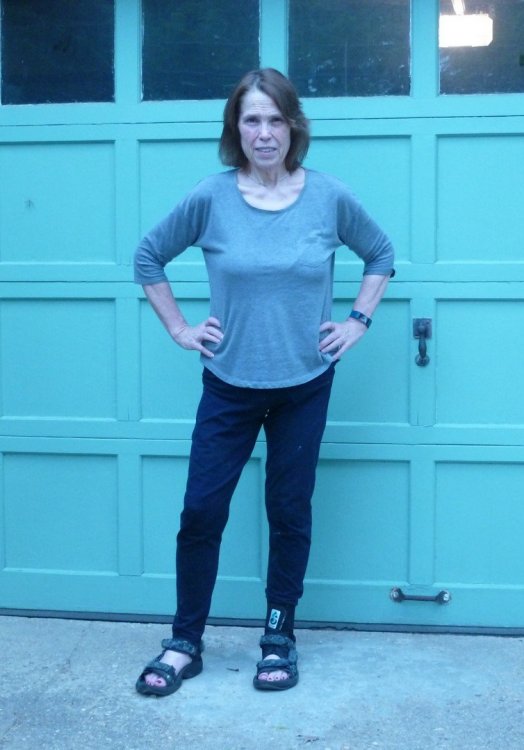
-
no - not normal. Since it's only been 17 days, it was likely brewing before you had surgery.
-
35 lbs in two months is a lot more than I lost - and I had a virgin bypass and weighed almost 400 lbs. And yes - revision patients typically lose more slowly.
-
yes - normal. The big drops that many of us see initially are mostly "water weight". After my first month, I was losing about 10 lbs a month, give or take. So that's about 2 lbs a week. On top of that, at your weight, you're what we call a "light weight". You're not going to lose as fast as someone who starts out at over 300 lbs.
-
I take Centrum Sliver - two a day
-
blender if you don't have one. Food scale is very helpful the first few months (I still use mine occasionally, but I used it all the time the first year post-op)
-
I started swallowing pills as soon as I got home from the hospital. The only kind I couldn't handle were those gigantic calcium tablets - I had to wait two or three weeks before I could swallow those.
-
you just have to go to that forum ("plastic and reconstructive surgery"). Actually, I'll just go there and copy and paste the address for you: https://www.bariatricpal.com/forum/393-plastic-reconstructive-surgery/
-
I'll usually order an appetizer or else order a (safe) entree and eat half of it - and have them box up the rest to take home. Honestly, that's what a lot of my never-been-obese women friends do, too, so no one ever says anything. On the rare occasion that someone does, I just say I'm not very hungry. it's pretty obvious the first couple of months after surgery that something is "up", but at three years out (or even one year out), it's just not obvious. People will just assume you're a light eater - if they even notice at all.
-
^^^ as usual, I agree with everything Arabesque said
-
actually, most of us don't dump. About 30% do. It CAN involve vomiting, but it more commonly involves chills, sweating, racing heart, and diarrhea. It can be controlled by limiting your intake of sugar (or for some people, fat) you will definitely feel less restriction from bypass than you do with lapband, from everything I've read. But you'll still feel it. Your "full" cues might be different as well. I feel kind of a pressure in my chest, and that means that if I don't quit eating, I'm going to be sorry. Others' have cues such as sneezing, hiccupping, or a runny nose (although cues like pressure are more common). I rarely vomit any more - but yes - I will if I ignore my "full" signal and keep shoveling in the food. That's what (usually) keeps me from pushing the envelope.
-
not all surgeons require a pre-op diet. Most do, but not all. Personally, I'd be thankful for that if I were you. Some of those diets are TOUGH. I thought it was the worst part of the whole ordeal. I was actually relieved the morning they rolled me into surgery...
-
your surgeon is right - that isn't normal. I'm not sure what to tell you - usually a CT scan will find things that are amiss. Maybe get an opinion from another G/I specialist? Wow - I am so sorry you're going through this.
-
yes - most people can get all their protein requirements met through regular food after the first few months.
-
I'm not sure about that - they do a sleeved stomach when they do duodenal switches (in fact, sleeve used to be phase 1 of the DS back when they usually did the DS in two stages. They usually do it in one stage now). A lot of people lost enough weight after phase 1 that they didn't really need to do phase 2 - so at some point the sleeved stomach (VSG) started to be offered as a standalone surgery. So I would think reflux would be a potential issue with either VSG or DS. Unless there's something about the intestinal part of the DS that helps with reflux? I don't know. Any DS'ers out there know? P.S. I just googled it and found an article by the NIH - yes - looks like the intestinal part of the DS redirects the bile or whatever that can cause reflux with the sleeve - so you are correct!
-
could be. I know iron can cause dark stools.
-
you might want to give these another try. I got sick on B-Complex capsules at first, but after the first couple of tries I was able to keep them down. Although yes -- you could also try crushing these...although it might be something in them rather than the tablet per se that your stomach is reacting to.. (so crushing may or may not help)
-
you don't have to - and shouldn't - avoid eating for life. You won't be eating all that much the first few months after surgery (and can't, really...), and you'll have some food restrictions those first few months (a lot of programs encourage low-carb diets, but not all do), but once you're a ways out, you'll be eating pretty normally -just less than you did before surgery. I used to eat 3000+ calories a day. Now I eat somewhere in the 1500-2000 range, depending on how active I am (and that'll be different for everyone depending on a lot of factors). When I go out to eat, I'll either order an appetizer and just have that, or I'll order an entree and take half of it home. Really no different than what my never-been-obese female friends do (I'm female, btw - men can usually handle more calories). I've always eaten mostly healthy foods even when I was morbidly obese, so from that angle, things haven't changed much - but if you're more of a junk food person, then that part will need to change. Although an occasional junky treat is OK once you're a ways out, you have to be more mindful of nutrition since your stomach won't be able to hold all that much food anymore - but other than that...
-
most of us lose our sense of hunger after surgery, but for the vast majority, it comes back sometime during the first year. Mine came roaring back at five months out - and believe me, things got a lot more challenging then. It was so easy to lose weight those first five months when I was never hungry and didn't give a flip about food. enjoy it while it lasts - and take full advantage of it. Yes - it's very common - and almost always temporary. It'll never be easier in your life to lose weight, so milk it for all it's worth! P.S. I should add that you do need to make sure you're eating enough to meet your nutritional needs -