




Start here
Where are you in your journey?
Choose the path that fits today. We’ll take you to the most useful discussions.
- GLP-1 medication Zepbound, Wegovy, access, side effects, progress, and support.
- Before surgery Compare procedures, plan ahead, and get honest pre-op answers.
- Post-op Recovery, food stages, symptoms, and support.
- Long-term Regain, labs, habits, and life after the honeymoon.
- Revision Explore revision options, complications, and next steps.

catwoman7
Gastric Bypass Patients
-
Joined
-
Last visited
Everything posted by catwoman7
-
yea I went through a lot of that the first year. Eventually you get to the point, though, that either everyone has already seen you and your loss, or they never knew you when you were obese. So the further out you go, the less you have to deal with those awkward interactions. I can't even remember the last time it came up for me. Thank God.
-
I also ate refried beans and ricotta back a lot. Also, I remember eating hummus, too. And Greek yogurt.
-
yes - there are fewer complications with the sleeve, but on the other hand, there really aren't many complications with the bypass, either. There's the risk of dumping, but that only affects about 30% of bypassers, and it can be controlled by not eating a bunch of sugar or fat at one sitting (which we shouldn't be doing anyway). Strictures are another one of the most common complications, affecting about 5% of us (if you can call 5% "common", but that does give you an idea of how common complications actually are (i.e, not that common)). That one is an easy fix. And of course you can deal with nutrient deficiences if you slack off on your vitamin supplements. But besides those, complications just aren't that common.
-
I had one of my consultations with Dr. Shifrin. He's very well-known, that's probably why his prices are a little higher. Although Chicago prices in general are going to run high. I had the full lower body lift and none of my three consults would do more than that in one surgery. There are a lot of surgeons who don't like having patients under anesthesia for more than six hours, and you can't really do both a lower body lift and something else in that amount of time (I figured a tummy tuck wouldn't take as long as a lower body lift, since with the latter they do front and back, but i think my LBL was also about four hours). I had my breast and arm lift in a second surgery, and then about 18 months ago (long after my other surgeries) I had a face and neck lift by a different surgeon (one who specializes in facial plastic surgery) P.S. I also didn't like the fact that Dr. Shifrin did his surgeries in his office suite - or one other place in the area (can't remember where it was - somewhere in the Loop, though). He said I could stay at the hotel across the street (I was an out-of-town patient), but I really wanted to be monitored that first night, *just in case* something happened. That was the deal breaker for me.
-
it may be hard to find a surgeon who'll be willing to place a lapband. That surgery has largely been replaced by the sleeve as the non-RNY option, because so many people had complications with the lapband. A lot of people had to have their lapbands removed. P.S. you might want to try posting on the Lap band forum here on this site. They're the only members of Bariatric Pal who probably have a lap band these days. I almost never see posts from lap banders on the major forums anymore. Here's the link to the lap band forum: https://www.bariatricpal.com/forum/4-lap-band-surgery-forums/
-
yes I've been thinking about people who go down there for bariatric surgery, too, and yes - some of those border towns can be dangerous, but they believe the cartel mistook them for Haitian drug smugglers. If you're in a car with a driver from the bariatric center - and esp if he or she is from the area, you're probably safer. Plus I don't really hear about tourists getting murdered there - it seems to be mostly tourists getting robbed (that is, when it happens at all). I think a lot of the more violent crimes are between competing drug smugglers and cartels. Although yes - after hearing that story, I was a little freaked out, too. P.S. I know you're not a tourist, but you're an American - so people will probably assume you're a tourist. P.P.S. the state they went to is also listed on the US State Dept's Web site with a DO NOT TRAVEL warning. Tijuana is in a different state. It definitely has a dicey feel to it, and there are only certain areas of Tijuana that are safe for tourists, but also, you'll be with someone from the bariatric center, so they'll know what areas to avoid. I do understand your concern, though. I think i'd be feeling the exact same way after hearing that story.
-
I don't think the inability to exercise is going to significantly affect your ability to lose weight. Yes, it does help - but weight loss is about 90% due to eating less and 10% exercise. I know of several people who rarely if ever exercised and they still lost a lot of weight with the surgery. secondly, I've had three surgeries since I turned 60 (although my RNY I had in my late 50s), and I was fine - but then, I don't have any major health issues, so that might make a difference. Your doctors can probably tell you if it's safe to have additional surgeries or not. as far as losing weight and keeping it off on your own, only about 5% of people are able to do that. Unfortunately, I was not one of the 5%. I lost and then gained back all the weight I'd lost about a billion times - again and again and again - decade after decade after decade. The only thing that worked for me was having weight loss surgery. I can't speak for you, of course, but that's been my experience.
-
yep. It's the infamous "three week stall". Most of us experience it. Just stick to your food plan and stay off the scale for a few days. It'll eventually break and you'll be on your way again. Stalls usually last 1-3 weeks.
-
I hadn't heard of this, so I just googled it. It doesn't sound like this is very common (although you're right - it CAN happen) - and I read that the surgery can also *improve* certain pancreatic conditions. Being obese, too, can be a factor in certain pancreatic conditions, like diabetes - or increase your risk of pancreatic cancer. So sounds like there's a chance you could deal with some sort of pancreatic condition either way (i.e, having surgery OR not having surgery and staying obese). So...(looking for an emoji that indicates indecision - can't find one!)
-
my current favorite is Robert Irvine's Fit Crunch
-
I had my surgery in June 2015, and people didn't start noticing until October 2015, so four months. But I weighed well over 300 lbs, so I'm not that surprised that it took that long. *I* could tell, but I'm sure I still looked really heavy to others....it was probably hard to see nuances until I'd dropped a lot of weight (well, it was hard for ME to see nuances sometimes as well). I just checked my spreadsheet - at four months out, I was down 52 lbs. So I had to lose over 50 lbs for people to start noticing. Arabesque is right - take photos of yourself - or have someone else take them - every month. I had my husband take them every month on my surgery date until I hit maintenance. Sometimes you can't tell from one month to the next that you're looking thinner, but if you compare current photos to the ones from three or four months prior - yep - you can definitely see the difference. just to add that I thought that was a pretty sh*tty thing that your dad said.
-
I don't personally do this because I don't like sweet coffee, but I know a lot of people put protein powder in their coffee as a creamer. That way they get a good shot of protein, too!
-
that's totally your call. A lot of people seem to end up in the "overweight" or "class I obese" range (with "class I obese" being...not very obese), but about 10-15% of us make it down to the normal range. I can tell you that the last 20-30 lbs are a bear to lose, but people do it. Also, keep in mind that even though we lose bone and muscle along with fat, we still end up with more bone and muscle than someone who's never been obese. So you're likely to look 10 or more lbs lighter than someone of the exact same weight who's never been obese. the other thing to keep in mind - I think you and I are around the same age. I lot of physicians nowadays like to see their older adult patients in the 23-27 BMI range, since that little extra cushion is good to have if you're sick or injured. People in that range tend to recover more quickly. I'm currently about 8 lbs overweight, after being in the normal range for a few years (the gain is mostly thanks to COVID). It plays with my head and I want to lose it, but my physician is totally happy with my weight. I do admit I look better than I did than when I was at my lowest weight two years after surgery (I thought I looked great, but looking at pictures now, no - I looked pretty awful), but yes - that "normal BMI" thing is really important to a lot of people. I think I'd be happiest if I was there again, but at the higher end so I don't look so gaunt. I'm trying - although admittedly, I think it's mostly a "mental thing" for me.
-
stall. Just stick to your program and stay off the scale for a few days. It'll soon break and you'll be on your way again.
-
liveaboard15 is correct. Most of us experience the "three week stall". Also, those weight fluctuations are just fluctuating water levels. With as little as you're probably eating, there's no way that's a true gain. It's just fluid levels.
-
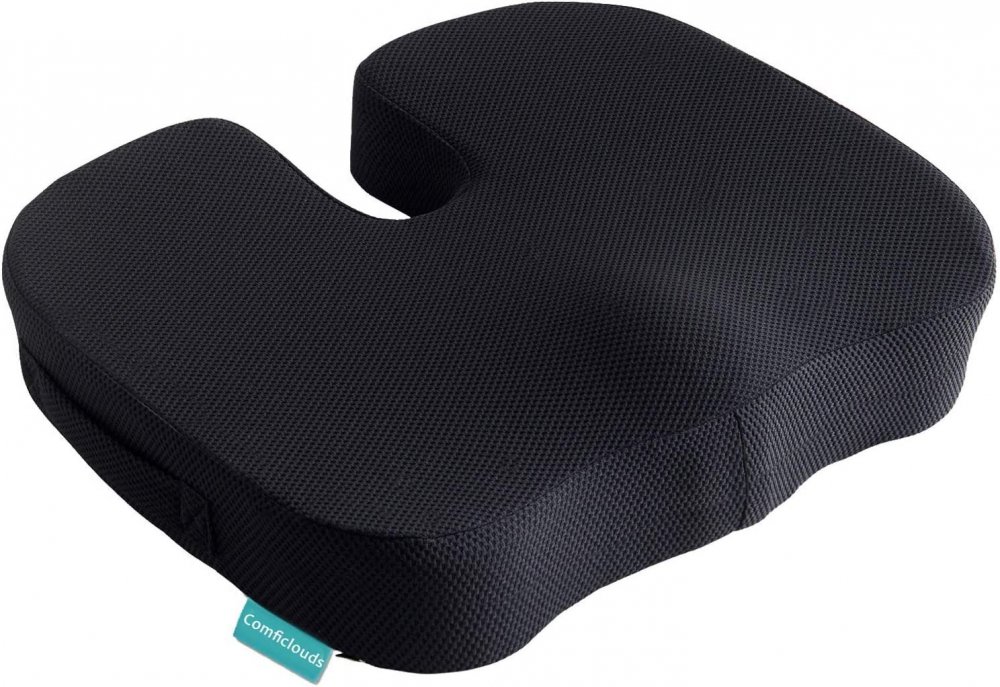
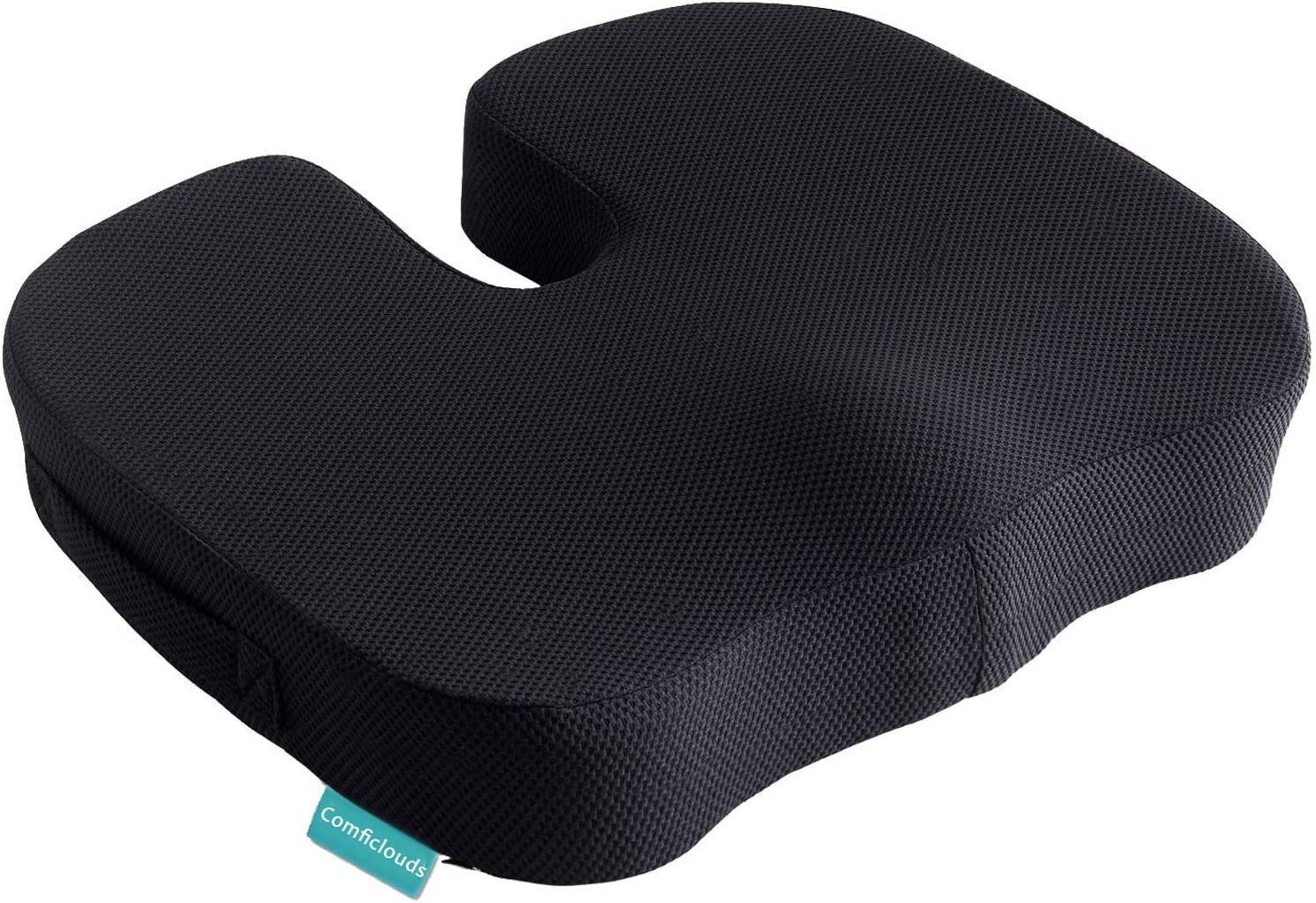
I bought two coccyx pillows when this started happening to me - one for my office chair, and one for my car. I still use them almost eight years later (or at least in the car. I'm now retired). In general my butt doesn't hurt as much as it did (maybe I just figured out how to sit to avoid the pain?), but long-ish trips in the car will still do it to me, so I still use the pillow. Coccyx pillows look like this. The "U" part goes in the back.
-
you'll see your biggest loses during the first month - or for some, the first two months. Then it slows down quite a lot. I don't know your starting BMI, but i started at well over 300 lbs. I had a decent drop the first month, but then months 2-6 I lost 8-12 lbs a month. Months 7-12, I lost about 5 lbs a month, give or take. After the year mark, there were some months I only lost 2. BUT...as long as I stuck with the program, i kept losing. if you started off at a lower BMI than I did, then it's likely your monthly losses might be lower, too, because starting BMI is one of the factors that affects your rate of weight loss. But just stick with it - in the end, it's how compliant you are with your program that determines how successful you ultimately are, not how fast or slow the weight came off. If you stick to your program, the weight WILL come off.
-
oh - forgot to mention: for those who do end up getting GERD, often it can be controlled medically (i.e., by PPI's or another type of antacid). It seems to be people with the more severe cases who opt for revision. I honestly don't know what percentage of people get it severely enough that revision is recommended.
-
do whatever you can to get fluids. It may take a few days to be able to get up to the recommended amount, but keep trying. Dehydration can land you back in the hospital if you're not careful. re; not hungry - that's extremely common and one of the advantages of the surgery. Hunger does return for most people sometime during the first year - and when it does, things get a lot more challenging. So take FULL advantage of that. Definitely eat what your clinic recommends because your body needs the nutrients, but beyond that, take advantage of not being hungry. It'll never be easier in your life than it will right now to lose weight. It was a little weird for me to get used to at first, but never being hungry and not giving a flip about food made it super easy to stick to the eating plan (my hunger came back at about five months out)
-
very true - although the structure of the sleeve itself can also cause GERD in some people. I've read about this and can't remember exactly what the deal is, but it has something to do with the size and shape of the new stomach causing high pressure in the stomach, which can cause the acid to back up into the esophagus. It's not the majority of people - I seem to remember reading that about 30% will have reflux issues. But that means 70% won't. Some people are willing to take that risk. I wasn't because I already had GERD even before I had surgery.
-
most insurance companies will cover it, but it's usually not part of their "core" coverage. In order to offer it, employers need to buy a rider for it. So although her company uses Cigna, they probably decided not to have their policy include the optional bariatric surgery rider.
-
oh good - then the rates have improved even since I had my surgery almost eight years ago!
-
yes - plastic surgery will get rid of it. I hated they way my neck looked, too, so I had a face/neck lift. The turkey neck is no longer there!
-
you're actually correct! I was a research librarian for several years at a major university. Scholarly articles like that are generally written by PhD-level researchers and their target audience is other researchers. Before the internet age, that's how researchers who were working in the same field knew what their fellow researchers were doing on other campuses or in other agencies. It's basically how they kept up with what was going on in their field. So even though students read these articles, they aren't the intended or primary audience for them - it's basically the way researchers communicate with each other so they all know what's going on in the field.
-
I wouldn't have been allowed to have that. The only soups I could have were plain broth. But your plan might be different. Mine was one of the stricter ones (compared to those of some people here on BP...)

.png)