Start here
Where are you in your journey?
Choose the path that fits today. We’ll take you to the most useful discussions.
- GLP-1 medication Zepbound, Wegovy, access, side effects, progress, and support.
- Before surgery Compare procedures, plan ahead, and get honest pre-op answers.
- Post-op Recovery, food stages, symptoms, and support.
- Long-term Regain, labs, habits, and life after the honeymoon.
- Revision Explore revision options, complications, and next steps.

catwoman7
Gastric Bypass Patients
-
Joined
-
Last visited
Everything posted by catwoman7
-
I worked with the pre-op classes in my clinic for about three years (until COVID hit and they went online). Yes - tons of people have their surgeries in the 300s. It was unusual to see someone who appeared to be 400+ (I saw maybe a handful the whole time I did it - and I don't think they were *much* over 400..or didn't appear to be. Certainly no one approaching anywhere near the size of the folks on "My 600 lb Life"). I'm guessing my clinic had a cut off, but I'm not sure what it was. I was over a 60 BMI at my heaviest, so I think my surgeon had a slightly higher ceiling than yours. Whatever they're comfortable with, I guess. But yes - I imagine at some point they refer patients to someone like Dr. Now, who specializes in high risk bariatric surgery.
-
a lot of surgeons recommend you wait a year after surgery for the reasons Arabesque mentioned.
-
pain should be gone soon. If they sent you home with pain meds, I'd keep taking them to keep on top of the pain. I'd give it another day or two...
-
I would say that's a "soft food", not a puree. So you may have to wait a couple more weeks.
-
sounds like you have some good ideas there...
-
hormone issues are really common the first few weeks after surgery. I was post-menopausal when I had my surgery, so I have no experience with this myself, but a lot of women report having screwed up menstrual cycles when they're early out (and moodiness, too). It'll eventually stabilize.
-
with the lack of hunger thing - take FULL advantage of that ! Your hunger will eventually come back (mine came back at five months out), and things got A LOT harder after that. It's so much easier to stick to the plan and lose weight quickly when you're never hungry and don't give a flip about food! So I personally would not cave and start eating fast food. Just eat according to your plan. it sounds like you're craving the fast food for emotional reasons - so I agree with others - find yourself a therapist who deals with bariatric patients or other eating disorders. If your clinic doesn't have one on staff, ask for a referral. the depression thing is common for the first few weeks after surgery because your hormones go haywire. Just hang in there...they'll settle back down again...
-
I was allowed to take any pill the size of a pencil eraser or smaller - which for me was all but two pills (the giant calcium tablets - and one other that I cant' remember). So I got chewable calcium - and the PA at my clinic said I could hold off for a couple of weeks on the other one. Ta da! I never had to crush pills. So maybe ask your clinic?
-
yea - definitely don't try raw vegetables at this juncture. Maybe when you're around six months out. Even at seven years out, raw veggies sometimes still irritate my stomach.
-
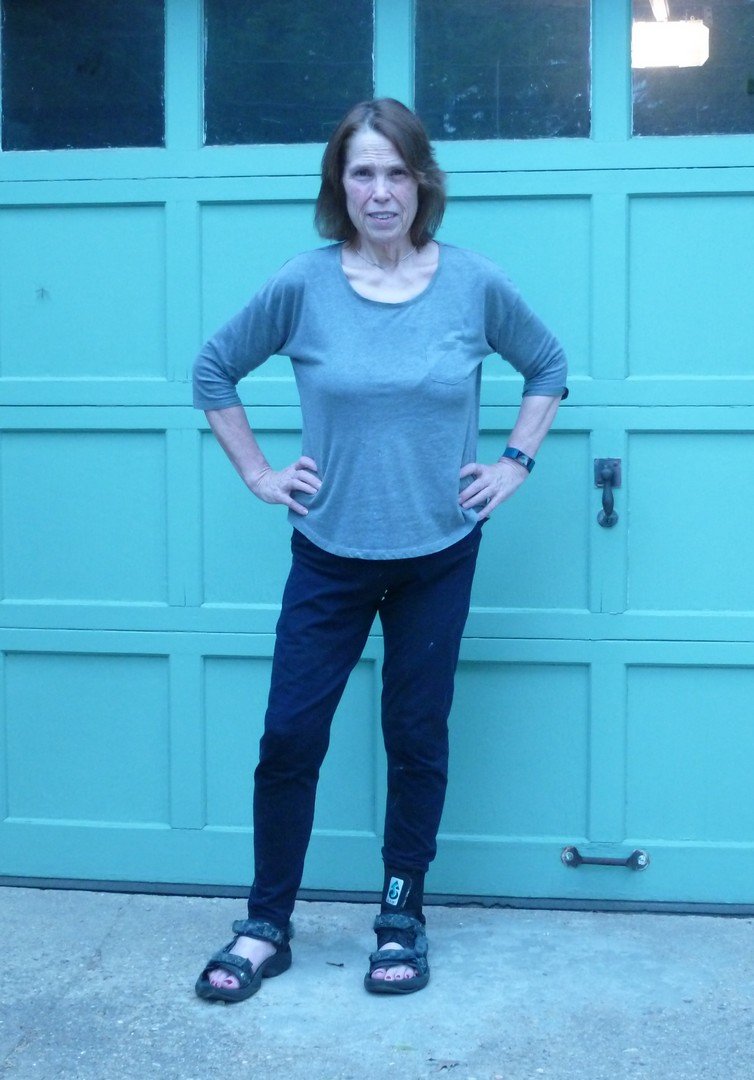
I lost over 200 lbs, so I had a ton of saggy skin. Things like Spanx helped (at least appearance-wise), but I eventually had it surgically removed. It was very easy to hide under clothes, so no one knew it was there but me (well, and my husband) - but I didn't like looking at it. Anyway, this is me BEFORE I had the skin removed. My thighs were never that bad, but I had moderate batwing arms - and my abdomen looked HORRIBLE. But it was easy enough to hide in slightly oversized, long tops with 3/4 length (or longer) sleeves. Anyway, again, this was taken before I had plastic surgery, so as you can see, the excess skin isn't noticeable (but trust me...it was there!!)

-
I usually don't take mine with food - and I just take them with a very small amount of water (probably like two tablespoons of water), so it really doesn't count as "drinking" (so if I happen to take them 10 or 15 minutes after I eat, which I often do, it doesn't really matter). Or you could take them a few minutes *before* you eat if you prefer taking pills with a lot more water than that (and if you need to take them as close as possible to eating food if you're one who gets nausea from vitamins - which I know some people do). Or another option is to get all your vitamins in chewable or liquid form.
-
don't do anything that causes pain. I have some of those issues as well because of a 16-year-old hip injury that never fully healed - plus mild arthritis in my knees. I CAN do strength training (within reason - there are some exercises I can't do because they stress my hip too much, so I don't do them), but it sounds like you can't, so find something else (or try resistance bands like GradyCat suggested. Actually, I have a set at home and mostly work with those now instead of the machines). Walking works for a lot of people (unfortunately, with my hip issue, I can't walk far enough or quickly enough to provide much cardio benefit, but I do what I can because it's good for stress relief...) I do mostly water fitness classes and bicycling, because those don't bother my hip and I actually like doing them. I can also manage low-impact Zumba so I do that occasionally (but when the instructor is doing something that bothers my hip, I just do something else that doesn't. As long as I keep moving, I'm good). so in summary, just find a couple of things to do that you like doing (or at least don't hate doing), and that doesn't cause you pain.
-
things can go wrong with the sleeve, too. Or with tonsillectomies. Or with wisdom tooth extraction. It's just one of those risks of any surgery... Overall, bypass does come with somewhat more risk since it IS more complicated, but the difference isn't that significant. And it's super low for both surgeries.
-
some people say they've worked for them and others have said they haven't. I think the jury might still be out on these. And like the person above said, sometimes it can take months or even years for deficiencies to start showing up. I never tried them because I figured I'd be one of the people they didn't work for. Plus some people's surgeons and dietitians are telling them not to use them since it's not clear that they work. They haven't been around long enough for much long-term research. I've considered getting some for when I'm traveling overseas, though, so I don't have to lug two or three weeks' worth of vitamins with me, but for regular use, I stick to regular vitamins.
-
I just added some more stuff to my message - (I accidentally saved it before I was done saying what I wanted to say!!) - so go back and check out the updates.
-
the closer you get to a normal BMI, the slower it goes. Those last 20 lbs were a BEAR for me to get off. Took forever. We're talking like 2 lbs a month the last three or four months. But I hung in there and finally made it. The reason being, your calorie requirements at that weight are MUCH lower than they were when you started. It takes about 1600 calories for me to maintain my current weight. I would have lost weight like CRAZY if I ate 1600 calories when I weighed over 300 lbs. For me to lose 2 lbs a week (which I could have done NO PROBLEM when I weighed 300 + lbs), I would have to eat 7000 fewer calories that week (well, I would have when I weighed 300+ lbs, too). That's 1000 fewer calories a day. When I was scarfing up 3500 kcal/day, that means I would have had to cut back to 2500 kcal/day. Now I would have to cut back to 600 per day. Ah...no. I could do that the first couple months out of surgery, but 600 calories a day at seven years out? No way. Plus it wouldn't have even been healthy. So I basically lose a couple lbs a month when I'm trying to lose weight. 8-10 oz portions - would depend on what it is. Greek yogurt, yes. Steak - no. Stretching your stomach - probably not. You'd have to really overeat, day after day, every day, to do that. you are hungry because physical hunger does come back for the vast majority of us sometime during the first year. And that's when things get a lot harder. I've never counted fats. And I wasn't on an ultra-low carb plan (mine was balanced), but the first few months, I rarely ate over 80 carbs a day since I had to get in so much protein. There wasn't room for more than about 80 carbs. Now i probably get double that - but I limit the "bad" ones. Mine mostly come from whole grains, fruits, and vegetables. exercise isn't that effective in helping you lose a bunch of weight unless you're talking swimming mega laps or running marathons. But it's great for your overall health, and you should do it regularly if you can. It CAN help you maintain once you get to goal, though.
-
you're not likely to notice the restriction until you move to solid foods. Once you eat something like a chicken breast, you'll notice it! (I still do at seven years out) however, do keep in mind that your "full" cues may be different. I don't feel "full" the same way I used to. Instead, I have this uncomfortable feeling in my chest - like a pressure. I know when I start feeling that, I'd better stop eating or I'm going to be sorry. Other people have even weirder cues, like sneezing or a runny nose. So it can take awhile to figure yours out. Although again, it may be too early for you to even feel those. It will come..
-
they scheduled me way out but when I said I was having surgery on such-and-such a date, they put me on a cancellation list and I got in a lot earlier (before my potential surgery date) -I think given the situation, they put me at the top of the cancellation list (this was for the sleep study - but still, the same would probably apply to your situation...)
-
I agree with the people above - there's really not that much difference. Post-op diets are the same. As far as vitamin regimens go, some clinics have the two groups of patients on the exact same vitamin regimen (and some clinics have the sleeve patients on fewer vitamins - but still, everyone is on vitamins). Recovery time is about the same. I also went with bypass because of reflux. I've been very happy with my bypass and would choose it again if I had to make the decision today (had mine almost seven years ago)
-
almost all of us have our first stall sometime during the first 4-6 weeks after surgery. It's USUALLY the third week, but not always. Mine was weeks 2 & 3. Scale didn't budge. Just stick to your program and stay off the scale. Maybe just weigh yourself once a week until the stall breaks And as long as you stick to your program, it WILL break, and you'll be on your way again. oh - just wanted to add that I agree with one of the above people who said that this might not even be a stall if it's only been three days. But if it goes on longer, then yes, it probably is - and it's not uncommon at all!
-
we were also told to shoot for 60 grams of protein and 64 oz of fluid. I was able to meet that right away, but I know it takes some people awhile to get up to that level. If you can only meet the requirements of one or the other (although definitely try for both as your body needs both to heal!), the fluids are more important. You can end up back in the hospital pretty quickly if you're dehydrated.
-
also - there's a good blog that's been used by the bariatric community for several years. The woman who does it had her surgery several years ago and she loves cooking - she has lots of recipes for all different stages. (she's quite well known - she was on the board of the Obesity Action Coalition (may still be for all I know...). Anyway, it's just another good place to check for recipes) https://theworldaccordingtoeggface.blogspot.com/
-
Bypass patients have to take B12 via either sublingual tablet or injection (although the vast majority go with the sublingual tablet) because we don't have enough intrinsic factor to absorb it in any other form. I don't think sleevers have that issue - I think you can take regular tablets (if you even need B12 in the first place - maybe so (I'm not a sleever, so I'm not sure about this)) it could be these people are thinking of giving you different doses (the twice a year one might be a much higher dose), but that's just a guess. And they should be going by your lab work. I've had to cut back - and then increase - my B12 supplementation a couple of times based on my labs (I'm several years out, though)
-
^^^^ I agree with lizonaplane. People have been known to come out of the hospital up to 10 lbs heavier than when they went in.
-
you're right - Keto isn't the best idea for RNY people. We have a high protein requirement (well, as do sleevers), and many can't handle large amounts of fat. Plus it isn't sustainable for a lot of folks. not sure if you were sort of responding to my comment above yours, but I meant I could handle MCT oil or butter in my coffee - NOT a complete Keto diet. For one thing, my protein requirements are even higher than most WLS patients' - 100+ grams a day. It'd be hard to do that - plus Keto - while staying within my calorie range. Plus my pouch doesn't like fat-laden meals.