Start here
Where are you in your journey?
Choose the path that fits today. We’ll take you to the most useful discussions.
- GLP-1 medication Zepbound, Wegovy, access, side effects, progress, and support.
- Before surgery Compare procedures, plan ahead, and get honest pre-op answers.
- Post-op Recovery, food stages, symptoms, and support.
- Long-term Regain, labs, habits, and life after the honeymoon.
- Revision Explore revision options, complications, and next steps.

catwoman7
Gastric Bypass Patients
-
Joined
-
Last visited
Everything posted by catwoman7
-
you've lost more than I did at that point, and I started out much heavier than you. there are many factors that determine your rate of weight loss, most of which you have little to no control over - age, gender, starting BMI, genetics, metabolic rate, how muscular you are, if and how much weight you lost prior to surgery, etc. The only two things you have a lot of control over are how closely you stick to your plan and how active you are. If you do well with those, you WILL lose the weight, whether fast or slow. I was a slow loser throughout my entire journey, and I ended up losing 100% of my excess weight, over 200 lbs. honestly, except for people the size of those on "My 600 lb Life", most of us lose somewhere in the 15-25 lb range the first month after surgery. Since you've lost 20 lbs in six weeks, you were likely in that range at the end of month #1. You'll always find some who lose above or below that range, but they're outliers. Your amount of loss is completely normal (and also, men tend to lose faster than women - hence, your husband...)
-
like others have said, as soon as you can meet your protein requirements through regular food, you can kiss the shakes goodbye. I still have one every day at eight years out, though (although unlike many others, I'm not a protein shake hater, fortunately...). I have higher-than-normal protein requirements because if I average less than 100 g a day, my prealbumin level tanks (although this is not very common). I can do it through food if I really focus on it, but I'd just rather have a shake every day and not have to be constantly thinking about whether or not I'll meet my goal. I know I'll make it if I have a shake every morning.
-
yep - went back and forth for 10 years. But I finally admitted to myself that I couldn't do it alone - I cannot tell you how many times I lost weight, just to gain it all back again. The most I could ever lose (and this was just a handful of times) was 50-60 lbs. But most times it was more like 10-20. I had over 200 lbs to lose. How on earth was I going to pull that off i I couldn't even keep 50 of? I finally realized this was the only thing left to try. And I was afraid of a drastically shortened life if I didn't get the damn weight off. So I finally did it. It wasn't easy - but it worked.
-
I've never been much of a drinker because alcoholism also runs in MY family, so the most I drink now is a glass of wine (and this only once or twice a month). I just know I get "buzzed" much more quickly now -- but I stop after one so I can't really comment on the rest of your experiences. And yes - transfer addiction is real. I unfortunately know of some WLS patients who are now dealing with alcohol addiction. I never feel social pressure to drink, fortunately. Even before WLS, I'd usually just order soft drinks after my one and only drink - and sometimes I wouldn't drink alcohol at all - just soft drinks. Even at bars. I never felt particularly weird about doing that, thankfully...
-
I lost 16 lbs the first *month*, so you're losing it faster than I am, and we started out about the same weight. So many things affect your rate of weight loss, many of which you have no control over. If you stick to your clinic's plan, the weight will come off, whether fast or slow. I was a slow loser from the get-go, and I ended up two years later having lost 235 lbs (which was 100% of my excess weight). I gained about 20 lbs in year 3 (which is very common), but besides that, I've maintained my loss pretty well. Like you, I also lost a bunch of weight before surgery - and that's one of the factors that'll influence who quickly you lose it, at least during the first month or so. Most of the weight people lose the first month is water weight, and since you lost 49 lbs before surgery, that water weight was long gone by the time they rolled you into the operating room (same with me...). So don't worry - the weight WILL come off as long as you stick to your clinic's plan.
-
at my clinic everyone had to have an EKG (when they just hook some electrodes up to your chest and take readings - it's nothing), and then on top of that, everyone over age 50 (which I was) or had had previous heart issues had to do a nuclear stress test as well. They stick you in a machine, take a bunch of readings, then like the person above said, they inject some kind of drug through your IV that makes your heart beat like you've just been out running, and then they stick you back in the machine and do the readings again. They're measuring how your heart reacts under stress, and how long it takes it to recover. The only weird thing is the way that drug makes you feel. It's a bit weird having your heart beat like crazy when you haven't done any actual exercise. But other than that, it's a pretty easy test.
-
I've actually never heard that. I microwave things all the time. Or is this something that only affects people who are early out? At any rate, never heard this one before.
-
most people have their first stall sometime during the first month after surgery, so you're actually a bit late to the party! So yes - early stalls are very common! it's been several years since I had surgery, so someone not as far out can probably answer your question about portion sizes, but as far as stretching your stomach, that doesn't happen - from what I understand, you'd have to overeat day after day after day for that (and i've also heard that the whole stomach-stretching thing is a myth - so I'm not sure which is correct - but suffice it to say, your stomach probably isn't going to stretch). Your stomach capacity is bigger now than it was right after surgery, though, because the swelling has gone down - but it's still pretty small now!
-
yes it is tough - and I agree with everything Arabesque says. It's a struggle just to maintain my weight (eight years out). I try to eat fiber, healthy fats, and plenty of protein every day to try to keep from getting too hungry (all three are filling). I also keep sugar free popsicles, sugar free Jello, and raw vegetables around (and fruit, too - although that has more calories) so that there are "safer" things to eat if I can't control my hunger. But I know it's still a challenge.
-
I agree with the person above. Even at 800 cal/day people need to be under medical supervision (which technically we are the first few months after bariatric surgery). And five months is too long for a stall - you're in maintenance, whether intentional or not. How far are you from a normal BMI? The closer you get, the harder it is to lose weight, so that could be what's going on, too. Are you still tracking/logging your intake?
-
Dra. Laura Carmina Cardenas in Tijuana has done a lot of bariatric patients (she herself is a bariatric patient). Her name comes up a lot for those of us who are looking for plastic surgery in Mexico, and she wouldn't be too far for you since you're in SoCal
-
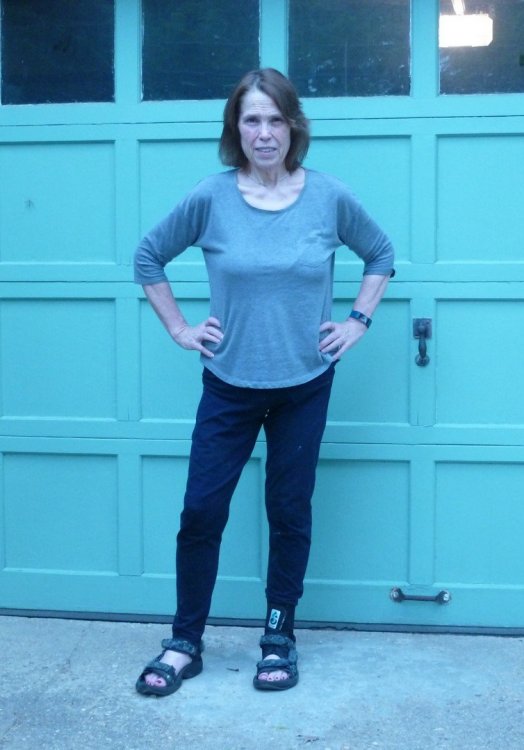
yes - supplements for life. But they become old hat after a while. I honestly don't really think about it at all anymore. I take a small handful when I get up in the morning, and another small handful in the late afternoon. Then iron & vitamin C before I go to bed. no surgery required to fix strictures. They do it via upper endoscopy. They give you "twilight" anesthesia - which is different from general anesthesia. You're awake but unaware and you don't remember anything once you snap out of it. Easy peasy. yes plastic surgery is a pain and it's costly (two (of the three) of my plastic surgeries were much more difficult than my RNY), but I think only a small percentage of people actually have plastic surgery. No one could tell I had excess skin except, obviously, me, my husband, and my doctor, but I eventually had it taken off regardless. But when it was there, it was very easy to hide in clothes. I think microbiome changes and faecal transplanting aren't commonly done at this point - but maybe in the future. They do seem promising. here's a photo of me BEFORE I had my excessive skin removed. See any of it? I can assure you after a 235 lb loss, I had a ton of it...but as you can see, my clothes hide it.
-
I had surgery eight years ago at age 55. No diabetes, though - just obesity. SUPER obesity. Also, borderline sleep apnea that I didn't know about until I did a sleep test for surgery. I lost 235 lbs and gained back about 20 lbs in year 3 post op (a 10-20 lb rebound weight gain after you hit your lowest weight is very common). Maintained ever since, but it's work. On the other hand, before I had surgery, the most I could lose was about 50-60 lbs, and every ounce of it would come back. Happened dozens of times. So yes - weight loss is sustainable after bariatric surgery as long as you monitor yourself. I had strictures at two months out and four months out. Very easy fix. The PA at our bariatric clinic told me it was the most common complication, and that they happen to 5% of gastric bypass patients (and if they're going to happen, it'll be during the first three months post-surgery - they're very rare after that). I personally wouldn't call something that happens to 5% of people "common", but that does give you an idea of how common complications are. Basically - they're not very common. about 30% of bypass patients have dumping syndrome. I've never had it and most of the people I know haven't had it, but some of us do. It's caused by eating too much sugar at one sitting (or for some, too much fat at one sitting seems to set it off). It's because food passes through to your small intestine much more quickly once you've had bypass, and your intestines go into overdrive trying to deal with the sugar (or...fat). It can be prevented by limiting the amount of sugar you eat at one sitting (which we should be doing regardless, even us non-dumpers). good luck in your decision. Honestly, I should have done it years ago. My only regret is that I waited that long to have it done. My life has changed dramatically for the good. I'd go back and have the surgery done every year if I had to - it's been terrific!
-
about three years out (our clinic just required one year, though). But then, I don't drink a lot - maybe a glass or two of wine a month.
-
I'm not sure how much you (or whomever) regained, but it's very common for us to gain 10-20 lbs in year 3. It's a rebound - and most clinics wouldn't even count that as a true regain - it's more your body settling in to its new set point. Above and beyond that, yes, it would be a regain. Some people lose it, but it's a challenge (and it would be regardless - the closer you are to a normal BMI, the harder it is to lose weight - and that's everyone - not just people who've had bariatric surgery). I'm on a forum with several long-time bariatric patients (some of us many years out), and most of us have struggled with regain - and losing it again. It can be done, but it's a challenge.
-
my clinic would not have allowed that. We were on all liquid, very low cal diets.
-
we were allowed to have them on the pre-op diet (and by this I mean the two-week liquid diet my clinic required), and I don't think they made any changes to that except for the last 24 hours before surgery, when we had to clear out our system in preparation for surgery. Check with your clinic. Fifteen calories is nothing - but if they want zero calorie fluids to do the final prep for surgery, then yea - in that case I would probably avoid them.
-
I'd agree with Arabesque that it's probably too much activity too soon after surgery. Your body's still healing, and you're not taking in enough calories to support strenuous activity yet. And low blood pressure/low blood sugar are issues with some of us the first few weeks. It was probably a combination of things. about alcohol (and I know you said you weren't drinking. but just because the other commenters addressed it...), we were told to wait a year. I waited more like three years. The first time I drank it slowly and in a "safe" place since I didn't know what kind of effect it would have on me. I remember getting really buzzed really quickly on just one glass of wine - although the feeling left more quickly than it would have pre-surgery. I do drink now (eight years out), but it mostly consists of a glass or two of wine (and usually only when I'm out with friends) about once a month. But then alcoholism runs on one side of my family (two uncles), and with my addictive personality and my re-arranged digestive system, plus the fact transfer addiction isn't uncommon among bariatric patients, I never wanted to risk it.
-
we were offered them, but I didn't take one. Here, the card said you could order off the kids' menu since you'd had bariatric surgery. The thing is, most items on kids' menus are either awful or not bariatric-friendly (e.g., chicken nuggets, hotdogs, PB&J sandwiches). No thanks. When we went out (at least when I was fairly early out - I can eat most things now), I'd just order an appetizer (like shrimp cocktail) or a bowl of soup. Also, keep in mind that although some restaurants will honor the cards, others won't - and they're under no obligation to do so.
-
I lost my hunger and didn't give a flying flip about food for five months. I loved it. Food no longer ruled my life!! I wished it would last forever - I found it so liberating - but unfortunately, it did not (last forever). Five months later, back it came, and everything became a lot harder. But no - I didn't grieve at all. I was surprised by that - but I honestly lost interest in food. It was a wonderful feeling. Only a small minority of us lose their hunger forever, but I unfortunately was not one of them. I suppose different people have different experiences, but that was mine. I had bypass because I did have heartburn issues before surgery and didn't want to risk it getting worse. I love my bypass and would make the same choice if I had to choose today. I could never figure out why so many people find it so invasive - cutting out 80% of your stomach and throwing it in the garbage sounds just as invasive to me. Plus RNY is reversible (although it's usually only done if people have severe complications that can't be resolved any other way - which of course is pretty rare)
-
that's pretty common
-
we were allowed to eat baby food, but I just couldn't even fathom it - it sounded so disgusting (odd that we feed our babies that, though!!)
-
It seems like most years I lose about 5 lbs in the summer and then gain it back in the winter. Rinse and repeat. I'm sure it has to do with just being out and about more. Plus I tend to eat lighter foods in the summer, too.
-
and I agree that a 20 lb loss in 12 days is phenomenal. I lost less than that in the entire first MONTH. And I started out well over 300 lbs!
-
very normal. It's the infamous three-week stall visiting you a little early. The vast majority of us experience that. It usually lasts 1-3 weeks. It's usually the third week (hence the name), but not always. Mine was weeks 2 and 3. Once it broke I dropped like six lbs practically overnight. the standard advice is follow your plan and stay off the scale. It WILL break and you'll be on your way again.