Start here
Where are you in your journey?
Choose the path that fits today. We’ll take you to the most useful discussions.
- GLP-1 medication Zepbound, Wegovy, access, side effects, progress, and support.
- Before surgery Compare procedures, plan ahead, and get honest pre-op answers.
- Post-op Recovery, food stages, symptoms, and support.
- Long-term Regain, labs, habits, and life after the honeymoon.
- Revision Explore revision options, complications, and next steps.

CowgirlJane
Gastric Sleeve Patients
-
Joined
-
Last visited
Everything posted by CowgirlJane
-
Weight loss is definately slower when you are smaller, but I get that you are frustrated with these results. So, do you work with a nutritionalist? I think that is super helpful. People have already suggested that you journal EVERYTHING. I do think that is a wise thing to try. I find that sadly, I can't eat much to keep losing. Even a few hundred extra calories here or there stops losses. If I undereat I feel horrid and too low energy, so it is a balancing act. I have had good steady losses, but this last month things kinda stalled. I refocused on Protein and Water, and sure enough, 5 pounds dropped. I would be happy to share more specifics/feedback if you share more details on your food and exercise. That is not to say that everybody is the same, but i have definately found some things that work better then others and can maybe spot something in your routine. So, I don't mean to sound discouraging, but you are right in the zone when your fastest losses should be happening so you are smart to try to figure this out right now. My personal experience was that I had almost no hunger months 2-6 . Starting just after my 6 month surgery anniversary, I started noticing hunger again. I am still losing, but it is definately getting a bit more challenging a bit slower.
-
I think that both surgeries are reasonable options. Posting here, you are obviously going to get a pro sleeve bias. I am very happy with my choice, but I can understand why another person would chose the rny. I think that 3 critical things need to go into the decision: 1. Relative risk of complications (revisions are always higher risk, but ask about the difference between sleeve and rny) 2. Outcomes based on the data available. Factor in some risk for lack of long term weight loss/maintanence data for the sleeve. 3. Lifestyle/eating/long term living with either procedure. This in the end was probably the deciding factor for me. I am scared of GERD with the sleeve (so far doing great!) but I had a pouch with the band and ultimately decided I never want THAT AGAIN. I am not trying to sell anybody on the sleeve, but you can read mine and other revision patient posts. After the initial few months, I feel like I eat very normally just small quantities. IT is a huge leap better then the band and I honestly felt like it was being sentenced to h*ll to have to spend the rest of my life with a pouch that restricted food in that way and that caused vomiting.
-
Oh, and leaks can indeed cause an infection. I do think the risks around leaks are something to seriously discuss with your surgeon. Scared the crud out of me, almost enought to make me not proceed. Then I asked how many of my surgeon's revision patients had leaks. At the time, NONE. Well, there are stats, and it is important to know them. It is also good to have a real heart to heart with your specific surgeon over it and what it means to your health and how treatment for it works. Then, once you decide, my advice is to turn that responsibility over to the surgeon and you focus on YOUR part of this whole journey - which is lifestyle changes, food choices, activity levels, changing relationship with food etc.
-
I think you have a basic misconception about the complexity of the surgery and the pain. Yes, it is a major surgery since they remove a goodly portion of an important organ, but it is NOT that complex compared to many surgeries. Yes, you want a specialist but this is not a highly "technical" procedure. Yes, you will have discomfort, but there are plenty of people that go home same day or stay just one night! I am not trying to poo-poo your concerns, just put it in perspective. I didn't have much pain, but my abs were very sore. I slept in a recliner because getting in and out of bed was hard for me the first several days... if i had something to grab to pull me up, I could have probably coped with bed. I have not had knee replacement, but in terms of how long you are "disabled" and need help, no comparison. I was up and walking around within hours of my surgery. I stayed one night, and was home the next morning. They asked that we have someone with us that first day home (mostly sleep apnea post surgery risk due to anesthesia) but I could get up and get my own drinks etc. In fact, they WANT you to walk. If hubby can talk 2 days off, I am thinking that is plenty. My opinion is that people worry way too much about the surgery and immediate post op, when the larger concern is really the long term lifestyle change. I am totally rocking my sleeve and loving it. I have several posts that detail out my story - I was a band to sleeve revision as well. I had the crapband for 10 years, but only had fill in it the first 2-3 of those years and it was always a nightmare. Sleeve is so much better.
-
How frustrating! I hope you are able to get this all resolved so you can move on to a healthier life. FYI, I have lost faster with the sleeve then I did with the band. According to my NUT, I am "doing good" even by virgin sleever standards so I don't believe that revisions always mean slower losses!
-
What I was told by my surgeon is that they believe most leaks happen very early out, and the ones discovered months down the road where probably always there, but undiagnosed (very small leak, masked by the swelling). We have seen people on the forum who discovered a leak a few months post op. The symptoms vary, but bottom line they don't feel well, don't have a normal recovery. I was told that the sutures are healed by 4 weeks, but, my doctor had me do the food progression longer then that - just extra conservative with revisions. I was asked to not do heavy lifting or horseback riding for 6 weeks post op, I am assuming again just to be extra sure. The leak rate for "virgin" sleevers is published to be in the 1-2% range. I am not sure there is a published rate for revisions. My doc guessed it was probably at least twice the risk as a virgin sleever - certainly single digits, but not insignificant. Interesting thing is they do alot of revisions, and at least at that time, they had ZERO leaks on revision patients. Stats are stats, worth asking about your individual surgeons results. Of course, some surgeons take on riskier cases, so I wouldn't rule one out just because he had a leak with a patient. There are several people who had leaks, recovered and went on to do fabulously that post on the forums. It sounds like a freaking miserable experience though. Depending on the nature of the leak and the surgeon's protocol it might mean another surgery, might mean wait and see if it fixes itself. It often means months of various treatments, PIC lines, hospital stays etc. Big deal situation, but, seems like people do recover. It is scary. My logic on this is that without the surgery I had 100% chance of heading down the same fatpath I have been on, with the ever growing health and lifestyle issues that went with it. I decided to toss the dice, pick a great surgeon and pray for the best - my odds of not getting a leak were pretty good so I thought it was worth the gamble. I made peace with my decision once I decided to let the leak issue be my surgeon's responsibility since there wasn't much I could do about it except trust him and follow his protocol as close to perfect as i could.
-
Well, you are pretty low BMI compared to many of us (including me!). My BMI is now 35 and my weight loss has slowed alot compared to when it was in the 40s. I suspect that people who are revised when they have less to lose are going to be quite slow BUT it will help keep you from regaining too. Looking at your stats, you are a success in my book even if it is slow going!
-
I am very interested to hear what the bariatric society has to say, please post the follow up answer here. I think the OP should ask the surgeon - preop time is definately the time to ask all the tough questions. I do want to mention that this site does have a few people who had the old fashion "stomach stapling" from decades past and have revised to the sleeve. I do know that they staple line disruption does happen in some cases. I don't mean to be rude, but it is probably incorrect to take the experience from the first few months and generalize it to years. I know that people who are several years out have to really work since the hunger does start to return. I am 7 months out and am experiencing hunger again. I can imagine a person overeating - it takes diligence to keep old habits and the hunger from driving those bad behaviors. I am not sure I believe what she is saying (meaning, not sure it applies to this particular surgery or the actual statistical risk) but I wouldn't blow it off either. Frankly, the early warning signs were there with the lapband even a decade ago, but they were "poo-poo'd" - so I would want to understand this better. I am in no way an expert, but looking at actual research, the main long term risks are acid reflux that gets worse over time (3+ years out it seems to peak again) and possible weight regain (a risk of all weight loss surgeries). I have NEVER heard that staple line issues and related sepsis is a statitisically significant long term risk. In fact, I have never heard of a single case - but that doesn't mean it isn't possible.
-
I have been in a stall, but this week i had a big loss of 4.6# to get me at the 101# lost. I am so thrilled with my success - all without vomiting, getting food stuck or trying to adjust fills. I am absolutely thrilled!!! I need to get updated pictures, but i feel so normal and everybody around me think I look normal. Wearing regular 16 jeans now - no more PLUS sizes for me!!!
-
I hadn't noticed this on videos. If you go to a sleeve post op support group, you will meet a bunch of sleevers. I have never observed what you are mentioning on longer term patients. I do know that reflux is a MAJOR risk over the longer run. 3-6 years out, the incidence increases. I fear it- but i reconcile it by saying that i would rather be under 200# with reflux then OVER 300# with just less reflux.
-
I have had really good losses, good success with the sleeve. I went on a 4 day camping trip over fathers day weekend, was very active and didn't overeat and still had good losses. Since then, I have basically been stalled. No big deal really, stalls are normal, right!?! Truth is that I have not been prone to stalls, I tend to lose at least some every week, so it isn't part of "my normal". Anyway, I started noticing thoughts creeping into my head - like I must surely be regaining and will my smaller clothes still fit kind of thing. I have been amazed at how quickly those negative thoughts have invaded my mind -- the fear of repeating the yoyo loss/regain pattern from my past. The good news is that I went shopping for jeans yesterday and I am down another size. Not only have I kissed the plus section goodbye, I am now fitting into 16s quite readily. 14s can't be that far away! That actually helped me reset my mind a bit and not over-react to going through a stall. I must say though, there must be quite the size inflation going on. Last time i was at this weight, around 10 years ago, I was wearing 18W-20W jeans.
-
It sounds like you are already doing some of the preparation work. The band SUCKS there is no doubt about it, but I think we can all look back and see how we could have done things better - how we contributed to the less then stellar success. I am trying to learn from my mistakes and to learn from people on these forums that are MOST successful. The sleeve does a much better job of reducing appetite/reducing food desire, but, you still need to work at it. This won't be a surprise to a bandster, but seems to be a surprise to some people who are sleeved as their first WLS. Good luck!
-
What film? I am actually very confused by this post as I am not familiar with this terminology. My band was so encrusted in scar tissue that you couldn't actually see it in the "before" pictures. They had to cut away scar tissue. I waited 2.5months before being sleeved, but (thank you Lord!) have had no complications. My only advice is to make sure that your surgeon has done LOTS of band to sleeve revisions, not only are you likely to have fewer complications, but you are also more likely to get your sleeve.
-
I felt that during certain periods early on that my body was not sending the "full message" early enough. I suspect it was lapband caused espophagus dialation. Like you have similiar capacity to other sleevers, but your body doesn't send the "enough" signal as early. According to my NUT, this is the reason they theorize that some revision patients don't lose as well as "virgin sleevers". My solution was to use the itty bitty dishes and silverware. Focus on eating slow. When I would eat my 2-3 oz portion, but didn't feel satiated, I would wait at least 15-20 minutes before deciding I needed more food. Pretty much always, I was actually satiated, it just took time for the brain to catch up. Then, I went through several months of just having very little interest in food - the forgetting to eat type thing. Now, I am having more hunger and just wanting to eat more. I think this is a fairly typical pattern. I stil use a little 4oz dessert dish as my bowl, and a tiny salad plate as my "plate" and even though I am hungrier/wanting more now, it is still pretty small portions!
-
So, I look at it a little differently... what can you do to preserve that feeling of good restriction/low hunger the longest? To me, it is just following the rules. Don't graze. Eat to the point of lack of hunger, not to the point of being full. Seperate liquids from meals by AT LEAST 30 minutes. Eat Proteins first. Avoid "slider" type foods for the most part - dense Protein makes you feel satiated faster and for longer then a cookie does. Eat SLOW! It gives you a chance to realize you are no longer hungery before you have eaten too much.
-
I lost weight slower in month 3 then I did month 4 and 5. I think the difference was I feeling better and could amp up the activity. I think I was also better about listening to myself and eating smaller portions. Don't feel like it is too late!
-
I was thinking about this topic - we all hear the stories of the person who lives on milkshakes or whatever - extreme examples. However, it doesn't take much to stop losing/regain. I think that just returning to grazing/mild overeating will create the same problem over time and the person doing it probably feels like they are not overeating (compared to everyone around them anyway!) Statistically, people have a partial regain after losing their initial weight - that is why the % of EWL stats go down after a few years out. Still a lot better off though.
-
I was cleared at 6 weeks for all activities, but I would not have had the energy to do that 2 months post op. Of course, I started with a high BMI too. In those early months post op, I definately struggled with getting enough Water in.
-
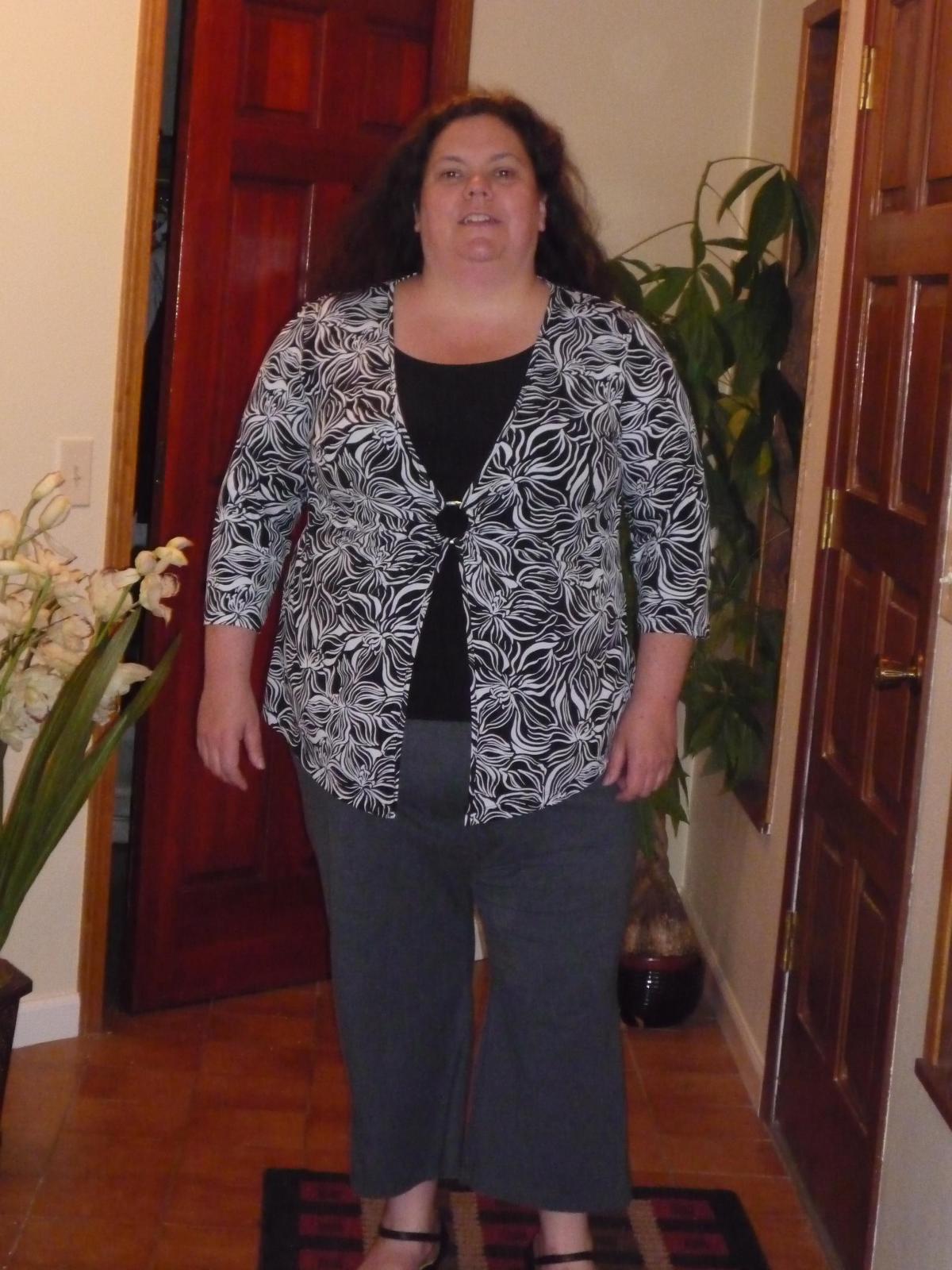
I am attempting to add my before picture and something pretty recent. That is my "riding outfit" in my photo from a few weeks ago. I am not actually as lumpy in the midsection as it looks, that is the mostly the clothes! My inner thighs are horrible, but it is a small thing compared to my overall LOVE of my new body! What i notice the most is my face. You can actually see my features instead of that moon faced look that the really obese get. I feel so much more "normal" now.


-
That sounds like the same progress I made - I think losing 21 in 3 weeks is excellent start. It is very normal to have stalls, I certainly did, at that 2-3 week post op mark.. I have kept up pretty good steady losses, month after month... it really adds up. I think the key is to keep pushing when the weight loss slows down - increase exercise intensity, change up the food etc.
-
i saw a bariatric doc (not the surgeon) who said that she has a patient or two that have not lost very well with the sleeve. The common factor is grazing/snacking all day - basically using food as entertainment or comfort or whatever. Especially for women, you don't need a zillion calories to regain, you don't need to binge or eat big quantities at a sitting.... even just overeating a bit, on a regular basis, or eating junk on a regular basis can cause regain. I went to a support group once and I was a little surprised by the number of people who weren't losing well after the frist 50-80 pounds even though they had quite a bit left to lose, but they were definately dipping into the high calorie/junky slider foods. It can happen to any of us, I am not judging, just saying what I have observed. I am not radical about it, I do have something sweet every once in a long while, I am just keeping it out of my daily routine. If you read the forums you will see that some people are disappointed in their results. I think sometimes it is expectations too. My goal is to get under 160#, but, even if i don't make that, being in the 200 range beats the crap out of the 300# range and I consider it a huge success ALREADY. Not everyone views it that way and are sorely disappointed even after substantial weight loss.
-
I started my pre-op diet 11/28/11 at 308; weighed 300 on the morning of my surgery 12/12/11. I was warned that since i didn't do well with the band, I might be a slower loser, i might have learned to "stuff" my esophogus and have poorer results. Well, all I have to say is if my results are "poor", I don't know what good results would look like!!! Yesterday (Monday) I weighed in at 212#!!! 96 pounds shed since I started that pre-op diet. I can hardly believe it. I went on an annual camping event and one person didn't even recognize me! I feel like myself again. I feel like the person who is capable of doing physical things, enjoying my horses, playing with my dogs, going for hikes all the stuff I used to love. My life is oh so much better. I have a ways to get to my goal, but honestly, I feel like I have already succeeded - my main objective was to improve health and have a better life and that has already happened! I don't have to shop the plus sections anymore! The band was a struggle for me, for probably lots of reasons. I tried to learn from that experience and apply to the sleeve but also to let go of the negatives of the band. I can eat salad, I can eat veggies, actually I can pretty much eat anything with the sleeve, just in small portions. I don't need to eat "slider" foods because I no longer fear vomiting, I am actually satiated after meals. I am not in pain and still hungry, I feel pretty normal. I know that the long term maintenance is the real battle, but I feel like I finally have a tool to help me succeed! I was terrified of this surgery since the revision risks are definately higher then a "virgin" sleeve, but for me, it has been just a marvelous journey so far! I am so glad I took this risk, this chance, to get my life back.
-
Woo hoo!! Congrats - great job!
-
I was really hungry between the two surgeries. I went on a low carb/high protein diet, though I didn't really restrict quantities of certain foods just to keep from gaining a bunch of weight. I am glad I did it separately, but it was really hard being hungry all the time. I didn't realize that my failed band with no fluid in it was helping to reduce hunger until it was gone!
-
In my case, i did it as two separate surgeries, but there are advantages to having a single surgery. I am glad I did what I did as it confirmed my decision to get the sleeve - but - I was so hungry in those months between. My insurance approved it either way, and I was an "revision" either way - whether seperate surgeries or the same.