Start here
Where are you in your journey?
Choose the path that fits today. We’ll take you to the most useful discussions.
- GLP-1 medication Zepbound, Wegovy, access, side effects, progress, and support.
- Before surgery Compare procedures, plan ahead, and get honest pre-op answers.
- Post-op Recovery, food stages, symptoms, and support.
- Long-term Regain, labs, habits, and life after the honeymoon.
- Revision Explore revision options, complications, and next steps.


SpartanMaker
Gastric Bypass Patients
-
Joined
-
Last visited
Everything posted by SpartanMaker
-
Based on that, and a starting weight of 345, that means your lean mass (muscles, organs, bones, etc.), is 172. While you will lose some of that lean mass as well as fat post surgery, I hope you can see why 125 is just too low. If we pick a healthy percentage of body fat of 27%, and use a proprietary calculator I developed that assumes a certain percentage loss of lean mass into account, that would put you somewhere between 185 and 220. I know that's a lot higher than what you were thinking, but I feel that's a better goal for now. Like I said, once you get to 220 (or 200 if you want to split the middle), you can always adjust downward if you're not happy with how you feel.
-
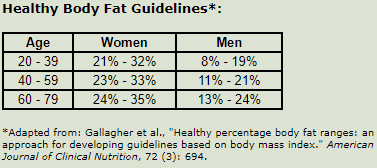
I think it's a great idea. Were I you, I'd focus on cleaning up my diet, e.g. start eliminating the junk and focus on eating more lean protein and vegetables. Even low carb junk is still junk, so it's best to avoid it. I can understand the desire to be lower than your spouse, but I honestly think 125 is way too low for you. Obese people have enlarged hearts and livers, denser, heavier bones, and increased blood supplies to carry blood to all that fat. As a result, you can't use "averages" based on height (such as BMI) as a guide. The best bet would be to use your percentage of body fat and pick a health body fat from something like this: My best guess would be that somewhere between 150 and 175 would probably put you in the right range. If you know you actual percentage of body fat now, I can calculate a better number for you. Remember too that if you get to a higher weight, you can always set a new lower goal if you don't like the way you look and feel at that weight. On the other hand, if you set a goal that's too low, you'll just get frustrated trying to reach an unattainable goal.
-
That's awesome, congrats! I know if can't have been easy to do that when working full time. Oh, and thanks for helping keep our money safe from the slime balls.
-
Glad to hear you're doing better! I hope the scope identifies the cause and you get some relief. If you don't mind my asking, what degree are you working on?
-
GERD is just a more serious version of reflux. The difference is that GERD is recurring, vs. the occasional reflux that everyone gets now and again. Often with GERD, the esophagus is damaged because the lower esophageal sphincter (between the esophagus and the stomach), is damaged. That allows acid to freely flow up into the esophagus. Bottom line, you may have reflux, but typically you'd need a doctor to confirm GERD. To your pain... I agree you should speak to your surgical team. This does not sound normal, but they would know best. I would expect you to have some extra pain around day 4 if you had a nerve block like Exparel, but what you're describing sounds different than typical post-surgical pain.
-
Yay, me too! Lots of folks on the 19th, but I was starting to think I was the only one on the 20th.
-
Me too. 3-4 shakes a day and clear liquids only for 2 weeks.
-
This is what I'm worried about. I'm trying to stay active now to help with recovery, but if I have no energy, it's going to be harder. I start the pre-op diet Tuesday.
-
Recommend talking to your doctor and getting a blood test. There are a number of things that can cause fatigue, but it's impossible to know which issue you're having via the internet.
-
Aside from the damage smoking does to your lungs and heart, it does a number of other harmful things to your body. Some of these are important when talking about bariatric surgery. Fast facts: Most surgeons won't operate on you if you have smoked within 4-6 weeks of the surgery. Some want you be smoke free even longer. Smoking significantly increases your recovery time because it causes your blood vessels to constrict, which reduces blood flow. It also reduces the amount of oxygen your red blood cells can transport. Well oxygenated blood is critical for healing. You will have at least a 30% increased risk of complications over a non-smoker. (Blood clot, anastomotic leak, pneumonia, etc.) Your mortality risk due to surgery is double or even triple that of a non-smoker. Smoking can cause esophageal strictures post-surgery that would need emergency care and possibly another operation. The chances are extremely high that you will develop an ulcer even years later, especially if you take up smoking again post-surgery. A complete perforation due to an ulcer is a life threatening emergency due to sepsis. Your chances of reaching your goal weight are much lower than non-smokers. Much of this is attributed to the fact that smoking reduces your ability to exercise, and numerous studies have shown people that don't exercise post-surgery are significantly more likely lose less weight, or even return to their original weight, than those that exercise regularly. If you are expecting bariatric surgery to reduce your cravings for nicotine, I wouldn't count on it. It's extremely common for smokers to restart post surgery. In fact, there's even an elevated chance that non-smokers start smoking post surgery as they replace one addiction with another. Best of luck. I hope you can kick the habit now and if possible, wait a while before having WLS. The longer you let your body heal after quitting smoking, the lower the risk and better your outcomes will be.
-
More food for thought here... Too small of a cuff can significantly impact the BP reading and make it seem like your BP is much higher than it really is. I've found way too many healthcare professionals don't know this, especially when examining obese people. If they are barely able to get the cuff on you and it sounds like it's going to come off when in use, those are signs it's too small. https://www.abstractsonline.com/pp8/?_ga=2.43661667.795188704.1646150369-78844285.1609356599#!/10553/presentation/491
-
For most people, it tends to go away after 3-4 days, once your body converts from burning glucose to burning ketones.
-
Could be. "Keto Flu" is pretty common when people start eliminating carbs.
-
Check with your team. They should allow you to take tylenol. It's NSAIDS they don't want you taking. Can't help with the rest, I went low carb and quit caffeine a while ago.
-
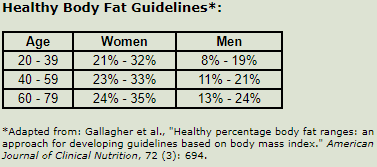
The problem with calculators like this is they are averages. I'm leery of any supposed calculator that does not use your % body fat to tell you what you "should" weigh. It's a lot smarter to determine if you are "done" based on how you feel, and whether or not you have reached a healthy % of body fat for your age:
-
I think we all have this fear. I know I do. We're all here because we've repeatedly failed at other weight loss attempts. Here's the thing: It's easy to compare WLS to a forced restrictive diet, but it's a lot more than that. Both Sleeve and Bypass actually change a lot more about your metabolic processes. Here's a quote from the ASMBS: The important takeaway is that your sleeve is not just restricting what you can eat, it's fundamentally changing the way your digestive system works. It's a very effective tool, but you still have to eat right and exercise to be successful. The way I think about it may be a bit simplistic, but I compare it to digging a hole. Can I dig a hole with my bare hands? I suppose I could, but it's going to take a long time and especially if I need it to be a big hole, It may simply be too much for me. Give me a shovel and now I have a tool specifically designed to dig holes. I will still have to put in a good bit of effort to dig that hole, but the shovel will help me be successful. WLS is the same thing. I've been trying to "dig holes" with my bare hands. Now I'm going to be given a shiny new shovel.
-
I did. I originally started in early 2020 and am just now getting around to surgery. You can read the whole sordid story here: Timing-wise, I pretty much had to start over. I was not able to count any of the nutrition visits I did back in 2020.
-
That's called BIA, or Bioelectrical Impedance Analysis. They make home scales that do the same thing (I have one), but they're not all that accurate. DEXA is definitely the more accurate way to determine body fat, but it requires a radiation tech and a much more expensive machine (it's a type of x-ray called dual-energy x-ray absorptiometry).
-
I know it's frustrating, but most likely this is just water weight. When you start dieting, the amount of glycogen stored in your muscles and organs drops pretty dramatically since you're not taking in enough carbs to replenish the glycogen. This depletion of glycogen also causes scale weight to drop in the form of water loss. Over time, those glycogen stores are renewed, which also causes you to put the water weight back on. This phenomenon is even worse if you also add in new exercise, as your body needs extra water in your muscles to help repair the micro damage that exercise does to your muscles. If you feel sore muscles, you can know for sure that you're storing extra water. I suspect there's another factor at work here: stress. Elevated stress levels causes you adrenal glands to make and release a hormone known as cortisol into your bloodstream. Among other things, elevated cortisol levels can actually slow down your metabolism, meaning you're burning fewer calories at rest.
-
I'm not sure there is any "normal" for this. My team took about a month to submit for approval and wouldn't even schedule the surgery until we had the approval back.
-
This actually may have been what she was responding to. If you are not eating healthily right now, this would be a bad time to have surgery. People that have WLS, but don't eat well afterward, tend to have worse outcomes. My guess is she wants to get you to a point where you are making healthy choices consistently so you don't have to try to learn this while you're healing and dealing with the other challenges post-surgery.
-
So far, I did 6 nutritionist visits, a psych visit, multiple rounds of blood work, an EKG, an echocardiogram, a swallow test, an EGD, and needed clearance from 3 other specialists. I'm probably forgetting something at this point. Thursday, I have a pre-anesthesia screening test, have to weigh in, and will have a 1-2 hour long physical/consultation with my surgeon. Friday, I'll have a 3-4 hour long class with one of the nutritionists. I assume this will be to cover the pre-op and post op-diet in detail. It's a lot, but I'm kind of glad there are so many steps. It's given me time to prepare mentally.
-
You need to talk to your surgery team. I would be very surprised if they allowed you to go through with the surgery. Aside from your own health, varicella is contagious, and especially if you're going to Mexico where vaccination is likely more spotty, you could actually give the virus to someone else. Please do the right thing.
-
Honestly, where you lose is out of your control and can be different for everyone. Gender plays a big role, but a lot of it is genetic. Hormonal changes as people age can also influence where you gain first and lose last.
-
Agreed. Remember that WLS does not fix your head. You have to be mentally ready to take advantage of the physiological changes the surgery provides. If you're not ready, the likelihood of ending up right back where you started is pretty high.