Start here
Where are you in your journey?
Choose the path that fits today. We’ll take you to the most useful discussions.
- GLP-1 medication Zepbound, Wegovy, access, side effects, progress, and support.
- Before surgery Compare procedures, plan ahead, and get honest pre-op answers.
- Post-op Recovery, food stages, symptoms, and support.
- Long-term Regain, labs, habits, and life after the honeymoon.
- Revision Explore revision options, complications, and next steps.
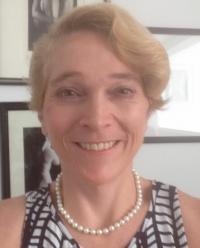
Sara Kelly Keenan LC
LAP-BAND Patients
-
Joined
-
Last visited
Everything posted by Sara Kelly Keenan LC
-
After Weight Loss surgery there are many months or years of losing excess weight during which we have a focus and a goal we are moving towards. We are moving towards a healthier body, possibly without obesity related diseases. We are moving towards a body-size that we may not have known since our teen years or maybe never. Oprah moved toward that famous size ten pair of Calvin Klein jeans, and many of us also have an outfit from our thin days as our "finish line." Some, like me, might just want to be able to fit into an airline seat again. I'd outgrown even the seatbelt extender and could not manage to crush my hips enough to fit into a coach seat at 333 pounds. When a WLS patient meets whatever goal he or she has set many wonder what comes next? One client said, "The driving force of my life for 18 months was reaching the point I've now reached. Now what do I do?" She and others have expressed this feeling that they are suddenly without a mission, except to keep the weight off. But keeping the weight off can feel less exhilarating than the months of big weight drops and the attention from friends and family as our bodies shrunk before their eyes. It is important to cultivate a new passion once the passion for food is cut-off by surgery and the passion of extreme weight loss has been taken to its' end point. This should be an activity that we can embrace as much as we once embraced food and then the WLS journey. Also, it is best if the new activity is one that can't be enjoyed if the weight is regained. If chess becomes our new passion we can regain and still enjoy that passion. But if the new passion is mountain hiking, outrigger canoe racing, running half-marathons or cycling Centuries (100 miles) through wine country then we are more likely to have long-term success keeping the weight off. We go through a re-education process after surgery during the weight loss period. Reaching goal weight begins a new phase of re-education. So, consider, what activity requiring a slim, strong, healthy body would you like to check out? Think outside the box! This can be something completely new in your life....something that you never imagined would be possible for you. In my post- weight loss life I've become a long-distance hiker and skydiver. These are two activities I never thought would ever be an option for me. I also never dreamed of doing them and never thought they would be fun. But they are, to me. They are surprising sources of joy in my life. Look for the surprising sources of joy in your life. Rather than limiting yourself to the activities you think you would be interested in ask the question, "What do slim, fit, healthy people like to do?" Now make a list and one by one experiment with those activities. You might be very surprised that you come to love an activity you never thought would be "your cup of tea." The reason for this is that you are no longer who you were and it takes time for the mind to broaden its' thinking to embrace what the body is now capable of. A Life Coach can help with this. Also, Meet-ups at meetup.com are a great way to experience many different activities and see which are of interest to you. Hiking, running, cycling, swimming, sailing, canoeing, cross-training are all activities people enjoy together at meet-ups. You will gain new friendships with active people who have similar passions and that will fuel your new passion for an activity and lead to prolonged and permanent weight loss. Pick an activity and get started! (The photo above shows me sitting on the rocks while meet-up friends below me sit on the bench. We climbed from sea level to that spot twice and it was exhilarating. An unexpected, delightful passion!)
-
For JustWatchMe, The magic is in you, not the band. It's a tool, like a hammer. A hammer doesn't make a beautiful table. A carpenter does. You are the carpenter. You have the free will to make gorgeous furniture or smash your thumb! Make beautiful furniture with your tool.
-
Thank you Jack, Prudence and 1Day. I'm so glad the article was helpful and the truths I see and feel had some meaning for you.
-
Prior to Weight Loss Surgery (WLS) I had never considered that my relationship with food was unloving to my body and my spirit. I just knew I had impulses deep within me for comfort that food seemed to sooth and that I couldn't seem to "control" and I knew my body was unhealthy because of them. I would start the day at 7:00am when the alarm sounded and with my first semi-conscious thought I'd think, "Today's the day I change it all!" That thought would be followed within moments by the dreadful thought, "I wonder how long I'll make it today before I screw it all up? 9:30 a.m.? 10:30 a.m.?" Because, without exception, the thought always came that I was destined to screw it up. It was only a matter of time. So I was unloving toward myself with this thought too. Then, when at whatever hour I did "screw up," the thoughts came about being a failure; a fat, out-of-control, slovenly failure! After WLS this continued and was often worse, since the pressure was "on" to lose and not regain. Everyone knew I'd had surgery and would know I was a failure on a whole new level if I didn't lose or regained. How's that for unloving thinking? WLS surgery may prevent, for a while, the eating of large meals but it does not remove from us the need to break unhealthy patterns of thought or behavior with food and create healthy loving patterns in their place. When this work is not done a new kind of hellish relationship with food can begin and along with it continue all those unloving thoughts, which actually get worse much of the time. On Message Boards and on Facebook I'm reading posts from people who have recently received surgery and are surprised to discover how much of the work they must still do, rather than the surgery doing the work. There are also the posts from people who received surgery months, even years in the past, who are struggling with unhealthy thoughts and behaviors. Often, these are new behaviors that came into existence when the path to the pre-surgery behavior is blocked by the anatomical changes of surgery. When an RNY patient post-op tries to eat a plate of french fries and reports being drawn to fried foods, even more than before surgery although there is physical pain each time, that is a new unloving, unhealthy behavior. When a LapBand patient considers "productive burping" or PBing a positive way to enjoy food and then vomit it without digesting and absorbing calories or nutrients that is a new unloving, unhealthy behavior. When a WLS patient stops exercising and stops eating protein and vegetables first and foremost, relying on liquid forms of caffeine and sugar for energy, that is a new unhealthy behavior. I know this experience firsthand. When I was newly "banded" in 2003 I would enjoy eating 2 shrimp and know that eating the third shrimp, which I of course ate, would bring-on pain and vomiting. Every meal ended at the railing of my deck with me vomiting into my backyard and I actually thought that was a good thing! I got to enjoy the shrimp and then...it was gone! Within 2 years I was living on liquids, with tight LapBand adjustments so that a sip of coffee sat uncomfortably in my stoma for many minutes before dribbling down. Eventually I ate large meals anyway so my esophagus became distended and stretched and is now capable of storing a large meal above the LapBand. These surgeries are not cure-alls, as we are all warned before we receive them. I am shocked by how much we, me included, don't heed the warnings and find ourselves wandering down new, dangerous paths. If this is happening to you it is vitally important to work with someone who can help you with your thought patterns and behaviors. You can do this with a therapist, a nutritionist, a Certified Life Coach specializing in Bariatrics or a great support group. It is vital to create a place where it is safe for you to get help early with any unhealthy new behaviors that arise before they do real damage to the body and become entrenched in your mind. Being morbidly obese is just an outward manifestation of behavior and beliefs that are unloving to us. Without addressing specifically those beliefs it will be difficult for most to experience an end to unloving, even violent, acts against the body and spirit as well as develop a healthy relationship with food long-term.
-
Extremely overweight people who become thin very rapidly through surgery can sometimes feel very vulnerable and unprepared to deal with not only their own changing bodies but also the reactions of friends and family to the "new" body. Sometimes they are uncomfortable being the object of sexual desire for the first time in their adult lives. Especially with women, I have also seen that some feel as though they are ostracized by other women because those other women believe that their formerly fat friend has become an attractive threat to their own relationship. Others may feel self-conscious or unattractive because an extreme weight loss leaves them with skin folds or scars. They sometimes feel that surgery did them no good because their bodies still stand-out in public and in private as unusual. One client referred to it as the "Is That All There Is?" syndrome. She said she somehow believed that losing 150 pounds would leave her with a body that society would consider beautiful and what she got was abdominal flesh hanging over her thighs. I notice this is especially true when a person going into the surgical process is focused on getting thin or attractive rather than on getting healthy. There can also be problems in intimate relationships. One woman spoke of her husband's lack of interest in her sexually. In all other ways the relationship was healthy so they were able to talk about it. What she learned was that after the weight loss her husband felt unworthy of her because he was still overweight. He also lost his sexual confidence when his overweight wife, in his words, became "one of the girls in high school who wouldn't give me the time of day." Also, if a WLS patient has early-life traumas unaddressed or not completely addressed prior to surgery the loss of food as a way to placate stress and to reduce anxiety can be a new source of trauma. This leaves many facing a very difficult transition to a life not centered around food. All of these stressors and others are a breeding ground for cross-addictions. It is vital to consider before surgery and in the "thinning" months and years after surgery how you will deal with stress, sadness, fear, loneliness, anxiety, or whatever thoughts and feelings triggered emotional eating in the past. If there is no healthy outlet for these the body and mind will create whatever outlets they can, which most commonly include alcohol, drugs, sex or gambling. The problem of replacing food addiction with alcohol addiction is the one I have personal experience with and have seen the most in people I've encountered. In 2006, three years after LapBand surgery, I developed an addiction to alcohol. I had lost food as my companion, soother of stress, provider of sensual satisfaction and entertainment. I was not able to eat the comfort foods that placated my fears of life prior to WLS and I desperately craved an outlet for uncomfortable emotions and beliefs I took-on and began running from during my childhood in a violent home. So three years after WLS, and after loosing 110 pounds, my dinner every night became a 6-pack of Vodka coolers or more (Sour Apple or Grape) and ironically Healthy Choice low-fat ice cream. At my lowest I was 220 pounds and I felt very uncomfortable and vulnerable in a smaller body. I continued to wear large, baggy clothes because I was afraid to look feminine. Feminine to me then meant I was vulnerable and open to attack. This went on for a year, during which I regained all 110 pounds lost and felt like a failure. Worse, I felt like a public failure because everyone around me knew I'd had LapBand surgery. What I had to do was address the beliefs and fears I had about what it meant to be feminine. I had to come to terms with my past and embrace a future in which it is possible and within reach to be healthy, feminine and safe. To avoid cross-addictions, it is important that individuals considering surgery or those who have had surgery take this very personal, individual journey into the beliefs they hold onto from their pasts. These are the beliefs that caused them to turn to food in an unhealthy way for comfort. It is vitally important to plan what healthy outlets for emotional pain they can create. A therapist or Weight Loss Life Coach can help with this. Dealing with the thoughts and emotions that caused compulsive overeating in the past and forming healthy patterns for working with and releasing fear and anxiety in the future are essential to long-term weight loss and the avoidance of cross-addictions for WLS patients.
-
Thanks for all your comments. I appreciate them all. The thing I find interesting in the people I have been interacting with is that they embrace the BMI chart, which I acknowledged is an imperfect tool, until they get close to leaving the "obese" range. Then they abandon the tool and take their weight loss no further. I notice this particularly in WLS patients, who experience dramatic and sometimes shocking (to themselves) weight losses. It's as though perhaps it happens too quickly for them so they "step on the brake." It's my job to help people examine their limiting thoughts and behaviors so I am a student of those behaviors. I notice that many people seem to decide to abandon their weight loss when they are about to leave the "obese" classification and enter the "overweight" classification and I wonder if that has to do with the euphoria of dramatic weight loss being behind them or their lack of comfort in their "new" bodies. Classifications have limited value when talking about the weight ranges of human beings and I wish there were a better way to speak of it . If someone is happy being a particular weight that is their business, of course. But if someone has limiting beliefs that cause them to stop short of their stated goal when they begin working with me then it is my job as their coach to help them flesh-out their motives and reasoning. Goals can change mid-course but it is important for a person to be clear why they are changing their goals mid-course and examine their beliefs. What I have seen is people who lose 100+ pounds, get 30 pounds from what the BMI states is normal weight for their body type and summarily dismiss losing more weight. I am curious about what beliefs may be limiting a client's success. After consideration, if my client wishes to remain at a current weight I support that.
-
I consult on a Facebook group made up of people who experience very large weight losses through Bariatric surgeries and today I am struck by how they view their slimmer bodies and the BMI chart. What strikes me is that when they get down to within 30-40 pounds of what the BMI chart says is goal for them I notice many deciding they know better than the chart. The phrase, "I feel good at _____ weight" keeps coming up, as though that "feeling" makes irrelevant the BMI chart and scientific data about the dangers of carrying an extra 30-40 pounds on our bodies. Heart disease, diabetes and high blood pressure, as well as other illnesses linked to overweight, don't care when we set an arbitrary number that we "feel good" about. Today I'm wondering if it has more to do with the emotional work left undone when the excitement of the huge weight drop is focused on. It's great to focus on the big drop and enjoy it but it is also important to do the emotional and psychological work to embrace a body without a protective layer that keeps the world at a distance. I wonder if not doing this work accounts for people deciding to hang on to the last 30-40 pounds and deciding the BMI chart doesn't apply to them. Again and again, I see the term, "Everyone is different." While that is true, I see it as an excuse to not face fears about a life without fat and finish the job of making the body as healthy as it can be. I know this pitfall well, which is why I care so much about it and am writing about it now. When I was 333 pounds and got down to 210 in my 30s and 220 in my 40s I said the same thing! "Good enough! I'm big-boned! The BMI-chart doesn't apply to me because I am 6'3" tall. I naturally have a linebacker's body. My body isn't meant to be slim." The thoughts that limited my possibilities seemed to go on and on and they did stop my progress at the exact weights at which I accepted those thoughts as fact. The last and final time I lost weight I decided to allow my team of professionals, my coach and doctor, to decide when the goal had been reached for my body. I decided it was possible that my thinking about my body was limiting my results. Imagine my surprise when a slim, sexy, very un-linebacker's body was waiting for me at 175 pounds and a BMI of 21. Imagine! The BMI chart applied to me too!! I try to gently point this out on the message boards I consult on, but people carefully choose their language with the term "I feel." We are taught to respect "I feel" and hold whatever follows in reverence. The problem is that many couch a thought with "I feel" terminology. They are actually expressing what they THINK and the thought, unexamined, limits their potential. I love to work with people willing to differentiate between what they think and what they feel. These people are willing to examine their thoughts for patterns that limit their possibilities and may even cause a backwards slide into obesity. Really, losing the weight is just the beginning. Working with our thoughts about our weight and almost every aspect of our lives is central to long-term success and health. I expressed thoughts like this on the message boards and within minutes there were multiple comments from people reverting saying "The BMI chart doesn't apply to me because I feel [this and that]." Losing a lot of weight isn't the end of the journey. It is just the beginning. So I believe examining the thought patterns that led to obesity is key in order to not return to obesity. The BMI is not a perfect tool. No tool is perfect and there are some concerns as to its' value in all cases and for all bodies. But why not test it ALL THE WAY in your weight loss journey rather than holding-up short of optimal results? What do you think?
-
I was 170 pounds overweight and I thought I had tried everything. I had a LAP-BAND for 11 years, during which I lost and regained 130 pounds. The LAPBAND was ready to do its' job, but I was not ready to do mine. This is the story of how I embraced, life, living, healthy food and exercise, and finally shed 170 pounds 8 years into my LAPBAND journey. From needing a "walker" to climbing America's tallest mountain in 2 years, this is my story. Food was my way of comforting myself and relieving stress for as far back into my childhood as I can remember. There was alcohol and violence in my childhood home and I needed comfort. There was no human source for it so I created a source for it. Food "hugged me" and made me feel safer. In an environment with stressors beyond my control. I had a small something I could easily access to sooth myself. It was my mind deciding what to eat for comfort and it was my hand lifting the food to my mouth. I was in the driver's seat regarding something in my life and body, even if I wasn't safe in my home. Food was my best friend, provided comfort and gave me a way to manage even a small part of my life. By my teens, my chubby appearance morphed into actually being significantly overweight. At the age of 12, I jumped from a women's size 12 to size 18 and never looked back. By the age of 20, soon after my mother's death, I was a size 26 and 330 pounds. In my 30s, I lost 130 pounds too rapidly and much of my hair by binging and purging and in my 40s, I again lost 130 pounds after LAP-BAND Weight Loss Surgery in 2003. But because I had not done the emotional, internal work on my relationship with food and childhood trauma, my food addiction shifted to liquid calories I could easily pass through the LAP-BAND, which is common. At this time, for the first time in my life, I developed an alcohol problem and my dinner each night was a six pack of "vodka coolers" followed by a pint of low-fat ice cream for dessert. Nutrition was the last thought on my mind and my focus was on comfort calories that could pass through "the band." By 2006, all the weight I lost was back. I also continued to eat solid foods that would force me to vomit and caused my esophagus to become distended. When a LAP-BAND patient doesn't respect the "full" signals the body sends to the brain and continues to eat, the esophagus becomes a storage place for excess food and the esophagus stretches. This made the LAP-BAND useless and while it is still in my body, it no longer functions properly. At the same time, during the last 20 years, I developed back problems from bulging discs related to the weight I was carrying. I began using opiates under a doctor's supervision to combat pain and muscle spasms in my back and in my knees that resulted in five knee surgeries. At first, I viewed the opiates as a wonderful tool as they relieved or masked some of the pain and also provided an emotional high. Soon I was using the opiates for emotional reasons more than for pain and as my tolerance for them grew, I needed larger doses to get the same effect. Then I needed to graduate to a stronger form of opiate and that is when, 10 years ago, I began taking Oxycodone and OxyContin around the clock along with Flexeril for muscle spasms. Sitting for long periods became unbearable and I was forced to leave my career as a Court Paralegal and qualified for "permanent disability." I cried as I left the hearing in which I was declared disabled. I didn't want to be disabled but felt it must be true for a judge to decide it was. It was 2010 and I believed my life was essentially over. At 50 years old I was simply waiting to slowly die. I believed all my happy days were behind me. When my doctor suggested I try yoga before we take the drastic step of implanting electrodes in my spine for the pain, I began attending a very gentle yoga class for people with disabilities. Slowly, over a two year period, I began to build stronger core muscles which made the back spasms less severe and less frequent. But I continued to take the opiates because by then I had an emotional and chemical dependence on them. During this time, I was diagnosed with Sleep Apnea which was caused by the opiates and excess weight. Opiates disrupt the brains signals to the lungs and suppress the respiratory drive. On top of this - physical pain, addiction and emotional unhappiness - I was also caring for my father with Alzheimer's. Although in a safe and loving group home, I still felt responsible for my father's well-being and comfort. I was his only family within 3000 miles. As so often happens when caring for a loved-one, we stop caring for ourselves in every sense. Soon after my father's death in 2012, I developed pneumonia because my breathing became so inconsistent that my lungs filled with fluid. I realized at that point I needed to change everything about my life including losing the weight and decreasing, even eliminating, my use of opiates or else I would die. At that moment, in the hospital in 2012, the desire to live was sparked in me by the threat of death! After leaving the hospital, for 60 days, I detoxed and experienced cold sweats, tremors and anxiety as the opiates slowly left my bloodstream. Once I was drug-free, I began making small, sustainable changes to my diet and gradually increasing amounts of movement. (Yes, that means exercise!) Over the following 18 months, my weight dropped from a high of 333 pounds down to 185. As a 6'3" tall woman this is a healthy, lean weight for me. In 2013, I decided then to give myself the gift of nearly full-body plastic surgery. Since I was already severely overweight in my teens, at a time of life when many young girls look their best and enjoy being pretty, I decided "it is never too late to have a happy childhood." During an 11-hour surgery, 13 pounds of skin was removed from my abdomen, buttocks, back, chest and under arms. For the first time since the age of 12, no part of my belly and buttocks continue to jiggle when I stop walking, no part of me droops and my thighs do not rub together. The Sleep Apnea is gone and I now climb mountains instead of grabbing railings to pull myself up stairs! But the hardest mountain I've ever climbed was a "metaphorical mountain" in those first few weeks of starting to change my relationships with food and drugs, as well as beginning to move. I am enjoying a lovely renaissance in a healthy, lean, strong and coincidentally beautiful body. However, this transformation has not been about beauty. My goals are continued health and a desire to live with passion, and about choosing to do more than survive. I am driven from an internal source to live a vibrant, full life of joy so I can continue to enjoy the love of family and friends and so they needn't lose me to obesity and addiction. This photo (above) was taken on the highest mountain in the 48 contiguous United States, Mount Whitney. After 10 hours of climbing 6,134 feet to an elevation of 14,508 feet covering 11 miles, I summited at 2:00 pm and like every part of my weight-loss, fitness and "reclamation of life" journey, I did it! Yet, like during every aspect of my journey I had partners. My partners knew the lay of the land, my strength and challenges. I surrounded myself with people who knew how to help me get where I wanted to go. Physical and mental health professionals who coached me to express my full potential. What mountains will you climb in your life and who will help you get there? Build your team, including here at BariatricPal, and there is no "mountain" you cannot climb!
-
The Rugged news is that today I had a camera put down my esophaghus (don't gasp! I doctor did it!!) The good news is that my 9 year old band has slipped so surgery will pay for it's removal. But I will need to go back to Mexico for the Sleeve because my BMI is too low! The better news is that I have the money!! Cool. Yippeee !!! Sara
-
Hi Thin Soon, No, I haven't yet decided where and when to be sleeved but I have decided to be sleeved in TJ. I had pneumonia last month that was a severe case requiring hospital time and the doc says it will take 6 months for my lungs to recover. My insurance will pay for the band removal, probably in the Fall, Then I'll rest my stretched esophagus for 3-6 months and then go to TJ for the sleeve. My BMI is 32 so I'm not a candidate for insurance to cover the sleeve in the US. I'm going to spend this 6 months exercising moderately and getting into the habit to eat the way a Bariatric patient should. Protein first, then veggies, fewer mochas and less other liquid calories, etc...... I'm going to do this because as a "failed" band patient I know that I have to eat and drink responsibly and exercise to succeed with any procedure and I was lazy and expected the band to do all the work while I ingested irresponsibly. I'm trying to lay a solid foundation so I get it right this time. How about you? What's your status?
-
Wow! That is so exciting. What was it about the band that didn't work for you and why does Dr. Forgione think the sleeve will be better? The surgeon my insurance requires I go to doesn't believe the sleeve is a valid replacement for the band. "Failed at the band, you'e fail with the sleeve." That's what he says. I'm going to have to educate him about the sleeve. Thank you and I hope you feel good......
-
Barb, Nice to know his price has come down. When I checked 2 yrs ago it was 11k-sleeve w/revision......10k no revision. Dr. Ariel Ortiz did my band on 4/15/03. Is his charming mother still driving patients from test to test the day before surgery??
-
thanks, i didnt know there was one. i'll go hunting. im not good with computer searches. thanks
-
Thanks anyway. I don't have Kaiser.
-
Oh Alice, I', sorry you are having a rough time. What is so difficult about the sleeve that it needs all this figuring-out post-op by the doc? Any idea why you are having such a rough experience? Is it common? I don't understand what it making your sleeve so hard to make work right that your needing an upper GI in Tuscon. Will you have to go back to Aceves? What's going wrong and why do you think it's going wrong? If it's too depressing or sad to write about in depth and it would cause you emotional pain to answer my questions then please don't answer. It sounds like you are in enough emotional pain without having to type your troubles in detail to a newby and I don't want to add to your pain. I'm just trying to understand. I hope you feel much, much better very soon!! Sara
-
Thank you Alice. That does help! That's a lot more than I thought it would be for Mexico, but it sounds like his patients pay for "the best" and I keep hearing about leaks when the surgeon might not be the most experienced. I don't want leaks!! I will contact them after I read the website. Thank you for the link. I might not have been able to find it on my own....I am a computer-challenged 50something being left behind by technology with every day that passes. Thanks again, Alice! Sara
-
What is the cost with your doc for band revision to sleeve? I'd certainly like to pay more for a very experienced surgeon. Good luck and please let me know the costs! Thank you, Sara
-
Dear MamaM, I see your doc is in Fresno. What was the cost of your revision? I just assumed I had to go back to Tijuana to get a good price. I'd love to only have to drive from the Bay Area to Frenso! Thank you in advance for sharing your costs. Sara
-
SORRY FOR THE CLUMSY CUT AND PASTE JOB ABOVE. I NEED TO FIGURE OUT HOW TO QUOTE AN EARLIER POST BETTER! SARA
-
DEAR THIN SOON, . I agree. Dr. Ponce has a name I've heard good things about since 2003, when I was banded. Do you have a band. Is your surgery just for the sleeve or are you getting a band revision to sleeve? What are his prices like? Can you pay with a visa card? Thanks in advance for the info and GOOD LUCK!! SARA
-
ALSO, DOES ANYONE KNOW IF SLEEVE SURGERY IS EFFECTIVE EVEN IF THE ESOPHAGUS IS PERMANENTLY STRETCHED INTO A POUCH ABOVE THE BAND?
-
Thank you Erika and Tanay. I'm going to digest what you've both said and I'll get back to you with more questions. Thank you for your openness in sharing your stories with me. Fondly, Sara
-
Hi B and R's Mommy and anyone else who's done or doing the band revision to sleeve in Tijuana......how much does this cost in Tijuana? Has anyone done a price comparison of the costs that the various doctors in Tijuana are currently charging? B and R's Mommy. Wht is Dr. Rodriguez' charge for that? How many days in a TJ hospital? Anyone else who can help with pricing and their doc's levels of experience would be great. I'm trying to not reinvent the wheel and hoping one or two or three of you have already invented this wheel? I think my insurance here will pay for the band to come out. I want to then wait about six months for my stomach and esophagus to rest and heal as much as they will and work on my own behavioral patterns of self-sabotage. Then in 6 months, and only if I'm emotionally ready and practiced at self-discoplina and following the rules I will go to TJ and pay cash for the Sleeve. Please share pricing. Thank you, Sara Thank you, Sara
-
To Everyone with Tijuana Sleeve doc knowledge........ Thank you Lissa and Sleeve Guru. From hearing people share their surgical sleeve experiences in the Tijuana area, who would you say are the 2 or 3 sleeve surgeons many different people have gone to for surgery and were happy with the experience AND the price? My band doc, Dr. Ariel Ortiz charges $10k for the sleeve surgery and some surgeons I don't know price it for under $5000. Who are the currently "hot" sleeve surgeons offering good service for a good price?
-
Hi Lissa, What is sliming and what are sliders. There's a band term called "PBing--Productive Burping"---which means puking the contents of an entire meal when to much food is eaten and as you say it is "more like my stomach ejected it's contents."