




Finding The Lap Band Green Zone
- Replies 75
- Views 37.3k
- Created
- Last Reply
Top Posters In This Topic
-
Alex Brecher 9 posts
-
Cindy C 3 posts
-
elcee 3 posts
-
judych 3 posts




Most Popular Posts
-
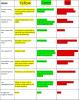
Thanks so much for the chart...I'm 50% yellow and 50% green. Here are some ideas of articles I'd like to see... how much weight a person can really expect to lose once they have had surgery. T
-
Thanks for the chart Alex!
-
I literally feel like a lightbulb went off; I seriously could cry. The chart with the questions is an excellent way to figure out where you are. I suspected that I was in the yellow zone, but now I kn



Posted Images
Featured Replies
Join the conversation
You can post as a guest; create a free account to track replies, follow topics, and be part of the largest weight loss surgery community.
So, what's the "green zone" and how do you get there from here?
The green zone is an expression that's often used to describe where a LAP-BAND® patient is in regards tohis/her hunger and eating regime. Certainly, just because a patient has had surgery doesn't mean they can eat whatever they want or that they can maintain the same food choices they've made in the past. Far from it.
In order for a tool like the LAP-BAND® System to work effectively, it needs to be fine tuned. That requires multiple visits to a care provider that has the ability to adjust the band, whether that's putting more Fluid in or taking some out which as you likely already know adjusts the "fit" (or restriction) of the band. Just know that it's a process to get there and requires assessments from a healthcare provider to get you to the "green zone".
Many bariatric practices require frequent "office visits" post surgery so as to monitor a patient's progress, offer encouragement and perhaps to perform an adjustment. Many people say that a key advantage of the LAP-BAND® System over the other procedural alternatives is that it's adjustable. And reversible too for that matter. Every LAP-BAND® System has the ability to be customized for fit, so as to bring about a sense of satisfaction(lack of hunger) to the patient after a modest and healthy meal.
Comparisons from one patient to the next in regards to who has what amount of fluid in their specific band is futile. We're all different people inside and out. And even two people of similar size (on the outside) may not require the same amount of fluid in order to both feel satiated. So, stop asking your fellow band patients how much fluid they have in their band. Their answer won't matter to your LAP-BAND®.
What does matter – is your hunger and getting you to your "green zone".
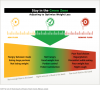
Imagine a color spectrum moving from yellow to green to red. I know, the colors are not in the order we were all taught in school – but bear with me. Think of it as the colors of a stop light. Yellow means caution. Green means go, while red indicates it's time to stop. Some would say that yellow represents "not quite there" while red indicates you may be over filled. And that leaves us with green. The best zone of the 3. It's the "go zone". Fully satisfied after modest meals, eating the right kinds of foods and losing weight.
Here are a few questions to help you identify within which zone you're currently residing.
Your healthcare professional may also ask you
All of these are good questions for self reflection as well – but you'll only get "a fill" (if needed ofcourse) by seeing and being evaluated by a qualified professional from your bariatric surgeon's office.
Allergan's Executive Council of top LAP-BAND® surgeons from across the country recommends 11 visits within the first year of your surgery in order to optimize your excess weight loss results. Read that again. 11 visits within year 1. Let's be clear though, success is not just EWL or # of pounds lost – it's about feeling good and being healthy. And getting back to doing the things you enjoy.
The aftercare algorithm that Allergan's experts came up with are only their recommendations. They are only for others to consider as each healthcare professional is responsible forhis/her own medical decisions. But with that said, here's what they came up with: Follow up visits should occur at week 1, 4, 8, 12, 16, 20, 24, 30, 36, 42, 48 and then again at 24 months.
That's 11 visits within 12 months of your surgery date. So with that said, if you're a year out and you aren't seeing the results you anticipated and also haven't seen your support team several times over the course of the last 12 months, you need to ask yourself why?
And if you're not in the "green zone", call your bariatric surgeon's office and ask for an appointment to discuss your options.