Start here
Where are you in your journey?
Choose the path that fits today. We’ll take you to the most useful discussions.
- GLP-1 medication Zepbound, Wegovy, access, side effects, progress, and support.
- Before surgery Compare procedures, plan ahead, and get honest pre-op answers.
- Post-op Recovery, food stages, symptoms, and support.
- Long-term Regain, labs, habits, and life after the honeymoon.
- Revision Explore revision options, complications, and next steps.

LumpySpacePrincess
Gastric Sleeve Patients
-
Joined
-
Last visited
-
As the daughter of a man who manages a legal marijuana dispensary in Washington state and who also had his own legal medical cannabis garden for a few years, I can tell you that different types of marijuana will illicit different responses. I really don't know what is available in New York, but according to my father there are varieties that will not make you hungry, and will give you a nice, mellow high. That being said, I think if you go into the experience prepared it may not be such a big deal. Have Snacks around that you know you can have, in portions that make sense. If you try to eat too much in the few months following surgery, your body will definitely let you know and you probably won't want to keep going. In my experience, it is best to let it go for the first six months, then maybe start with once or twice per month after that and see how it goes. Our tastes and responses to foods and experiences change in the first six months after surgery, so you might find that the munchies aren't a big deal that far out. I would not worry about a "transfer addiction" right away. If you notice you start to need to smoke more than once per week, then maybe take a few steps back and analyze what emotions are surrounding the need to smoke the same way you would have analyzed the emotions around the need to eat. Good luck!
-
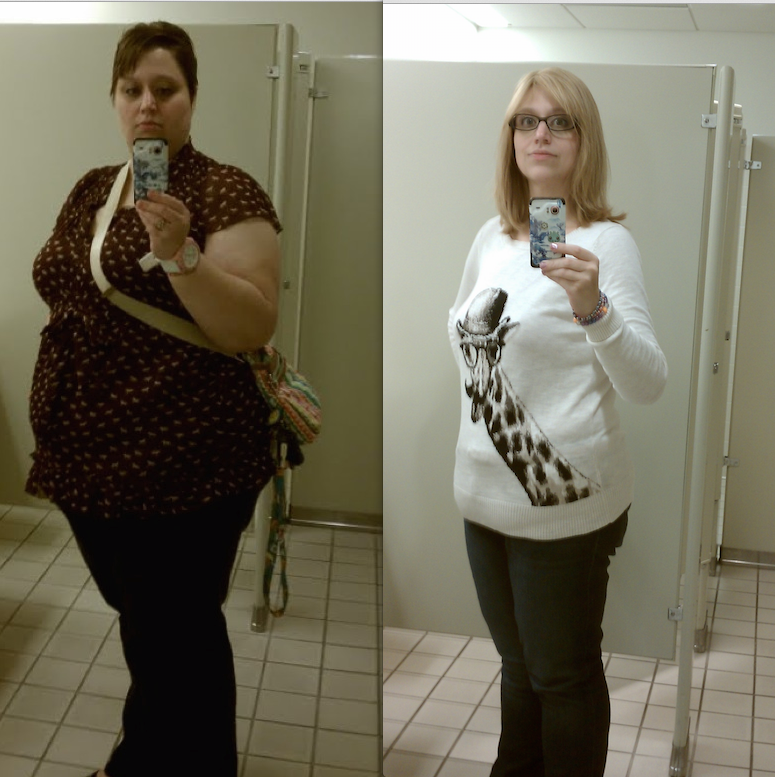
After, a weight loss surgery photo album by LumpySpacePrincess on BariatricPal. 1 photo in Member Photo Gallery.
-
I am a year out (sleeve) and I can still only eat 6 ounces at the absolute most in one sitting, so I'll just be having very small amounts of everything and just being mindful of when I start to feel that I've had enough and ending my meal there. No grazing, no snacking during the day. The few traditional 'sweets' I made (cranberry bread and pumpkin pie) were made with splenda instead of real sugar, and we typically don't eat things like candied yams or mac and cheese anyway. I'm just most excited for the spinach quiche and turkey!
-
Profile, a weight loss surgery photo album by LumpySpacePrincess on BariatricPal. 1 photo in Member Photo Gallery.
-
During, a weight loss surgery photo album by LumpySpacePrincess on BariatricPal. 3 photos in Member Photo Gallery.
-
The issue I have with labeling obesity as a disease is that it undermines goal pursuit for many people. When we believe something is beyond our control, we are less likely to try to change it. Here is a very interesting article from the British Psychological Society that details a study that was recently done concerning the psychological impact of labeling obesity a disease. http://bps-research-digest.blogspot.com/2014/05/if-obesity-is-disease-is-labelling-it.html
-
As a Counselling Psychology PhD candidate, and someone who is recovering from Binge Eating Disorder and Bulimia (exercise type), it really saddens me that so many people who suffer "food addiction" aren't aware there is a lot of very good psychological support available out there; or they are ashamed to come forward and talk about their food issues. I really honestly can't tell you how much seeing a therapist has changed my perception of food and portions over the last year. I no longer have to choose between avoiding or altering my favorite foods, but can enjoy them in moderation without the psychological backlash that would either lead to over-restriction, binge behavior, or exercising until I was out of my mind. Thank you so much for writing this article. I really believe it will help a lot of people.
-
I have to respectfully disagree with #5. sleeping in your exercise gear sounds obsessive and mildly dysfunctional on a psychological level. If you did that, and did not get up to exercise, there is likely to be an increased amount of shame, anxiety, or guilt over not following through right away. Seems like that would push you back into the "What's the point?" mentality a lot of us have had in the past when we "fail." To be honest, the biggest thing anyone can do to help them during this process is to speak to a therapist about their eating issues. As much as we would not like to admit it, none of us got to where we are because we have a healthy, non-dysfunctional relationship with food. Short term changes are relatively easy, but the long-term changes we need to make are extremely difficult without professional support. The second most important thing is to stop putting moral labels on food. No food is "clean" or "good" or "bad." It just is. By putting those labels on different foods, you are giving the food the power to dictate how you will view yourself for the day. If you didn't "eat clean" does that make you a dirty person? You may not say it to yourself outright, but I'll bet anything you'll be thinking that in some form. When food stops being a moral choice, and simply a nutritional choice, we stop giving food control over our lives and start controlling the food.
-
Very interesting article. I should add, though, that some of these points (never "cheating" or getting on the scale every day) would not really be helpful to those of us with diagnosed eating disorders. I know when I get on the scale every day, it becomes an instrument of punishment for myself. Many of us are like this, and I have found (as have others) that getting on the scale only twice per month is much more rewarding and less stressful. I don't like the idea of there being "cheat" food. Sure some food is considered healthier than other foods, but to say it is "cheating" is implying we are somehow bad or wrong for wanting/eating these foods. Taking away the negative attributes attached to food actually allows us to look at it as just another piece of food, not a forbidden fruit, and we actually will want less of it. I know for those of us with Binge Eating Disorder, telling us we can't have one thing will just lead to a sense of deprivation so we end up panicking and eating five times a normal amount of something else, and eventually getting around to eating the item we were told not to on top of it. Some of us also take notions like "don't eat a cheeseburger" and apply it to every aspect of the food. "Ok, I can't have the cheeseburger so I can't have beef, cheese, or bread in anything else." This leads to over-restriction which cycles back to bingeing. Exercise is another hard one for many of us with BED or exercise bulimia. You tell me to walk the equivalent of four miles per day (easily done if you're not sitting around all day), and my brain says "Ok, four miles? I'll RUN five PLUS do weights and cycling." A few summers ago I was exercising six hours per day for eight months straight until I burnt out. When I stopped I went right back to bingeing because I felt like I'd failed. So with the daily scale attendance, plus the restrictive eating and prohibitive exercise regime, it was just a recipe for disaster. So I do think this list is good for many people, but those of us with eating disorders might want to look at how each point will affect us in the long-run.
-
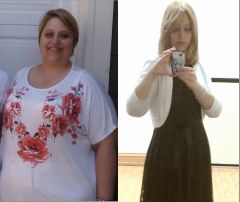
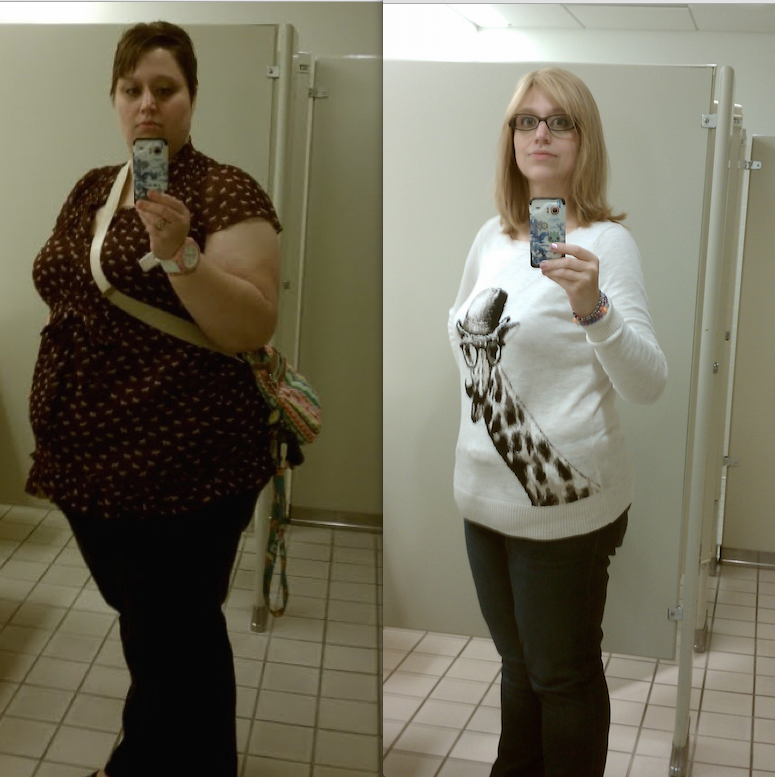
Before, a weight loss surgery photo album by LumpySpacePrincess on BariatricPal. 2 photos in Member Photo Gallery.