Skip to content
View in the app

A better way to browse. Learn more.

BariatricPal

A full-screen app on your home screen with push notifications, badges and more.

To install this app on iOS and iPadOS
  1. Tap the Share icon in Safari
  2. Scroll the menu and tap Add to Home Screen.
  3. Tap Add in the top-right corner.
To install this app on Android
  1. Tap the 3-dot menu (⋮) in the top-right corner of the browser.
  2. Tap Add to Home screen or Install app.
  3. Confirm by tapping Install.

Can't stop losing!

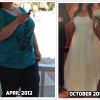
I am exactly 1 year and 5 months post-op and I can't stop losing weight! Anyone else having this problem? I am scared....

  • Replies 25
  • Views 4.7k
  • Created
  • Last Reply

Featured Replies

What!! And here I am ready to throw in the towel I was sleeved June fist lost 37 lbs the first month and half been stuck since July.

"I would do the surgery again, but would have done things differently had I known THEN what I know now." Explain more please.

  • Author

It is impossible to predict how you will change after surgery. Everyone has had different experiences. When I made that statement, I was addressing my exact journey. I had strange eating habits prior to surgery, for example, I had never eaten a singe bite of fish/seafood prior to surgery. Now I am having to learn how to eat it....wish I would have taken the time to address that before surgery so I would already know what fish I do/don't like. Saved myself some time, money, and frustration. That is just one example specific to me. That's what I meant by that.....

  • Author

I also had periods of time here and there where I felt like I wasn't losing like other people. I am thankful for that time now. It gave my body time to catch up with my weight loss.....so don't get overly anxious about the numbers. THEY WILL DROP. I have been blessed with little to no complications, looking back. But at the time I was in rapid weight loss stages, I was critical about it. I suggest everyone take a deep breath and try to enjoy the ride. I promise, if you have the surgery, you will lose the weight! :)

Thank you all for your suggestions. I scheduled an appt with the nutritionist for next week.

I've been very fortunate with my weight loss. I was sleeved June 19 th. as of this morning ( sept 26) I am down 65 pounds! The weight loss has slowed down somewhat but the gym has really helped me with the slow periods. I was 294 before surgery, now 229. I am tall somewhat 6'0. My surgeon says I need to lose only about 10 more pounds , but I d like to be around 210. As for the person who has lost only 20 pounds, trying exercising regularly. It will help so much. It has helped me more than words can say.

I am with you. My starting weight was 246. My surgery was in 12/12. Doc wanted me to stop at 140 and try to maintain. That was a couple weeks Ago and now I'm down to 133. I feel awesome. I just simply could care less about food. It's crazy. It used to control me. I guess in some ways it still does. Plus, I still can't eat very much. 4 bites of oatmeal in the morning and I'm stuffed and usually can't even eat lunch. I realize I need to increase calories and I'm not in a size 2 like you (currently in a 5) but I do start to freak out a little when the scale keeps going down.

Hello all, congrats to u all. For those havn prob w stop losing, thats a question i asked in June when i first started this. Ive yet to b sleeved, frkn nut has yet to release me after 2 visits, num 3 in oct. Im mad but geesh oh well, i can prob see her point... Right now, im about a 1 meal a day eater. I might grab a snack of cereal at night. So thats what concerns me, im tryn to add 3 meals nd ik its what ill have to do to b healthy after surgery. So thats y im like, will my body know when to stop losing. It reminds me if the steven king movie thinner. So w that said, to the OP, how many meals do u consume a day including snacks? And if need be, as some have suggested, add some protein drinks if u still like them, potatoes. I wish u nd all luck nd cant wait to join the loss journey. Altho im rdy to get started, i guess the nut knows what shes doin, esp since i struggle now to get 3 meals in...im still mad tho ;) gla

  • Author

MOMMYOFFIVE!!!! Thank you for posting! You sound exactly like me with not caring about food AT ALL. It seems to be too much money to eat out (I am single without children) for only 4 bites, too much wasted food to cook at home (altho my dogs are loving that I did the surgery), and "forgetting" to eat happens more times than I care to admit publicly. Can you contact me privately? Not that I want to keep secrets from the others, but it feels so good to hear that SOMEONE ELSE is having the same struggles...maybe we could be accountability partners?

NEW YORK, Feb 18 (Reuters Health) - Severely obese people can potentially develop anorexic and bulimic symptoms after they have lost weight through strict dieting or stomach-reduction surgery, Spanish researchers report. The flip-flop, they say, appears to come from an intense, obsessive fear of regaining weight--supporting the idea that obesity and eating disorders share some features. Dr. Juan A. Guisado, of the University of Extremadura, and his colleagues described two such cases in a recent issue of the International Journal of Eating Disorders. In the first case, the researchers analyzed 100 morbidly obese patients 18 months after each had undergone gastric surgery. Morbid obesity, also known as severe or clinical obesity, refers to people who are 100 pounds or more over their ideal body weight. The investigators discovered a 32-year-old female who had developed an eating disorder after stomach-reduction surgery. "She thought that she had to lose weight quickly, and became especially worried by the flaccid skin areas remaining in arms and legs after weight loss," they write. Even after she had dropped 120 pounds, the woman remained obsessive and depressed about her weight, and would make herself vomit and use diuretics whenever she ate certain foods, according to the researchers. So drastic was her weight loss that she stopped menstruating 5 months after her surgery. The other patient, a 19-year-old female, came to Guisado for psychiatric treatment. By following a severe diet, she had lost close to 200 pounds in 3 years and was depressed and reclusive. The patient reported an "intense discomfort with food, considered herself fat, and felt unhappy with her body," according to the report. By the time Guisado interviewed her, she weighed 110 pounds, but still wanted to have stomach-reduction surgery--which was denied. According to Guisado, these cases highlight the psychological effects that can come with severe obesity. "It is necessary to change some concepts of morbid obesity," he told Reuters Health. He pointed out that while anorexia and bulimia are treated as eating disorders, severe obesity is seen differently. Guisado said he finds that morbidly obese patients show high levels of "psychological discomfort," and he believes that psychiatric evaluation may be appropriate. "Some obese individuals do seek psychiatric treatment for disordered eating, but it is far more common for them to seek obesity treatment," said Dr. Marsha Marcus of the University of Pittsburgh in Pennsylvania. "I think that there has been much more dialogue between the eating disorders and obesity research communities in recent years, based on a growing awareness that problems with eating and weight do have commonalities," she told Reuters Health. But Marcus warned against over-generalizing from such a small number of cases. "Certainly, some individuals who initiate strict dieting will develop aberrant eating, as did the patients described in the article. I have indeed seen patients like this, but they are not common," she said. "The growing gastric surgery literature has shown that, on average, patients' eating habits improve after surgery." She added, though, that as the number of obesity surgeries performed increases, "there is a need to understand the potential complications of the surgery and the reasons for the poorer outcomes in some patients." SOURCE: International Journal of Eating Disorders 2002;31:97-100.

  • Author

I don't feel like I have an eating disorder bc I don't think I am fat, I think I am too skinny. I want to get to 130lbs! It's just a lot harder to do than one would think. But I appreciate the posting, makes me more aware of the potential negatives to the surgery. But at this point, re: the surgery, my only regret is not doing it sooner! :)

The tricky part is the nutrition. Yes, I could eat potatoes and milkshakes, but in the long run, I am gaining only FAT (assuming I would even gain anything), and what I need is Protein for MUSCLE! I chose to swim for exercise right after surgery, I should have done power lifting! :) FEED YOUR MUSCLES, bc if you don't, you WILL lose them! It's the muscle that will keep the body "curvy", which helps with the excess skin.....

Archived

This topic is now archived and is closed to further replies.

Trending Products

PatchAid Vitamin Patches

Account

Navigation

Search

Search

Configure browser push notifications

Chrome (Android)
  1. Tap the lock icon next to the address bar.
  2. Tap Permissions → Notifications.
  3. Adjust your preference.
Chrome (Desktop)
  1. Click the padlock icon in the address bar.
  2. Select Site settings.
  3. Find Notifications and adjust your preference.