Skip to content
View in the app

A better way to browse. Learn more.

BariatricPal

A full-screen app on your home screen with push notifications, badges and more.

To install this app on iOS and iPadOS
  1. Tap the Share icon in Safari
  2. Scroll the menu and tap Add to Home Screen.
  3. Tap Add in the top-right corner.
To install this app on Android
  1. Tap the 3-dot menu (⋮) in the top-right corner of the browser.
  2. Tap Add to Home screen or Install app.
  3. Confirm by tapping Install.
  • Appearance

Join BariatricPal free

  • Ask your own questions
  • Reply and follow topics
  • Message other members
  • No cost, no spam

Intestinal barrier sleeve (removable gut sleeve)

Hi all,
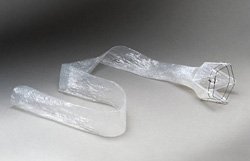
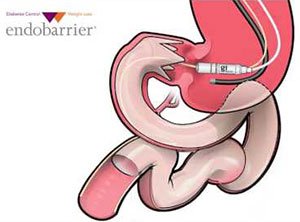
I did a research on bariatric procedures and surgeries, and found that I am interested in the intestinal barrier sleeve (aka duodenal-endoluminal sleeve aka removable gut sleeve) procedure. Even though it seems pretty effective, the least dangerous (besides the gastric balloon, maybe) and reversible, it is not popular compared to other types (no idea why, but it's not well known to public). In short, it is a two feet long flexible tube (barrier, sleeve - not to confuse with the famous "sleeve" bariatric surgery where the stomach is cut!) which is put in the upper part of the small intestine and physically prevents the food from absorption. I.e. its action is similar to a malabsorption surgery, but without the surgery (the tube is inserted by endoscopy, through the mouth, and could be removed in the same way at any time). You can find more info if you google "intestinal barrier sleeve".

zzz1.jpg.a2eb158d75ad471f91f37a3d26ed2513.jpg

743103181_zzz1-Copy.jpg.3c14daee5dd96b7270429dee0f03a3cb.jpg

So, I have 3 questions:

1. Why is this procedure not widespread despite its attractiveness?

2. Has anybody in this forum did it (or wants to do)? Any ideas, impressions, considerations?

3. Any hospitals in Eastern Canada (or North-East USA, or Mexico) which perform the procedure? Search for "intestinal barrier sleeve Canada" only brings information about the classic sleeve surgery.

Thanks to all in advance!

To the moderator: since the procedure has no dedicated sub-forum, I've put it here. Please move to the correct sub-forum if I was wrong.

Edited by Posmotri

  • Replies 3
  • Views 1.1k
  • Created
  • Last Reply

Top Posters In This Topic

Most Popular Posts

  • I did a little research on it; it sounded interesting. However, it looks like leaving the sleeve in longer than a year causes a number of serious adverse events--pancreatitis, liver abscess, upper GI

  • That would be my question as well. I did Optifast once and lost LOTS of weight--but it came back in less time than it took to lose it. I don't think this would be much different, as it doesn't perma

  • I have seen such devices being developed to treat diabetes, which makes sense as they emulate the surgical changes done in the biliopancreatic diversion (BPD) part of the BPD/DS bariatric procedure wh

Posted Images
Featured Replies

I did a little research on it; it sounded interesting. However, it looks like leaving the sleeve in longer than a year causes a number of serious adverse events--pancreatitis, liver abscess, upper GI bleeds, and cholangitis. So my question would be, what happens to your weight loss after the sleeve is removed? Yes, apparently you'll lose weight while it's there, but it has to be removed sometime and then I think you may find yourself, after some time, right back where you started. This is the same problem I see with Lapbands and gastric balloons--they have to come out at some point.

The study I read was done in Chile, by a Doctor Quezada. He's published quite a bit about it.

1 hour ago, Foxbins said:

So my question would be, what happens to your weight loss after the sleeve is removed? Yes, apparently you'll lose weight while it's there, but it has to be removed sometime and then I think you may find yourself, after some time, right back where you started.

That would be my question as well. I did Optifast once and lost LOTS of weight--but it came back in less time than it took to lose it. I don't think this would be much different, as it doesn't permanently alter your digestive system.

I have seen such devices being developed to treat diabetes, which makes sense as they emulate the surgical changes done in the biliopancreatic diversion (BPD) part of the BPD/DS bariatric procedure which yields exceptionally good results on resolving type II diabetes. It makes some sense that there will be some interest in trying to develop the concept for weight loss, but I suspect that they are climbing a very tall tree to get significant results. At best, I would expect it to be no better than the existing restrictive balloons and bands.

Back in the 1960's and 70's one of the common weight loss procedures was the jejunoileal bypass (JIB), which was a purely malabsorptive procedure that resulted in pretty good weight loss performance, but at the cost of significant nutritional problems and other significant complications. It was largely supplanted by the RNY gastric bypass, which is highly restrictive, with a minor malabsorptive kicker, and that overall works well. Subsequently, the duodenal switch (the BPD/DS of above) came along which combines a more moderate amount of restriction with a moderate level of malabsorption, which has shown to work even better overall, but at the cost of being more complicated to perform.

The lesson that I get from all of this is that for there to be enough malabsorption to yield the weight loss that we see in the current mainstream bariatric procedures (the VSG, RNY, SIPS/SADI and BPD/DS) it would probably have similar metabolic complications of the old JIB. Something with lesser malabsorption, such as these proposed sleeves, would likely yield relatively poor weight loss results - on the order of what is seen with other implantable weightloss devices (balloons, bands, etc.) and would likely have similar lifespan and foreign body issues.

The other concern that I would have with these is how do they handle the bile and pancreatic enzymes that are released in the duodenum? presumably they flow down outside the sleeve to be introduced to the food flow at the end of the sleeve (perhaps that is the source of the pancreatitis and liver issues that Foxbins noted?)

Overall it does seem like a neat idea, at least for some cases, but is not yet ready for prime time (and probably won't supplant the existing surgical weight loss interventions.)

Join the conversation

You can post as a guest; create a free account to track replies, follow topics, and be part of the largest weight loss surgery community.

Join the conversation

You can post now and register later. If you have an account, sign in now to post with your account.

Guest
Reply to this topic...

Account

Navigation

Search

Search

Configure browser push notifications

Chrome (Android)
  1. Tap the lock icon next to the address bar.
  2. Tap Permissions → Notifications.
  3. Adjust your preference.
Chrome (Desktop)
  1. Click the padlock icon in the address bar.
  2. Select Site settings.
  3. Find Notifications and adjust your preference.