
clk
Gastric Sleeve Patients
-
Joined
-
Last visited
Everything posted by clk
-
On the skin - I hear you. Trust me again when I say that no matter your age that you should still see some more rebound in the next year. I know, it's a long ways to go. For me it was a HUGE improvement. My thighs were so saggy baggy at one year out I refused to wear shorts, skirts or dresses but now they're fine. And yes, I'm just over 5'1" and my doctor would love to see me in the one-teens and I think that's insane. It's not going to happen. At age twelve I weighed 120 pounds and there is no way I want to be that small. My husband would trade me in for sure! He already complains I'm too skinny. But I could EASILY wear a four, possibly smaller, if my panni were gone. I'm not entirely sure because I am an hourglass, so my hips might keep me in a larger size, but yes, even with today's vanity sizing I'm a small lady. The skin stinks and I'll eventually remove it, but it really is much improved over one year post op. And for me, the extra skin kept me from developing even more stretch marks with this pregnancy. Ha! Not that hearing this makes you feel better. But hey, I have to look at the plus side. As for the little one, we're pretty sure we have her name but I'm not thrilled. Between my husband's kids, our kids and my late daughter, this is the tenth child, the seventh daughter. And of all those kids, none were ever named after my mother in law and she really feels we need to do that. In his family, that's a tradition they follow but in my family it's simply not done. Number one, we'd consider a list of names before the child is born but never name it until after birth. And beyond that, you'd never, ever name a child after a living relative! But hey, I'm pretty sure we're going to have to buckle on this or her feelings will be hurt forever. I'm a huge planner in every other aspect of my life. But superstitions are hard to break and I haven't purchased anything yet or done any planning. Weird, I know. I'm already getting gifts from the international community here and trying to accept them gracefully but it's so odd to me to celebrate a birth before it happens. ~Cheri
-
Plus sizes have a much larger weight range than "regular" sizes. It's about ten to fifteen pounds between sizes in the smaller sizes but anywhere from 20-40 in the larger ones. I really don't recall exactly anymore but I don't think I really dropped a size until close to fifty pounds down. And I have no doubt that part of why it took so long is that I was absolutely squeezing myself into those 18/20s and XXL shirts because I refused to size up again. Think sausage casing. So naturally it took a bit longer to take sizes off than it might have otherwise. And the weight loss wasn't really noticeable until sixty pounds were off. From that point, though, I flew through sizes and there were times when I lost less than five pounds but lost an entire pant size, and I skipped one entire size (10s) without wearing them at all. ~Cheri
-
I think the idea of using food for fuel doesn't mean you don't enjoy what you're eating. I think it means it doesn't control you. The fact is that for many of us, it takes a long time post op to enjoy food again. For months I ate because I had to, not because I wanted to eat. During that time I got to the point where I could eat in moderation and food no longer had the power to make me crazy. It's just food. Yeah, I enjoy eating but I very seldom ooh and aah over a meal. I don't feel guilty, I don't feel the desire to consume more than my set aside portion and I don't think about food between meals unless I'm preparing it. It's enjoyable, but in the end it's just food. And I'm more of a food snob than I ever was as a big girl. My tastes have changed and my standards are higher. Just pouring a heavy sauce over food doesn't make it tasty, and using less than quality ingredients shows. If I'm only going to eat a few bites of a food, they had better be very tasty and very healthy or I'll be displeased! I agree with the other posters that if you're eating bland and boring foods that you don't like, simply because you feel you're supposed to, that you need to change things up. Quickly, too, or you'll burn out and fall completely into bad habits. It's far easier to stick to a healthy lifestyle if you don't feel deprived. Branch out with spices and try to introduce foods you didn't eat regularly prior to surgery. Your tastes have likely changed and it's possible you'll find new foods to love. In moderation, as fuel. ~Cheri
-
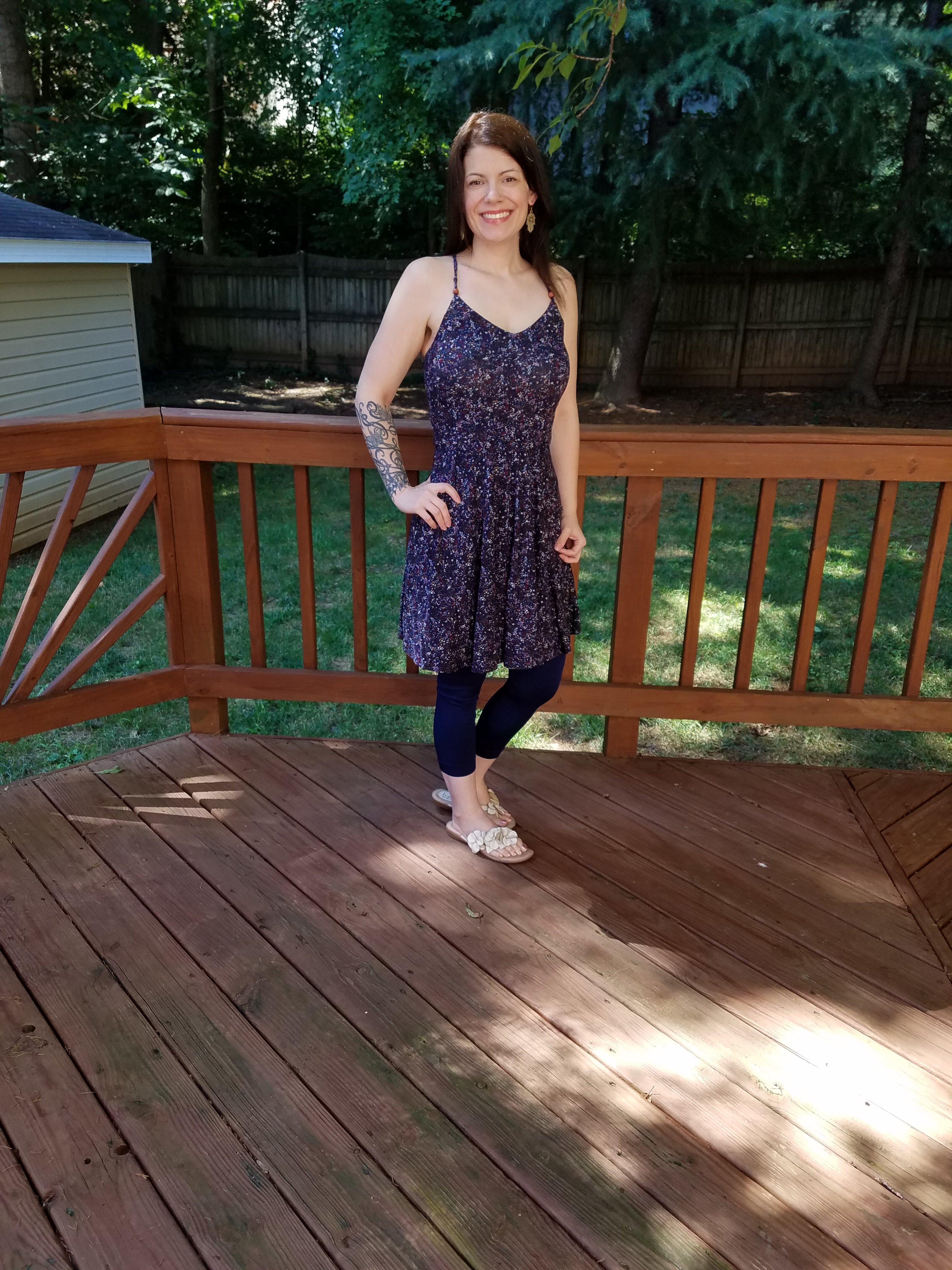
First, congrats. It sounds like you've done a great job! Honestly, it takes a long time for the mind to catch up. And if I'm not careful, I can still forget and my mental image of myself will slide back into how I looked for so long. Even now, seeing a picture of myself at goal weight is really odd sometimes. I can't believe how SMALL I am. And it's ridiculous but I still worry every time I order clothes. I measure myself and use size charts but I always manage to work myself up about the fact that I'm ordering size small in anything. I live overseas and buy everything online - that wait to try clothes on is always a little stressful for me. I always worry that I'll need to send things back. It took me a long time to realize that I don't need the biggest in everything. When I'm able to shop in person I don't let sizes or labels bother me like they used to, either. Once upon a time I would pass on a shirt that looked great on me just because I had to buy it a size larger. Now I accept that I'm anywhere from XS to M depending on where I'm shopping and the material used in the clothes. And there's nothing wrong with that. My husband was ready for me to stop losing weight about twenty to thirty pounds before I was done. To him, I'm skinny. I can honestly admit that while I see myself as a much smaller person, the word "skinny" has never been something I'd apply to myself. So some things never change. But the longer you maintain at goal and get used to your new body, the more comfortable you get and the more in sync your mind gets. Good luck and congrats! ~Cheri
-
The surgery will help immediately and forever with overeating. You simply will not be able to do it with a sleeve. And even though it's possible for you to stretch your sleeve (through constant overeating to the point of pain and vomiting) your sleeve is only going to have a tiny bit of stretch, anyway. You will never sit down and consume a massive meal again. That said, many people transition from overeating to grazing because that's what their sleeve will allow. As with any surgery, the sleeve really is only a tool. It will help you control your portions while (in most cases) taking way your desire to eat and your hunger. This in turn gives you the time to work on breaking bad habits permanently. That's the hard part - learning how to be satisfied with smaller portions and a different way of eating so that you can maintain long term and still be happy. meat is a tricky one. For some people they can eat it fairly quickly post op. I had issues with any dense Protein for a long time. Beef, in particular, bothered me for a long time. I could only eat a bite or two of steak and would feel terribly frustrated. But anything beyond that would make me sick. There simply wasn't room for more. I was sure I'd use tuna as a staple protein as soon as I was on soft foods but again, it took me a very long time to be able to eat more than a bite or two. In fact, I was more than a year out before I could eat more than an egg scrambled with cheese in a sitting. That said, after a period (several months, in all honesty) of feeling pretty frustrated by food and forcing myself to eat around the clock to hit my nutritional goals it did get easier. Now I still eat small portions but I enjoy them more than before. I can eat 2-3 ounces of dense protein in a sitting and that's plenty. Be prepared that this is something you might also experience and there's absolutely no way to know until you're sleeved and healed. You could develop lactose intolerance. Many don't, but you could. It's important to be mentally prepared for any of the potential outcomes so that you can cope if you have those issues post op. It's when people aren't prepared that you see the incredibly frustrated posts by people that feel they made a mistake. I love my sleeve. I couldn't have lost weight without it. It changed my life and gave me the opportunity to really understand my relationship with food and improve it forever. Good luck with your decision. Hang around and read stories - I'd hit the exercise/fitness board and see how people maintain an athletic lifestyle post op, because there might be something there that interests you. Many people transfer their food addictions to exercise...I'm not one of them, but they're out there. ~Cheri
-
Artificial sweeteners or yes, dairy. There's a huge amount of dairy in your diet if you're drinking two or more shakes a day - between the shakes and the fact that most people mix them with milk you can have a real issue. You can try finding a shake that has nothing artificial in it and see if that helps, or try mixing with a different liquid like Water, hemp milk, tea or coffee to see if that helps cut some of the reaction. Too many artificial sweeteners can cause dumping, especially if we're not used to eating them. ~Cheri
-
It stinks, doesn't it? I mean, we had surgery so we could eat less but I think deep down, we expect that we'll eat less of things we enjoy the same way while reaping the benefits of the weight loss! I wish! There are some folks that never have the taste change or have finicky sleeves but so many more of us go through exactly this phase. And iegal is exactly right: hang in there and it will pass. I did not really enjoy a meal until more than a year out. But before that I did get to a point where eating wasn't such a chore. I hated eating. And I developed lactose intolerance, so my "easy" Protein foods like yogurt and cottage cheese stopped being options early on. It was miserable. But it does come back. Your tastes change and your standards get higher but you'll find yourself genuinely enjoying your tiny portion of a meal at some point. I can't say when, but it really will happen. There are a few things you can do in the meantime. One, keep trying new Vitamins. Gummy vites are not the ideal but if that's what you can keep down right now, take those (and your other supplements) until you can handle the other ones. The multi that finally worked for me was a chewable prenatal Vitamin that I started taking more than a year before I got pregnant. I think it was the sixth or seventh multi I'd tried and it was the first one that didn't give me hours of nausea after taking it. Two, do not force yourself to drink a protein you hate. Keep trying new ones until you find the one you like. There is one out there if you try hard enough! I cannot even begin to count how many times I changed protein powders. The only brand that has hung in there the entire time and tasted good to me is the Syntrax nectar - I like the chocolate, vanilla, Cappuccino and unflavored versions. It's the only unflavored I've had that I really cannot taste or smell once it's mixed. Find what works for you. Find a site that sells samples so you can try many different things and track what you like. The Syntha-6 drinks by BSN have a higher calorie/carb profile but taste very good. You might find that in order to get to your protein goals you need to compromise with yourself and eat what works and keeps you happy. And mix with something other than milk - try almond milk, hemp milk, Water, tea, coffee...keep trying until you find what works for you. Make your diet as varied as possible. Eating the same, boring foods day in and out, choking down unpleasant Protein shakes and feeling exhausted by eating will only make you feel run down, discouraged and depressed. If you're having Soup, make it spicy or different in some way. Introduce foods you might not have eaten prior to surgery to liven things up. Do you like quinoa? It digests quite easily and is a complete protein. If you don't use it already, it's easy to use it in place of rice in dish you used to enjoy. Get out there and find foods that you can eat and enjoy, or at least not hate. This is a very normal part of the journey. It really does get easier. ~Cheri
-
Bah, what days of losing five pounds a week? I missed that stage entirely. I think that first of all, our bodies just have happy weights they don't want to leave. I had a heck of a time getting out of the 190s and the 160s (those were my two nine week stalls) because they were previous stopping points for me. I desperately wanted to hit the 120s because I'm not even 5'2" tall. My body had different ideas about my happy place. After a ton of work I could get down to 135 but to maintain there took real effort. I had to count every calorie and keep restricting myself. But if I just let the scale bump up two measly pounds I was able to maintain effortlessly. I didn't have to measure food, I didn't have to track calories, I didn't have to do anything but make sure I kept away from really rotten habits like grazing all day. In the long run, the two pounds affected only me - my pant size stayed the same and nobody else can see the difference two pounds makes. So I relaxed and let it go. But yes, the loose skin has to factor in somewhere. Mine isn't as bad as it was at one year post up but there's no denying that there's a significant amount of skin there. I often wonder if I'm going to finally achieve that goal of living in the 120s after plastics. But after hanging at goal for a while and being two and a half years out, the numbers really do bother me less. What I want is to fit in my own clothes and to continue enjoying my life. And after this pregnancy, I'm not aiming for a scale goal as my ultimate success. I'm aiming to get back into those adorable dresses I was wearing before I got pregnant! In any case, those last pounds came off so slowly for me. And while I can say I was six months to lose 20 pounds, there were months in there where I lost one pound the entire month and five the next. It's really hard to do. If you're absolutely certain you have to get there, the best thing I think you can do is check out a gym class that includes strength training. Add in different exercise to shock your body, because at this point, I think you've done all the diet work you can. Good luck, ~Cheri
-
I don't know that a taco is a terrible food choice, even if it's not a spectacular one. I ate them and still do on occasion. They bother me less than super fried foods. Anyway, I chimed in to say that I discovered after the first time I ate one that I had to order them without lettuce. Iceberg makes me feel terrible every time I eat it. So, if you ever do feel up to trying it again, try it without lettuce. They'll think you're nuts when you order but who cares? Anyway, I also tried to eat the whole thing the first time or two but in reality, I have to leave two or three bites behind or it's too much. ~Cheri
-
All the scale will do in the early months is drive you crazy, unless you have a very relaxed and reasonable expectation on what you'll see each time you weigh. You cannot expect to lose weight every time you step on the scale. You can even expect the occasional bump up in weight! Most people think they understand this until they're in it - and then they panic, post that they hate their sleeve, start screwing with their diet and basically...lose their minds. On the other side, I feel that you NEED your scale in maintenance. For me, that daily weight check is what keeps me in line. I no longer log my food daily so seeing a number on the scale, and reassuring myself that I'm within my allotted four pound window means a lot to me. If I see those numbers rise steadily for more than a day or two, I know I'm slipping somewhere. I have a tool that can immediately help me get back on track, with small changes like drinking more Water or avoiding food that could be the cause (sodium gets me every time). But outside of that? The best thing you can do for your sanity is weigh weekly or monthly. Your clothes and physical appearance are going to tell a more accurate tale of success in the early months, anyway. At one point I really did have my husband hide my scale and only bring it out for a weekly weigh in, because I was driving myself (and him) crazy. Seeing the scale go up, or seeing it stay in one place for weeks at a time really is a normal part of the process, but it ruined my day every time it happened. Good luck, ~Cheri
-
Thanks for sharing the study. If you haven't yet, it'd be nice to see it cross posted to the pregnant after sleeve board, as many people chime in there to see how long they should wait. I agree that 12-18 months is when people should start considering it, but that's based upon my own experience. I was nearly two years out when I got pregnant and honestly had a hard enough time eating and keeping food down even being that far out! I had such restriction it was very difficult to eat enough for myself for a year. I didn't really get everything together and really cement in those good, strong habits until somewhere in the 12-18 months post op window. I know it's possible to get pregnant earlier out and I know it happens and can result in nice, healthy babies and uncomplicated pregnancies, but why take the risk when you do have the choice to use some form of birth control and completely heal first? And yes, I am amazed and appalled that more surgeons do not discuss birth control with their female patients because I can't begin to count the number of "accidental" pregnancies on the boards here. It's complicated enough to learn a new way to live and eat post op and I really feel that more women should be taking control of this part of the conversation and asking the questions to avoid a high risk or unwanted pregnancy after surgery. Thanks again for the post - ~Cheri
-
I'll be a different voice here. I think that while your husband may not understand where you're coming from, he's trying to help you keep a more normal approach. There could be a number of issues here. One, he may not want to be alone in his enjoyment of food now that you're sleeved. Food was likely part of a ritual you shared as a couple and he doesn't want to lose that, simply because you lose weight. But two, he also may have seen you do all-or-nothing diets in the past and wind up failing, not to mention being angry or resentful because of what foods you're avoiding. Right now, the goal is to build healthy eating habits. But the way to successfully maintain long term is a balance of your approach and his. It means enjoying the food and yes, the social rituals we build around it, without losing control, feeling guilt or going overboard. You're a ways from it yet, but there will come a point where you SHOULD be incorporating a more normal diet. You'll need the energy, you'll function better with more (quality) carbs and you'll need to learn moderation so you don't fall on your face once you hit goal. You'll likely also find that you feel a better sense of control around food when you do incorporate a more balanced diet - not feeling deprived helps you avoid the binge and graze behavior that most likely helped contribute to your obesity. So - try to be more understanding of him while also trying to help him understand that your sleeve is not temporary. This is a big change for us, yes, but we underwent it and have new limitations that almost force us into compliance (at least early on) while he really cannot understand how big a change this is for you without undergoing it himself. Good luck! ~Cheri
-
I was type 2 and the last time I took anything to control my diabetes was the day before surgery. My surgeon did have to give me one or two doses of insulin immediately post op because of how the anesthesia can affect your blood sugars, but other than that I've been fine. Within a matter of weeks I was testing high normal on my sugars. I stopped testing completely around nine months post op, because my sugars never left the 90-110 range. I'm pregnant and recently had my glucose tolerance test. It turns out that my normal blood sugars stay around 67-75 and my one hour postprandial is normally between 120-140, but by two hours out I'm back at 67-75 again. It's absolutely amazing, honestly. I was worried I was running low but after a few days of monitoring recently my doctor said there is absolutely nothing wrong with me. I'm doing better than I ever could have hoped. My A1C just came back as a four - perfectly normal. For many of us, the diabetes is completely resolved with the sleeve. Before I even lost weight, the drastic post op diet had my diabetes under control and it stayed that way. Here's hoping you have similar results! ~Cheri
-
Great job! I'll say from experience that you're about to get slammed with tons of congrats from everyone, but also many requests for how you're eating, how maintenance is treating you, etc. So be prepared to share a bit more about how you're doing and your method for success. Everyone always wants to know how you did it. You've done great, enjoy the results of your hard work! ~Cheri
-
I was never a cake person but yeah, you should have no trouble post op. The previous posters are exactly right - how much you can handle will be up to your sleeve. And be warned that if you've been low-carbing you might have a reaction from too much sugar if it's a seriously sweet cake and frosting. So take it easy until you know how it will settle. The idea is to get to the point where you know you can eat whatever you want, but you're capable of keeping it in moderation. food shouldn't control you - you should control your desire for food. So I frown upon abstaining completely from entire food groups, because in my opinion, that leads to binge and graze behavior, not to mention a feeling of deprivation when you're constantly denying yourself food. This is especially true in social situations where partaking is expected and you'll can feel out of place or resentful if you're not eating. So, long story short: stop at a few bites and enjoy your cake. Odds are good you'll find it's not nearly as delightful as you remember, though. Try not to be too disappointed. ~Cheri
-
You know, until you said this I hadn't thought about how revolting it really is to be in a public place (like a mall or just driving down the street) and completely surrounded by the smells of greasy, fried foods. Even Krispy Kreme (which I used to love) just smells like sugar and grease to me...completely unappetizing. I sat there with my family and drank a cup of coffee while they each ate a doughnut and would have had one myself if it hadn't smelled so awful to me. It's really weird how much we change post op. I chalked it up to living overseas and not being around it all the time, but when I was back in the states over the summer I felt nauseated all the time when we'd pass restaurants and that heavy, greasy smell. I used to love fried foods, so I try not to be too judgmental here - but sometimes it really is hard for me to understand how people can eat that stuff. Even my husband, who didn't have surgery or need it at all, is completely grossed out by the way people eat back home. ~Cheri
-
Fries were my most beloved food prior to surgery. And if I indulged one day, I had to have them EVERY DAY. I would crave them. I loved fried foods. I doubt they'll always affect you so strongly, but yeah...they aren't so fabulous post op, are they? As your tastes change your standards will get higher. I no longer want greasy, quick foods - when I was back in America over the summer the first thing I wanted to do was eat some fast food. Within my new better habits, of course, not like I would have done pre op. Ugh. All I can say is YUCK. If you go without eating that garbage for any real length of time, you'll be amazed by how disgusting it is after a while. Sure, some foods are still enjoyable no matter how bad I know they are. I love soda, so I keep my consumption to a minimum. I love popcorn, but I pop my own on the stove and ration myself so I don't overdo it. But most of those old trigger foods? They're gone. They taste like the garbage they are, and that's not a bad thing at all. You might find that later on you'll enjoy a real, homemade french fry every now and again. I'm okay with them if I make them myself. They taste a thousand times better. But I still only eat four or five before I've had enough. It's nice to know you CAN eat them, even if you don't want to do it. ~Cheri
-
It's kind of amazing that despite the overwhelming failure of dieting for America at large, how everyone from people on the street to doctors to celebrities can just act like it's the only answer to obesity. First and foremost, if dieting were as simple as willpower and a 1,200 calorie diet we'd see a lot more success with Weight Watchers. I had willpower like a madwoman...in four month stints. But after four months of restricting myself, not losing weight and not seeing results it's awfully hard to keep going. Beyond that, I'm sure you've dieted before. All of us have. We don't get up one morning twenty pounds overweight and opt for the sleeve as our first way to lose weight! We're all here as obese and morbidly obese adults that have spent a good portion of our lives dieting. I know more about eating a healthy diet than any of my friends that have never had a weight problem, for sure! This is about you, your body and living your life the way you want to live it. Make this choice for yourself, not for anyone else. That said, the pre op diet will be hard, but I encourage you to give it your best. Because pre op, your diet stumbles will only make you feel guilty. Post op, they can cause complications. Knowing that you can stick to a restricted diet simply because your doctor ordered it is important. I think that the pre op diet and your ability to stick to it can really show how mentally ready you are for the post op phase. Because yes, your stomach will be smaller and you're not likely to have any real hunger after surgery. But the mental game you'll play is the same one you'd play on the pre op diet. You'll want food, even if you aren't hungry. At some point, you'll be tired of tiny sips of shakes and warm drinks and you'll wish you could chew. And you won't be able to. And you'll be risking your health if you break the doctor's ordered diet. So try to think of this as an extra tool to have under your belt before the surgery. You'll know you can hack the post op diet if you can make it through the pre op one. Good luck to you. We all have naysayers or unsupportive people somewhere in our lives. They'll come around once they see your success in most cases. But otherwise, try to ignore it. This isn't about anyone but you. ~Cheri
-
It's a proton pump inhibitor - like Nexium, Prilosec or Protonix. Prevacid is a PPI but for many of us it simply doesn't work at controlling the acid post sleeve. Taking Tums or Pepcid will address the symptoms of too much acid (usually poorly) but a PPI will reduce the acid production until your body learns to make less on it's own. Most people are on their PPI for roughly six months to a year, though some need one long term. It is the single most important thing (outside of diet) that you can do that will improve your quality of life post sleeve. Acid is a problem for nearly everyone post op, and having a PPI in your daily routine makes a world of difference. ~Cheri
-
I'd measure my food. Not because I think you're consuming too much but because I think it's important to start that habit immediately so that portioning and recording what you eat become second nature to you. Later on you'll have questions about how much you're eating and if your loss slows you'll want to know what you can do to fix that. The best way to control what you eat and to stay out of denial if bad habits slip back in is to track every mouthful of food. So, perhaps making eight ounces of a liquid and slowly doling it out to yourself would work. In the very beginning, I think most of us eat this way. It's hard to eat the three larger meals we're used to with a stomach that's a fraction of the size! I think I slowly grazed on food until about six months post op, when I could fit in a more reasonable amount in a sitting. At that point, it was no longer necessary to eat all day long just to hit my nutritional goals, so I transitioned to a more normal eating pattern. What's important here is that you stay hydrated and try to get some Protein in. You're newly sleeved and that's where the biggest issues with healing come in. It's also important to make sure that your grazing doesn't turn into a bad behavior. Meaning, don't allow that desire to slowly nibble all day make you allow yourself slider foods (and junk!) once your sleeve can tolerate it. The biggest way I see people slow their progress is by not addressing this kind of behavior. We go from being overeaters to sneaky grazers and again, the best way to stop that and stay accountable is to track your food. I did this, too - it's a learning process. So, keep yourself honest and don't worry about it unless it becomes a problem. If you're having trouble sleeping, make sure you're not consuming way too many artificial sweeteners. I avoided them for the most part prior to surgery but post op they were a huge part of my diet, until I realized they were causing me to have trouble sleeping. In the meantime, half a melatonin tablet will do the trick, though you might feel a bit groggy in the morning. I'm more sensitive to it post op than I was prior and it really knocks me out, much the way a sleeping pill would do. Crazy, the way our bodies change. Good luck, and congrats on your new sleeve. ~Cheri
-
A real stall is three weeks or more at the same weight. I had two of them and both were nine weeks long. Both started out as "natural" stalls, something you should fully expect post VSG. But like many of us, after about a month at the same weight I fell back into bad habits and had to address the bad behavior before I could get back on track. It is perfectly normal to have stalls and it is perfectly normal to have a less than perfect journey. If we had all of the tools we need to lose weight effortlessly, we'd skip the surgery and just join Weight Watchers again. The sleeve is that extra tool that helps us do the head work to overcome. So, expect stalls and expect some measure of frustration and expect that you will need to put effort into adopting new habits permanently for long term success. As for what month you stop losing there's no such thing. Really. I'll say it again: NO SUCH THING. Your sleeve is just about as large as it will get at roughly one year post op. Your capacity afterward is tiny compared to pre-op, even if it is considerably larger than immediately post surgery. We're talking about fitting in between 3/4 to 1 and 1/2 cups of food somewhere between one and two years post op. And that's it - forever - unless you try your very hardest to stretch your sleeve (though pain and real effort) what little it will stretch. So what does all of that mean? It means that there is nothing stopping anyone at one, two, three or even seven years post op, from picking up the pieces if they fall into bad habits and regain. The sleeve was and will remain a restrictive tool to help you lose weight and maintain that loss if you make the right food choices. Expect that the lower your body weight and the closer you are to your body's happy place, the harder it will be to lose weight. So yes, weight tends to come off more quickly in the beginning and to come off more slowly the closer you get to goal. That does not mean it's more difficult to lose weight. You'll use the same exact techniques and tools to lose. It's just harder for your body to give up those final pounds. I was six months to lose the last twenty. That's a bit excessive, maybe, but I was a slower loser from the start. But everyone slows down near the end - it's natural when your body has less to give up. And in my experience, people need to feel in control so they fiddle with their diets any time they don't see a drop on the scale every day. If you're tracking your food and you're not eating an extra four hundred calories a day all of a sudden, it's doubtful that your diet is the culprit. Everyone's body reacts differently but in more cases than not, the thing that shakes a real stall is upping the calories and carbs in your diet, not slashing them. Or you could just wait it out. Because with time, it'll pass and it's part of the journey. ~Cheri
-
Yes, I'd do VSG first. I haven't had knee issues, but when a family member needed two knee replacements two years ago she did one at a time. She did the first one with no weight loss and had a long, tough recovery. She opted to keep going with physical therapy and put off her second surgery until she lost some weight and felt better. Fifty pounds later she had the second surgery. Perhaps it was just knowing what to expect but she bounced back right away and has continued physical therapy and the weight loss on her own. By the time she had the second surgery, it was her choice to have it then or put it off a bit longer, because the need wasn't as pressing. Due to her age, she opted to do it then, but had she been younger she probably would have put it off for at least a few more years. Good luck! ~Cheri
-
I was always a "super sniffer" and it never really bothered me. If anything, I feel like having a stronger taste of sense and smell made me a better cook. That said, yes, I'm definitely more sensitive to all smells post op and it's about a thousand times worse being pregnant on top of that! And meat is especially hard for me. I've had to sort of re-learn normal with this one, but will admit that even the faintest "off" scent makes me pitch the entire package. I'm always careful to wash meat to be sure I'm smelling the meat itself and not the old blood or packaging. And I've become a bit of a fanatic about cleaning my refrigerators because they can get stale and hold smells in quite easily. I super clean mine about once a week, when I do my shopping. There have been times I could tell without even opening the package that something was off and have been proven right when my doubting mother-in-law or husband open the package to check for themselves. Consider it a super power? I spent many years as a vegetarian but did eat meat prior to surgery. Now that I'm expecting meat makes me completely ill, so I'm pretty sure I'll only be an occasional meat eater in the future. I don't care for the smell of it either raw or cooking. Sometimes I can eat it if someone else prepares it but prefer to avoid it now. There are plenty of ways to get Protein without it, so long as I'm careful about my diet, so I don't worry too much. Good luck and I hope you find a solution that keeps you both happy. ~Cheri
-
New sleeves are noisy. It gets much, much better with time. At some point my husband and I realized we were no longer being serenaded by my guts every evening in bed. Nowadays the only time my sleeve makes noise is when I miss a dose of my PPI or eat too much dairy (despite knowing I'm intolerant) so it's no longer an issue. I used to have an embarrassing stomach prior to surgery, too - it would loudly growl and gurgle even within a hour of a large meal and nothing bothered me more than sitting in quiet lecture hall or conference room and having people stare at me because my stomach was growling so loudly! Within a year it should diminish. Be careful to get on a PPI immediately post op but yes, expect the sleeve to be noisy for a while as you heal and adapt. ~Cheri
-
Read it all and make an informed decision. If you researched your surgeon and trust him/her and feel confident about their ability, and if you're educated about what to expect post op there is no reason no to go ahead. Yes, complications can happen with this and any other surgery, major or minor. They are pretty rare but can always happen to any surgeon at any time. They're accidents - it's the unintentional thing that happens during the procedure, in most cases. Choosing a surgeon of experience and skill minimizes your risk, as does knowing what to expect post op - if any sign or symptom could be a leak so you get it addressed immediately. Following a post op diet to the letter is also important. You should do everything you can possibly do to minimize your own risk and diet is one of the few things you can control. That said, complications really ARE rare with this surgery. They happen, and you should know that they happen, but for most people the worst thing they experience post op is gas pain or acid reflux. You'll be sore after surgery and that's normal. I hated having to sleep in a recliner, but really, that's a small sacrifice for my sleeve! Make sure you're reading it all - not just the horror stories but the stories about people that came through fine. We're all here. It's good we can pool our knowledge and experiences for everyone else. Choosing whether or not to do this is far too personal for me to try to sway you either way. But I can say that it's perfectly normal to have a bit of nervousness and also to wonder if it will work for you. I see people post about it all the time, but after a year of research the only feelings I had prior to surgery were eagerness to be on the other side and frustration that I had to travel so far for my surgeon! Good luck whatever you decide, ~Cheri