AnAnole
Gastric Sleeve Patients
-
Joined
-
Last visited
Everything posted by AnAnole
-
To be fair, I lost the bulk of my weight mostly avoiding alcohol (maybe 1 or 2 times a month after the first month) but now, when, I can't stomach the idea of eating any more food, I find that a couple of glasses of wine is a good way to get me close to maintenance. My labs are still stellar and my body composition is still improving, but if that changes maybe I'll re-evaluate. I follow mostly a Mediterranean style diet and I don't think you can disassociate wine (yes, even every day) from the well documented health and weight benefits of the diet.
-
Alcohol is a great way to meet my 3,000 calorie maintenance. I drink some almost every day.
-
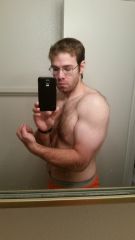
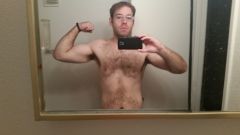
Reached a low of 168 lbs a few months ago after a pre-op weight of 331. Back up to 175 lbs but all the weight I've gained has been muscle. Maintenance is around 3,000 kcals a day. Pic I took yesterday:
-
Did you plan this all yourself or did you get a personal trainer? Congrats!! I need to lose enough as quickly as possible up front, so that 1) I FIT in the equipment, and 2) it no longer shreds my knees to walk! I planned it. I've lost weight on my own before (50+ lbs on 3 separate occasions). I've read the studies that show that most people regain the weight if they lose it without surgery. I knew from experience that my body would fight back again if I lost the weight only through diet and exercise, which is why I got the sleeve. I knew how to lose weight, I just couldn't lose all of it and I couldn't keep it off. This feels totally different. It's amazing to feel satiated at maintenance, thanks to having far less circulating ghrelin, as opposed to constantly being hungry with another 50+ lbs to lose despite eating the correct foods, which is what I experienced losing weight without the surgery. Before I injured my back nearly a decade ago (end of high school) and became depressed and ultimately gained 150 lbs after years of yo-yoing, I was quite fit. I worked out in high school, so I knew how to workout. I knew how to measure macros and count calories. It definitely helped knowing how to do all of this ahead of time, but it isn't rocket science - you can learn how to do all of this through a bit of reading.
-
I lost ALL 150 lbs of my excess weight in 9 months. I walk at least 15,000 steps a day, weight train 4 days a week and carb/calorie cycle where I go high carb, high Protein, and low fat and the days I don't train, I go low carb, moderate fat, and high protein. Yes, it's possible to lose all the weight. For the first 3 months, I averaged 600 calories a day with as much of it coming from protein as possible. For the next 3 months, I averaged 900 calories a day, still getting as much from protein as possible. From months 6 to 9, I stopped counting calories but probably averaged 1,800 calories a day. I still lost ~30 lbs and gained a lot of muscle doing this. This is also when I calorie and carb cycled. I eat significantly more calories on days I workout. I don't recommend this for everyone, but post workout simple sugars are my friends - chocolate milk is my go to post workout nutrition.
-
update: 9 months out, officially down 150 lbs. Current pics:
-
AnAnole, a weight loss surgery photo album by AnAnole on BariatricPal. 3 photos in Before and After Gastric Sleeve Photos.
-
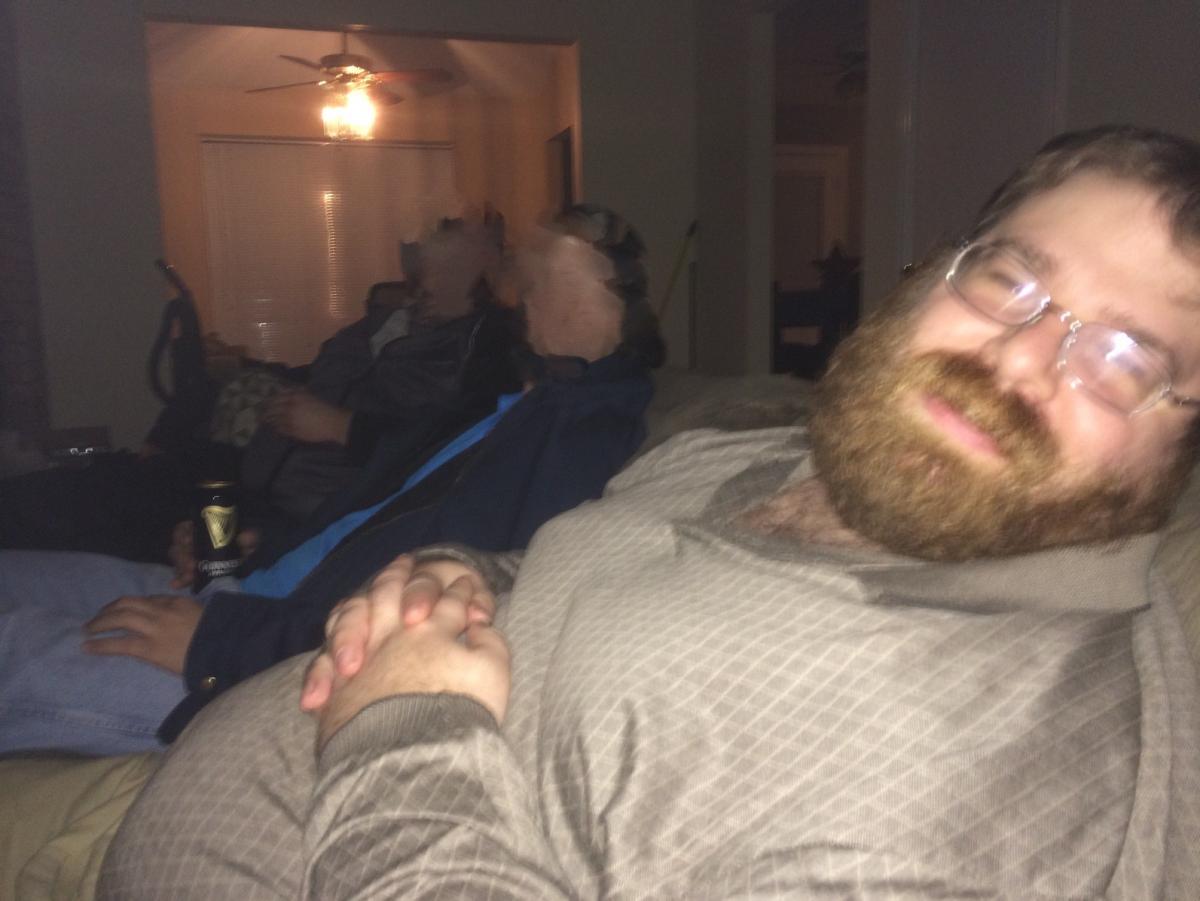
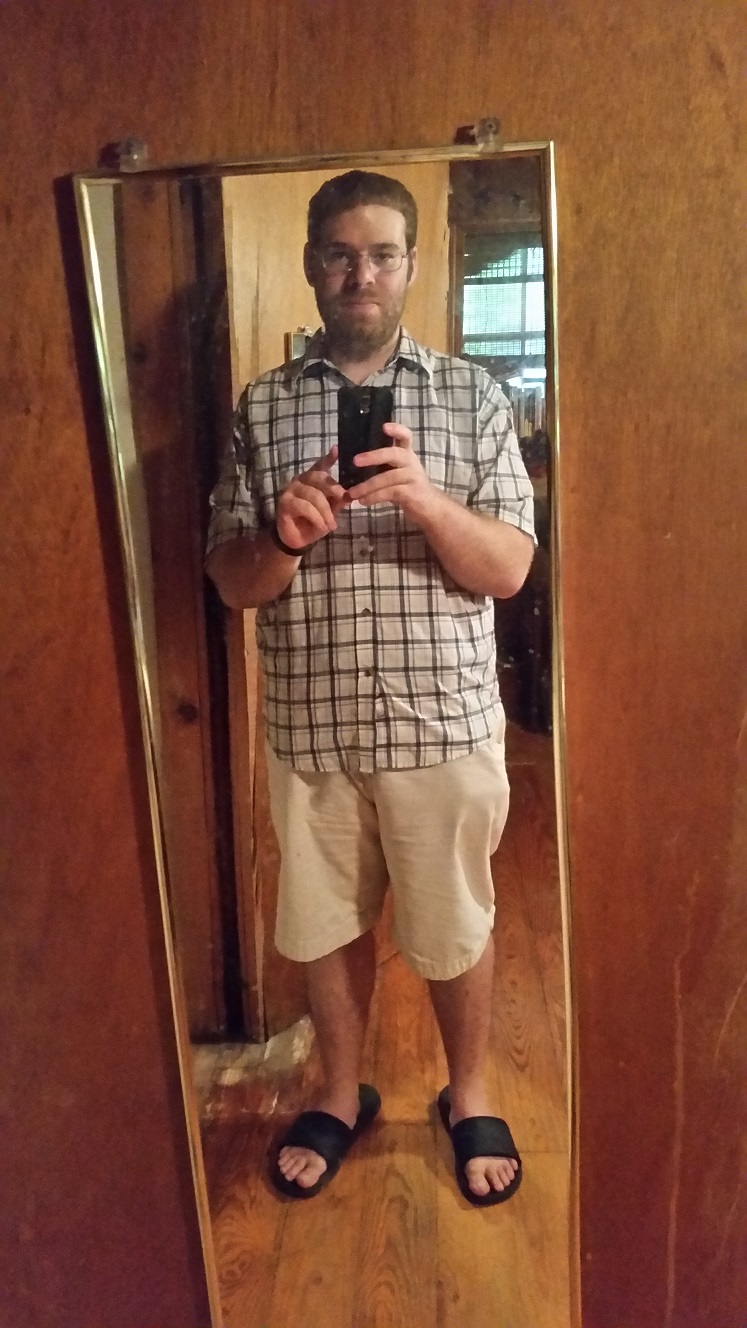
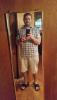
I don't have any good pictures at my fattest...and the shirt...I would wear anything that would fit. Anyway, here's my transformation thus far.

-
I drink a diet coke a few times a week. There's zero evidence that carbonation harms the sleeve and it hasn't hindered me one bit. My eating/drinking guide even said I could have carbonation after a month. All it does is make me burp more.
-
I just want to preface this by saying that getting the surgery was probably the best decision of my life. A briefish summary of my story: I was lean as a kid and a teenager. I was highly active and on many days I would play basketball for 3-4 hours after school. Then, I went off to college. As a teenager, I ate a ton of food just to keep the weight on. I could eat ~5,000 kcals a day and my weight wouldn't budge. I had a 6-pack and could dunk a basketball on a good day, which isn't easy when you're 5' 10". When I got to college, I started partying a bit (others certainly partied a lot more, but I'm not going to say it didn't affect me). I also stopped playing basketball every day because I either felt too lazy to go to the gym (none of my usual friends were around to motivate me to get off the computer) or I had to focus on studying/writing a paper/etc. I gained about 20 lbs my freshman year. I still didn't look bad in a shirt, but I think this was the beginning of my battle with obesity. I'm certain that extra 20 lbs was enough to trigger the beginning of my sleep apnea. The next year, I became incredibly lazy, mostly because I was often tired. I went to go see multiple doctors on campus, including a psychiatrist, and they all diagnosed with major depression. When I mentioned my poor sleep, they just attributed it to the depression. I tried various anti-depressants, but they didn't seem to help. My doctors and I thought it was a matter of just finding the right medication. Meanwhile, I kept gaining weight. I gained another 40 lbs my sophomore year and my abdominal bulge could no longer be hidden by wearing a loose shirt. I made it through that year with OK grades, but it was a struggle. Once I finished the semester, I resolved to lose the weight. This was my first diet of many. I spent most of my summer working out / playing basketball and adhering to a strict 1,500 calorie diet. I managed to lose 40 lbs and and I actually looked quite good due to the muscle I put on from weight training, but as soon as school started up again, I slipped. I supposed it was the stress that caused me to fall of the wagon. Between late August and mid-May of the following year, I put on 50 lbs and was heavier than when I started dieting. I also lost a lot of my muscle mass, to the point where my legs buckled a few times just walking around. Worst of all, I failed a couple of my courses each semester. I decided I needed a change of scenery and transferred to a different university, hoping that a new location would help me reinvigorate myself. Long story short: it didn't help me. I ended up dropping out and moving back in with my parents. I spent the next few years in a state of lethargy, hopping from one crushingly monotonous retail job to the next, quitting when my fatigue would become overwhelming. Finally, at 26, I started to turn things around. It started when I saw a report on the news about sleep apnea. None of my doctors ever mentioned it to me, but I was certain that I had it. After a few months, I finally got scheduled for a sleep study. The night at the sleep clinic was rough as I had trouble sleeping with all the wires attached to me, but I did manage to sleep for an hour, enough to be diagnosed with severe sleep apnea. A week later, I finally got my CPAP. It changed my life. I went from having little motivation and energy to wanting to change the world. I signed up for a couple of classes at the local CC and aced both of them. I then transferred to the nearest university while living at home. Over the next year, I took 39 credit hours and made As in all of my classes except for a difficult genetics class, which I got a B in. It was by far my most difficult course load, but I thrived. I would have graduated summa cum laude if it weren't for the fact that I need another 15 hours at the campus to qualify. But I still had one large problem: I was fat. Fatter than I had ever been, tipping the scales at 330 lbs. I had also recently tried dieting, but succumbed to the yo-yo effect. Throughout my time living at home, I dieted several times. Each time, I was initially successful, losing 30 lbs or more, but I always ended up a bit fatter than before. I finally realized that dieting was futile, at least in my case. I was in the 95% that re-gains after weight loss through traditional means. I always changed up my diet some, going from low fat to low carb, but the result was always the same: fatter than before. I had known about bariatric surgery for a while, but I didn't consider it an option until after I graduated -- even then I was reluctant to get operated on. Fast forward to this past March. I had be avoiding doctors, but I finally went to get my bloodwork checked at the behest of my parents. I still felt pretty good thanks to my CPAP but, shockingly, I was diagnosed with diabetes. I also had hypertension, hypertryglceridemia, hypercholestolemia and mildly elevated ALT levels, on top of my diabetes. My A1C was 6.6%, but my doctor said that I could put my diabetes into remission if I lost weight. I had to do something, but I knew dieting again would be a failure. It was time for something different. Fortunately, immediately after my diagnosis, I saw an ad for True Results offering to do VSGs for $3,500. I knew my insurance wouldn't cover my surgery, so I called and set up an appointment. It wasn't long before I had a surgery date. I had my VSG on April 6th. My pre-op weight was 331 lbs. Today, I weigh 270 lbs. My appetite is nil. I feel fantastic and walk 8-10 miles a day. I lift weights 3 times a week. I've gone from wearing XXXL shirts to fitting comfortably in XL shirts. I was wearing size 52 pants, now I can squeeze into size 42s. I wake up feeling refreshed every morning. I still use my CPAP, but I my pressure has come down from 12 to 6 cm H20. My blood pressure has gone from being uncontrolled even with 2 meds to being normal without any medications. I haven't had my post-op bloodwork yet, but I have no doubt that it has greatly improved.