safemancsp
Gastric Sleeve Patients
-
Joined
-
Last visited
Everything posted by safemancsp
-
Efierke, I did not address your statement on alcohol. Less than 20% of alcohol is absorbed in the stomach, the remaining 80%+ is absorbed in the small intestine. I can provide numerous references supporting this if you would like me to.
-
efierke, Please provide a reference or source for your assertion that what I stated about calcium being absorbed in the small intestine and not the stomach is not true. Also, are you able to cite a medical reference that actually states, B12 is absorbed in the stomach? If so, please provide the reference. B12 is not absorbed in the stomach. B12 is absorbed in the small intestine. Bound B12, that is B12 contained in food we eat, rather than supplements we take, requires "intrinsic factor" which is produced in the stomach to be broken down and absorbed in the small intestine. It is NOT "absorbed almost exclusively in the stomach" as you assert. From the Merck Manual which you can find here: http://www.merckmanuals.com/home/disorders_of_nutrition/vitamins/vitamin_b12.html "Vitamin B12 occurs in foods that come from animals. Normally, vitamin B12 is readily absorbed in the last part of the small intestine (ileum), which leads to the large intestine. However, to be absorbed, the vitamin must combine with intrinsic factor, a Protein produced in the stomach. Without intrinsic factor, vitamin B12 moves through the intestine and is excreted in stool." From another source located here: http://www.fao.org/docrep/004/y2809e/y2809e0b.htm Absorption"The absorption of vitamin B12 in humans is complex (1, 2). Vitamin B12 in food is bound to Proteins and is released from the proteins by the action of a high concentration of hydrochloric acid present in the stomach. This process results in the free form of the vitamin, which is immediately bound to a mixture of glycoproteins secreted by the stomach and salivary glands. These glycoproteins, called R-binders (or haptocorrins), protect vitamin B12 from chemical denaturation in the stomach. The stomach’s parietal cells, which secrete hydrochloric acid, also secrete a glycoprotein called intrinsic factor. Intrinsic factor binds vitamin B12 and ultimately enables its active absorption. Although the formation of the vitamin B12 - intrinsic factor complex was initially thought to happen in the stomach, it is now clear that this is not the case. At an acidic pH the affinity of the intrinsic factor for vitamin B12 is low whereas its affinity for the R-binders is high. When the contents of the stomach enter the duodenum, the R-binders become partly digested by the pancreatic proteases, which causes them to release their vitamin B12. Because the pH in the duodenum is more neutral than that in the stomach, the intrinsic factor has a high binding affinity to vitamin B12, and it quickly binds the vitamin as it is released from the R-binders. The vitamin B12-intrinsic factor complex then proceeds to the lower end of the small intestine, where it is absorbed by phagocytosis by specific ileal receptors (1, 2)." I can produce at least another 20 medical references that clearly state that food bound B12 is absorbed in the small intestine and not the stomach if you would like me to do so.
-
I am not sure why they would tell you that since no nutrients are absorbed in the stomach, they are absorbed in the small intestine. Neither form of calcium is absorbed in the stomach.
-
Me too!
-
I just had my surgery two weeks ago today, so I have a lot of work still ahead of me to get to my goal. But I am looking forward to many different activities: hiking in the hills, riding a bike, and taking long walks with my wife are just a few.
-
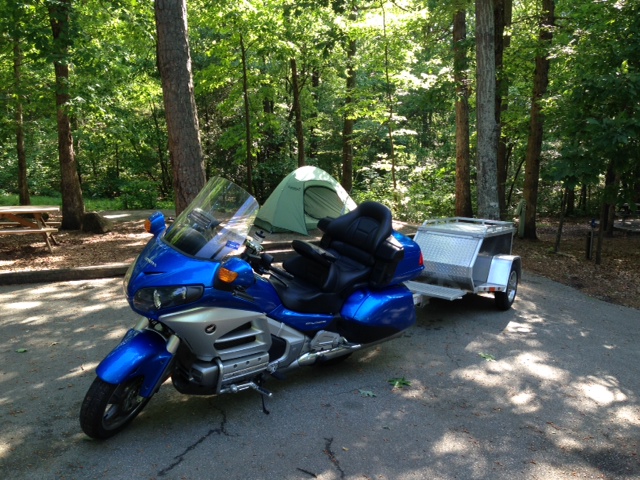
I ride a 2012 Honda Goldwing.

-
Michele, I know directions from different doctors are often different. My doctor and dietician indicated that calcium citrate was necessary for bypass patients but for sleeve patients, calcium carbonate is fine. The dietician actually pointed me towards the calcium chews at Costco as a low cost alternative. Randy
-
How did your surgery go?
-
Geekguy, let me know after your surgery when you are ready to meet, or before your surgery if you want to meet before. I would be happy to meet you for a cup of decaf coffee. My surgery was 11 days ago and each day is better than the day before. The first 5 days were difficult, but I am over the hump now and I am already so glad I had the surgery. Dr. Newton did my surgery, Dr. Steiner was assisting him. Randy
-
No, the three days was not planned. Had some issues controlling pain and nausea.
-
My surgery went well. I spent three days in the hospital and came home Sunday. I had my first soft food this morning. I am making progress every day.
-
Don, I am also in Lexington. My surgery is this Thursday, 1/22. I would be happy to meet regularly after my surgery. Randy
-
Anyone else with a surgery date of January 22nd? I am really excited that it is finally getting here.
-
I finally got approved and have a surgery date, this coming Thursday, 1/22!
-
I just started the process with my surgeon the day before yesterday. My insurance company (Aetna) requires 3 months of supervised diet prior to giving approval. So, I am looking at probably mid to late January before I will have surgery.
-
safemancsp on myfitnesspal.