SpartanMaker
Gastric Bypass Patients
-
Joined
-
Last visited
Everything posted by SpartanMaker
-
I'm not entirely sure if this is a win, but let me give you a little bit of my backstory first. Thanks to a work accident many years ago, I have multiple herniated discs in my lumbar spine that sometimes cause a lot of sciatica. When this was at its worst, I had to use a walker just to get around the house because I had no motor control over my right leg. To be honest, this is one of the things that actually led to me becoming obese. I wasn't able to workout (I could hardly move), and was in a lot of pain, so I self-medicated with food and alcohol. The pain isn't completely gone now, but after losing all this weight, it's so much better than it used to be. Fast forward to this week. I spent basically 4 days (Saturday-Tuesday), trapped in a zoom class and this inactivity took its toll on my back. I'd been in a lot of pain and hadn't worked out at all since taking a short run Monday. Wednesday and Thursday I didn't get the walker out, but i did seriously think about it. Today the pain was still about a four or five on a ten point scale, but at least it wasn't radiating down my leg much. I really struggled with trying to determine if I just needed to man up, or if it was stupid to try to workout, knowing that I might make it worse. I finally decided I just needed to try to run, since I knew that once the endorphins and endocannabinoids kicked in, I'd probably be fine. Plus, the movement should actually help loosen things up in my spine and help me heal. It took a bit for me to work up to going for it, but I did finally go run this morning. (The bad thing was that the delay meant I was running in the heat.) To be honest, the run really sucked for the first mile or two. Thankfully, once I made it to about 4 miles, the pain was mostly gone and I was able to complete the 9 miles I had planned. I'm still thinking I'm going to have to skip my strength training tomorrow (I'll probably log a few running miles instead), but at least I got out there. The more I think about it, the more I'm convinced that completing the run wasn't actually a win. The win was that I didn't let this pain become the start of a spiral down to a place I never want to go to again. I personally think the most important thing is not actually the highs, though those are great. It's not succumbing to the lows and letting yourself fall back into those old destructive habits. I wanted to throw this out there because i know I post a lot here and I suspect some of you might think I've got it all together since I'm normally the one giving advice to others. That's just not true. Like everyone, I have my own demons that I have to deal with and this back pain is just one of those.
-
Wow, you are all doing fantastic and I love that you're feeling good about your new bodies! (Especially those of you rocking a form fitting dress or bikini, that's effing awesome!) For me as an older guy, I don't really have a style, unless you consider athletic clothing a "style". Yes I know athleisure is a style, but I think of that as more for women? When guys wear workout clothing, it's just what we happen to be wearing at the time. I guess what I'm saying is I didn't explore new "styles" as much as I had a blast buying types of clothing I never would have worn at my heaviest. My point is even style challenged people like me can have fun dressing in ways that we never would have considered before.
-
Interesting that it's called barley in the UK! We have a different grain we call barley, but the word "farro" is really odd here in that technically there are 3 different varieties of wheat berries we call farro: emmer, spelt & einkorn. These are all really ancient wheat grains that predate modern wheat. The word "farro" is obviously a loan word from Italian and we can thank the large Italian immigrant contingent here for it (and for bringing over some tasty ways to prepare it). Regardless, I agree that it's such a wonderful grain and sadly underutilized here in the states. I think our traditional barley is mostly used in soups and stews here, but farro is more common in salads like I made, or sometimes as a side dish similar to how you might make a risotto (another wonderful Italian dish). Sorry for going off on a tangent a bit, but I'm a huge food history geek and find it fascinating how what we eat has evolved and changed over time!
-
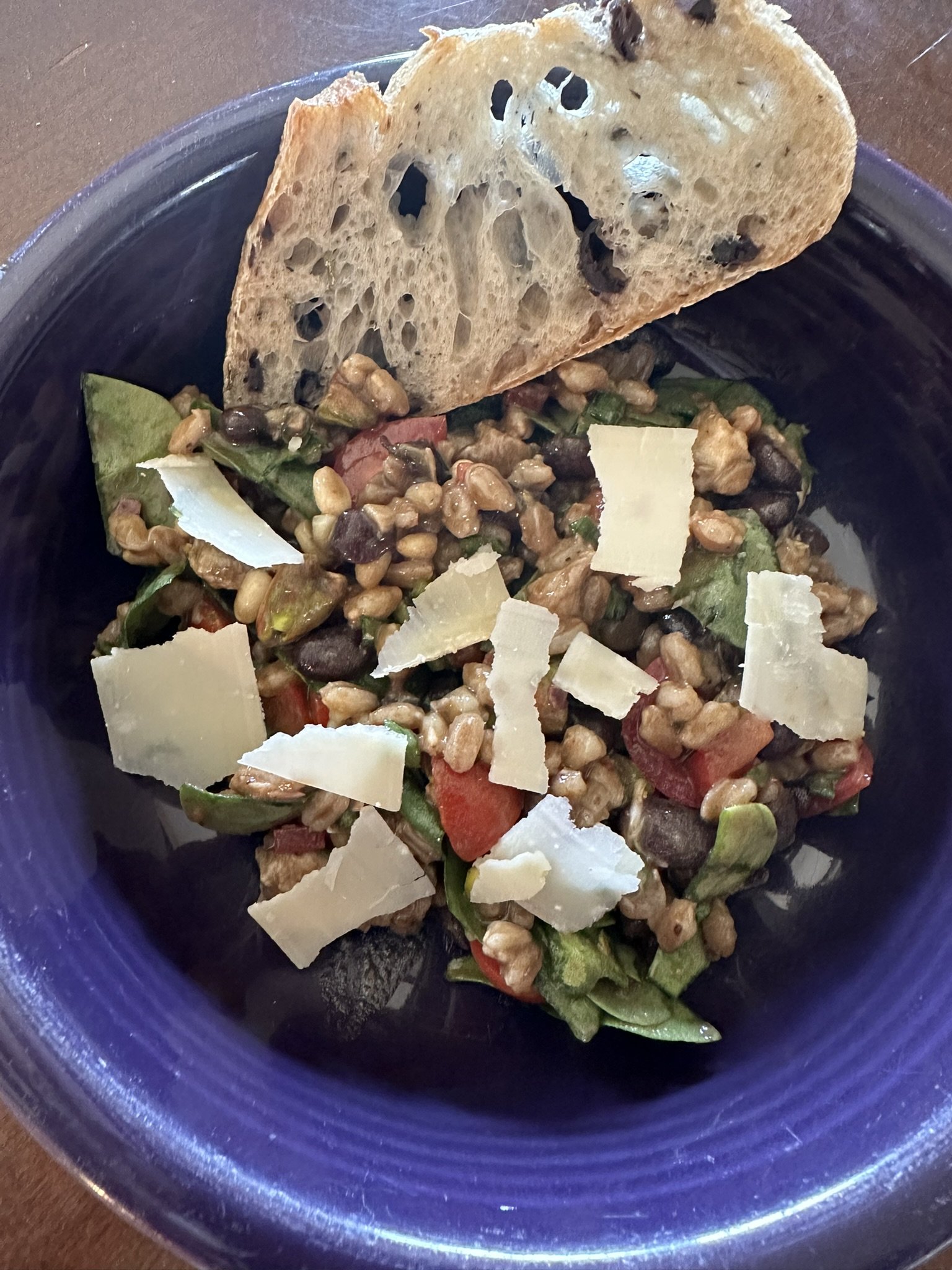
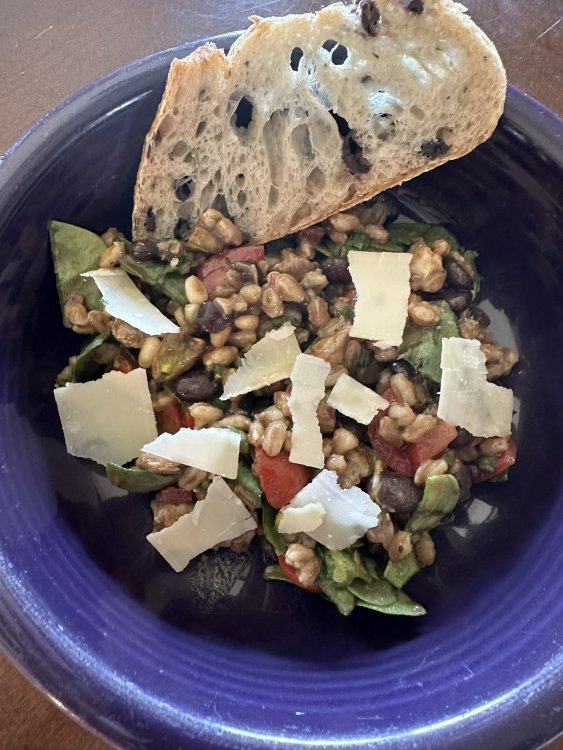
Farro salad with balsamic vinaigrette. Has spinach, tomatoes, red pepper, black beans, pistachios, pine nuts, shaved parmesan and probably some other stuff I'm forgetting... ? The bread is an olive sourdough.
-
-
Mmm, best kind IMO!
-
I doubt it's a stricture or anything serious, but if you're concerned, it's never a bad idea to talk to your surgeon's office. My guess is it's just due to the swelling. Right now, your new stomach has lots of little "pockets" in it and I suspect that may be contributing to this feeling. If you get to where you can't keep anything down, that's when you should definitely reach out to your team ASAP.
-
For me, it may have been 5 or 6 days, but like you said, everyone is different. Also, in terms of the gas bubble feeling you have mentioned a few times, that IS NOT surgical gas. The gas used during surgery is not inside your digestive system. It's in what's called the peritoneal space. This is used to allow the doctor to help visualize all your organs. My point is that's not what's causing your gas bubble feeling. I can't say I actually experienced that feeling, but it makes be wonder, are you drinking with a straw? Typically using a straw is a no-no right after bariatric surgery because it can cause you to swallow air. Since you have such a limited amount of space right now in your stomach, We don't want any air in there.
-
No fruits on veggies at all? Wow, that's really restrictive. If you also can't eat any seafood, then really about all that's left is dairy, meat or grains. About all I can come up with would be: Yogurt, especially Greek style (Make sure to avoid any flavors with chunks) Protein supplements /drinks (duh) Mashed cottage cheese (small curd) Ricotta cheese Mashed beans like lentils or alternately low fat or fat free refried beans. Add some grated cheese if your plan allows this. (Of course culinarily we classify these as vegetables, so maybe they don't want you eating this either???) Pureed meats like beef, chicken, or turkey (I personally couldn't stand this) Canned chicken breast, mashed up well. May also need to add something to make it moister? Cream of wheat Grits Baby oatmeal (since it's all ground up) Mashed potatoes (or do they consider this a vegetable too?)
-
I'd say the four pillars of a healthy immune system are moderate exercise, good sleep, good nutrition and low levels of systemic stress. If you are lacking in one or more of the above areas, then that's likely contributing to a poor immune system. I personally would focus on those big pillars before focusing on things that don't have much scientific evidence behind them.
-
I hope you got some answers today from the surgeon's office?
-
It does get better! You just had MAJOR surgery and your stomach tissues are massively swollen right now. I know it's scary ATM, but just follow your post-op instructions and make sure to drink, drink, drink. Dehydration is a big risk early on after surgery, so even though it sucks, keep sipping! I suspect your hunger feelings are probably a combination of things such as not eating any real food for a while, as well as your body trying to let you know that it's not happy with the current situation. That too will get better over time as things start to normalize and you're able to eat more.
-
How disappointing! I was hoping this would work because I was thinking about trying it!
-
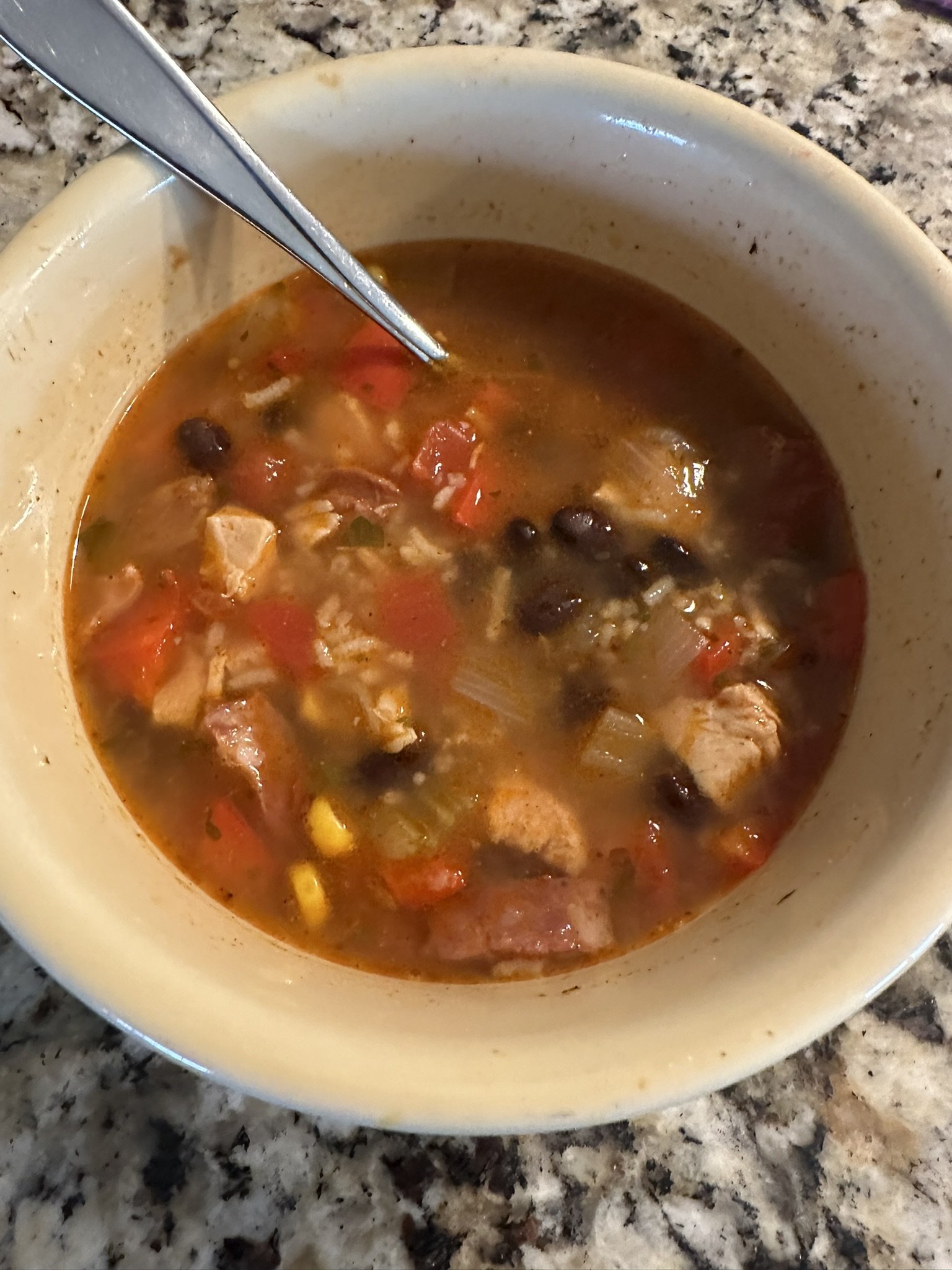
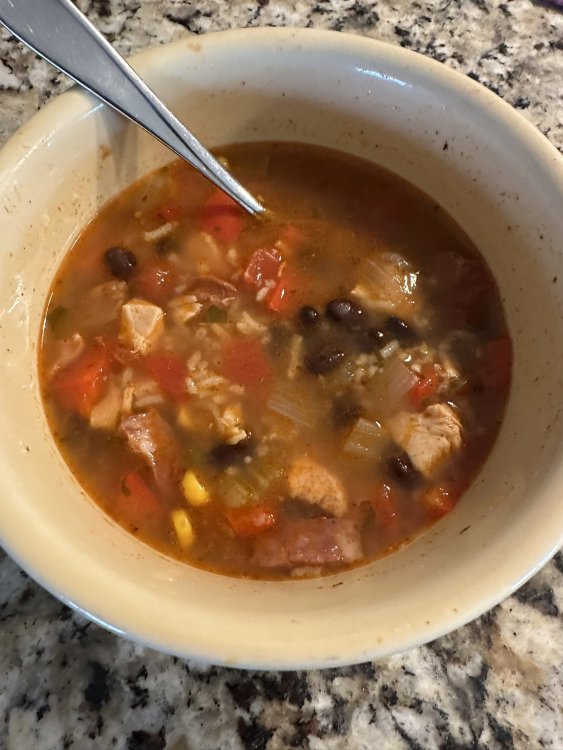
I realized I never shared my "Jambalaya Soup". Yes I realize jambalaya isn't actually soup, but it had a lot of the same ingredients, including cajun spices, so I took a little liberty here. If you're Cajun or Creole, please don't come at me!
-
Oh wow, yes a serious B12 deficiency is a big deal, but I'm a little surprised for it to show up 11 years later? Also, did your other doctors not do any blood tests? A typical blood test called a comprehensive metabolic panel (CMP), is really common and should have shown a B12 deficiency if you have one. A B12 deficiency is fairly rare in most developed countries because B12 is found in high quantities in meat and dairy. For obvious reasons, it's more common in vegans, though most vegans know to consume foods high in B12 or to take a supplement. Speaking of supplements, are you not taking a multivitamin? Really everyone should take one since there's very little downside compared to the risks involved in vitamin & mineral deficiencies. Bariatric surgery patients especially should do so for a lot of reasons. If you really think this might be your issue, go pick up a multivitamin from the store and start taking it ASAP. You could just get a B12 supplement, but it's potentially possible it's something else, so a multivitamin should cover more potential deficiencies.
-
Sorry you're having such a hard time. If you do have a hiatal hernia, that could account for the pain you're having? I think the critical thing is how quickly you can get in to see someone because if you have a hiatal hernia and it's causing you this much pain, it's probably going to require surgery to address it. That said, it's important to go through the process of differential diagnosis to rule out other causes. Gastroenterologist are well positioned to help you through the process regardless of what the issue is. On the other hand, a bariatric surgeon may also be able to accurately diagnose the issue and potentially even do the surgery, whereas a gastro will typically refer you out to a general or thoracic surgeon. It's a tough call, honestly. I think your instinct to seek out a bariatric center is a good one and the best course of action is to go down both paths for now until you know for sure what's going on and have a treatment plan in place.
-
I curious where the idea came from for this? Also, just from a scientific perspective, it seems odd to me to make so many changes all at once since it will be impossible to determine if only some of these changes are actually making any difference, or if some of these may be detrimental, while others are beneficial. For example, we know pretty conclusively that increased sleep is hugely beneficial to weight loss and better health overall. I think at the end of your experiment you won't be able to tell what changes you might want to make more permanently vs. which changes didn't help and can be safely ignored. Just my thought so far. Regardless, I hope it helps you.
-
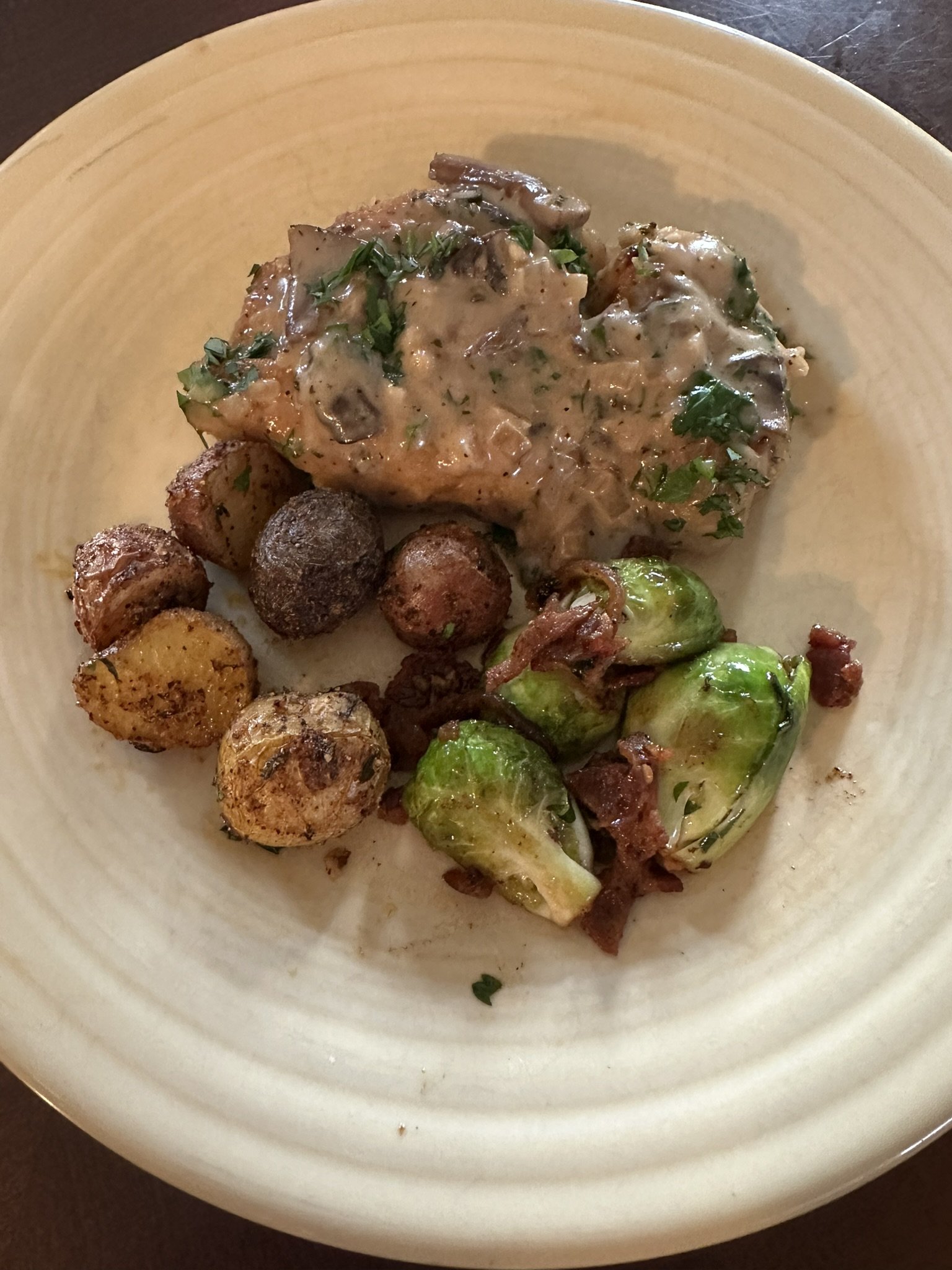
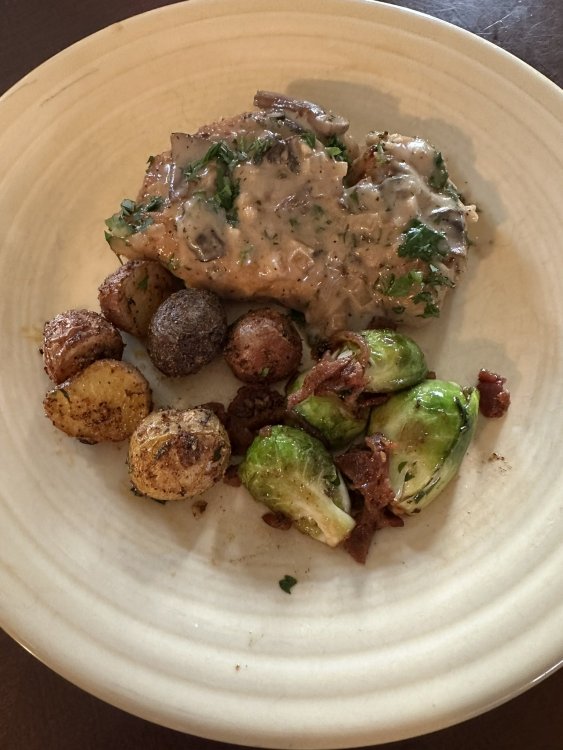
Chicken marsala, roasted potatoes & sauteed Brussels sprouts with onion & bacon:
-
Oh man, this is tough! I'd love to hear what others think, since if I was great at this, I wouldn't be in the same boat! That said, I will throw some ideas your way. ? Fundamentally, what we're talking about here is NOT forcing someone else to change, since that's impossible. Instead, what we have to do is help them realize that THEY need to make a change. I think there are a couple of models that would be useful to understand. This first is called the "Health Belief Model". This states that it's underlying beliefs and emotions about health behaviours and health risks that influence a decision to make a change. Beliefs about health risks are further influenced by the individual's perceived susceptibility and their understanding of the potential seriousness of the risk. For example, if you believe you are at high risk of a heart attack or stroke and you believe these are potentially life-threatening events, then you are much more likely to think that you need to make a change. The other key factor is your beliefs about health behaviors. Let's say you want to do something about your heart attack risk. You'll evaluate various health behaviors and will consciously or subconsciously grade them based on your own beliefs about the potential benefits of a specific behavior, as well as your beliefs about any barriers you foresee. An example might be acknowledging that a better diet would help, all the while highlighting all the reasons you can't change your diet or why it's too late for you to change. The takeaway for any of us trying to influence loved ones to change is that we can't actually force the change. What we can do is help them see the risks and benefits of changing, all the while also helping eliminate any barriers they see. The second model that I think is worth thinking about is called the "Transtheoretical Model of Behavior Change" (often abbreviated TTM). Some of you may have also heard of this one called the "Stages of Change Model". The basic idea is that there are several major stages we go through in changing behaviors. In order: Precontemplation. At this stage, the person is either unaware, or under-aware of the problem (or believe it can't be solved). If the person is at this stage, about the best you can do is help them see the need to make changes. IMO, this works best if it's subtle. Maybe it's talking about the coworker that just had a heart attack. Maybe it's pointing out a news article you found interesting about a health topic. Maybe it's just modeling healthy behaviors so they have a reference point. Again, keep in mind that you can't force the change and telling them they need to change won't work either. It has to be their idea. You can only help them see the need to change and help them clear barriers. Contemplation. If they are at this stage, the battle is almost won. Here they are aware of the problem and are thinking through the pros and cons of various changes. At this point, they really don't know what to do to address the issue yet, so they may be ready to seek out expert advice or support. One of the best things I personally think you can do at this stage is help them find this additional support. Keep in mind that even if you are an expert in diet, exercise, or whatever, help and opinions from an outsider are often valued much higher. Preparation. This stage is when they actively start trying to make plans to change, but have not actually made any changes yet. My best advice here is to make sure they start small because a lot of people try to overhaul everything at once and it's just too much. Slow, sustainable changes are always going to work best. Action. Here they've actually started to make changes. It's really easy for them to get derailed here, so they're going to need your support to stick with it. Maintenance. At this point, the changes have become habit and are much more likely to become permanent. What they need from you at this point is encouragement. Relapse. This isn't inevitable, but preparing for it is worthwhile. (And see, this even comes back to the original topic! ) Obviously if this does happen, being there to help them work through restarting is imperative. Even if they don't relapse, it can be useful to do some thinking ahead of time about what sort of things might derail their new health behavior and then making plans ahead of time to keep it from happening. For example, holidays, travel, or being sick or injured are common examples of things that can cause relapse even in someone that's been successful for a while. Happy to explore more specific ideas, but this post feels overly long already! Best of luck!
-
Thanks for clarifying. This may become important if you do go down the surgical route. You didn't say where you live, or what it might look like in terms of paying for surgery, but this may also play a role in your decision-making. What I mean is that if you're in the US, whether or not your insurance plan covers weight loss surgery is an important thing to note. Almost all insurance plans that cover surgery also require some prerequisites that may include a history of previous weight loss interventions. Of course if you're not in the US or you don't have coverage with your insurance plan, then YMMV. @summerseeker makes an important point for you to consider as well. ALL medical and non-medical interventions for weight loss work by reducing calorie intake (for the record, I'm including malabsorption in that bucket since it also reduces the number of calories you functionally have available for your body.) Whether it's surgery, pharmaceuticals, or specific dietary plans, they all work by creating a negative energy balance. With that in mind, it's not so much which is "best" for everyone since they all can work, it's about which is best for you individually to safely lose the weight and keep it off long term.
-
For clarity, I purposefully chose not to go down the rabbit hole of discussing diet since you mentioned being under the care of a "nutritionist". (I hope by that you mean an RDN "Registered Dietitian Nutritionist".) None of us here are qualified to promote one way of eating over any other, especially when you have multiple disease states you're dealing with. Let me explain. I'm currently working to become a certified sports nutritionist, and one of the most important things that was drilled into me early on was that I needed to stay within my practice guidelines. This means ONLY physicians and RDs can develop a diet for the treatment of specific medical conditions. If you want to know how to maximize your diet for athletic endeavors, I can help. If you need a diet to help with managing or treating a medical disease, I'm woefully underprepared and will always advise seeking out an RD or RDN. The reality is that dietary options abound, but medical conditions greatly impact not only what your dietary needs are, but also how you respond to various dietary options and even what's potentially safe (or not), for you to eat.
-
At the end of the day, no one here can tell you if it's right for you. Keep in mind that obesity is a disease and it definitely needs a treatment plan, just like your other conditions. The right treatment for any given person varies based on a lot of factors, so don't automatically decide yourself what the right treatment should be. The best thing for you to do is seek out a GOOD bariatric center that has lots of options available to you and not just surgery. Personally, my gut tells me that it's too soon to go this route since obesity is such a recent issue for you. I'm not a doctor, and certainly not a bariatric surgeon, but just thinking through how recent this obesity disease is for you, I personally would want to try some more conservative treatments first?
-
I'm team both? My diet mantra is 80/20. What I mean is: I try to focus on getting ~80% of my calories from minimally processed foods. (AKA, I try to eat clean.) I don't really track this, I just focus on making good food choices when I can. I try to eat a wide variety of foods, so nothing's off limits. To me, there are no bad foods, there are just some that provide more nutritional value than others. Plus, the more variety i have in my diet, the better overall nutritional profile I'll have. I try to shoot for 80% of what I eat being things that have a bit more nutritional value. For example, most of the time, I might pick spinach or kale over lettuce. I eat carb centered. It's not quite 80%, so my mantra may be a bit off? I suppose between carbs and protein, it probably is 80%, so I'll settle for that. I know this one will be controversial here since the bariatric dietitians push protein so heavily (and don't misunderstand me, protein is critically important), but as endurance athlete at maintenance and 2.5 years out from surgery, I need more carbs than I did during the weight loss phase. Critical to the above is that I don't obsess over any of it. I guess my point in the above is that if you're trying to determine the "best" protein source, maybe the real right answer is there is no best. Once your body starts breaking down the protein you consume into the component amino acids, your body doesn't know where those amino acids came from. The advantage of not focusing on just one source of protein is that there are vastly different micronutrient profiles across foods. The more variety you eat, the better off you are nutritionally.
-
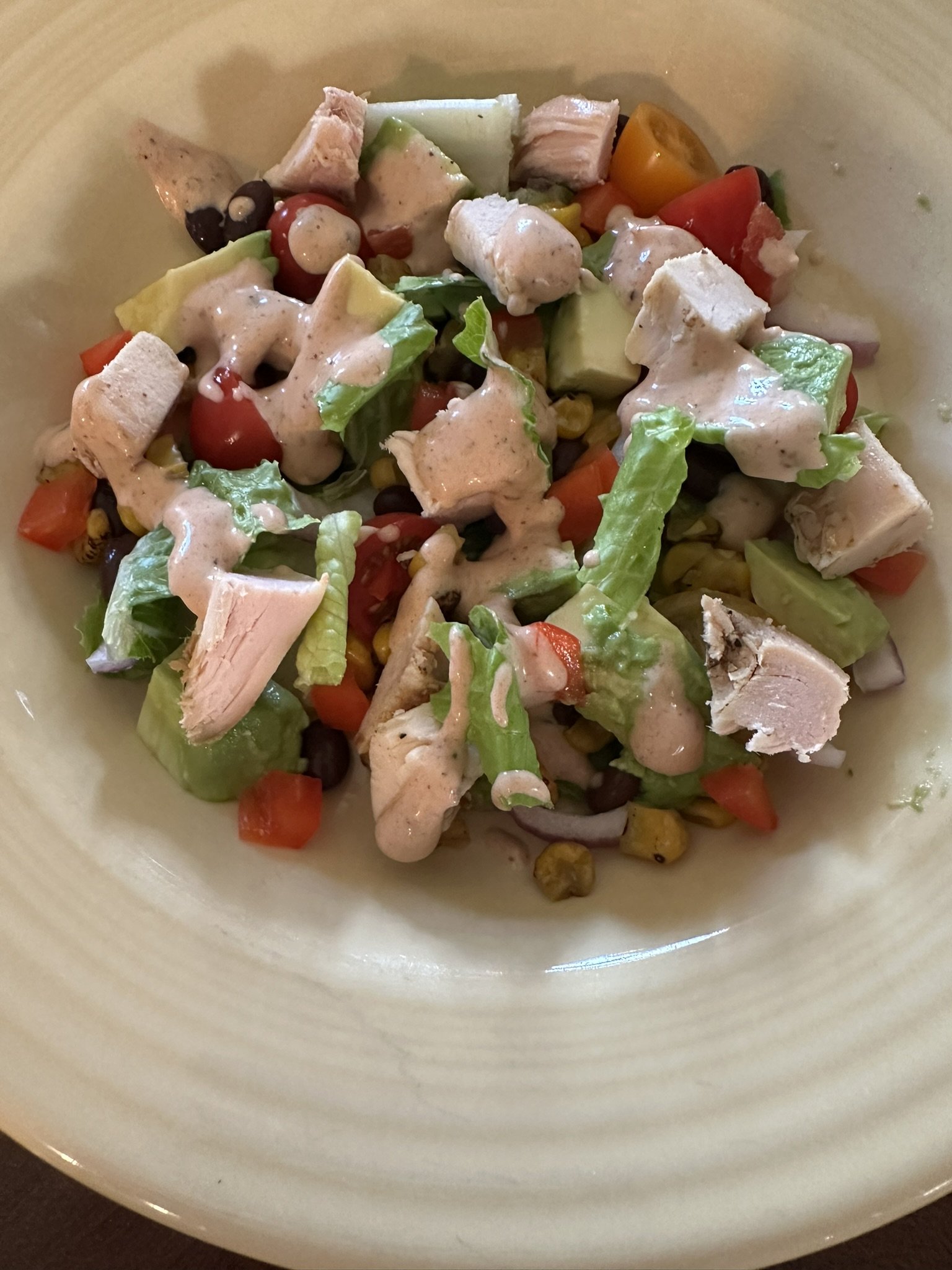
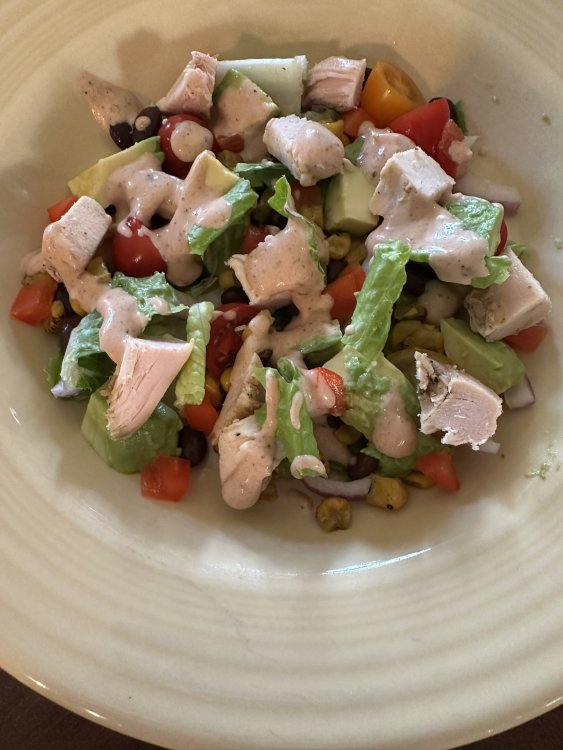
Still looking for ways to use up all the smoked chicken! Last night it was a Southwest-style salad with some of the smoked chicken. Tonight I'm planning on loaded baked potatoes with BBQ smoked chicken. I also made some Jambalaya style soup and added smoked chicken to that. I froze most of it, but perhaps weirdly, I like soup as a post-workout recovery meal, so I suspect I'll be eating a lot of that most weeks!
-
@Dub My heart goes out to you. I honestly suspect I wouldn't have handled it as well as you. I do worry sometimes that I could end up in the same situation since my wife does not exercise and is pretty heavy. Her health seems okay for now, but I doubt that will last considering her health risks. I'm trying (gently), to encourage healthier behaviors, but it's slow going. Anyway, I'm so glad you're back here and working to get your health back! Our health is a gift. It's one I didn't value for the longest time. Now, I recognize it's the most precious thing I have.

.png)